Healey explores bank and energy windfall taxes ahead of Budget
Developed over time first seen 2 months ago
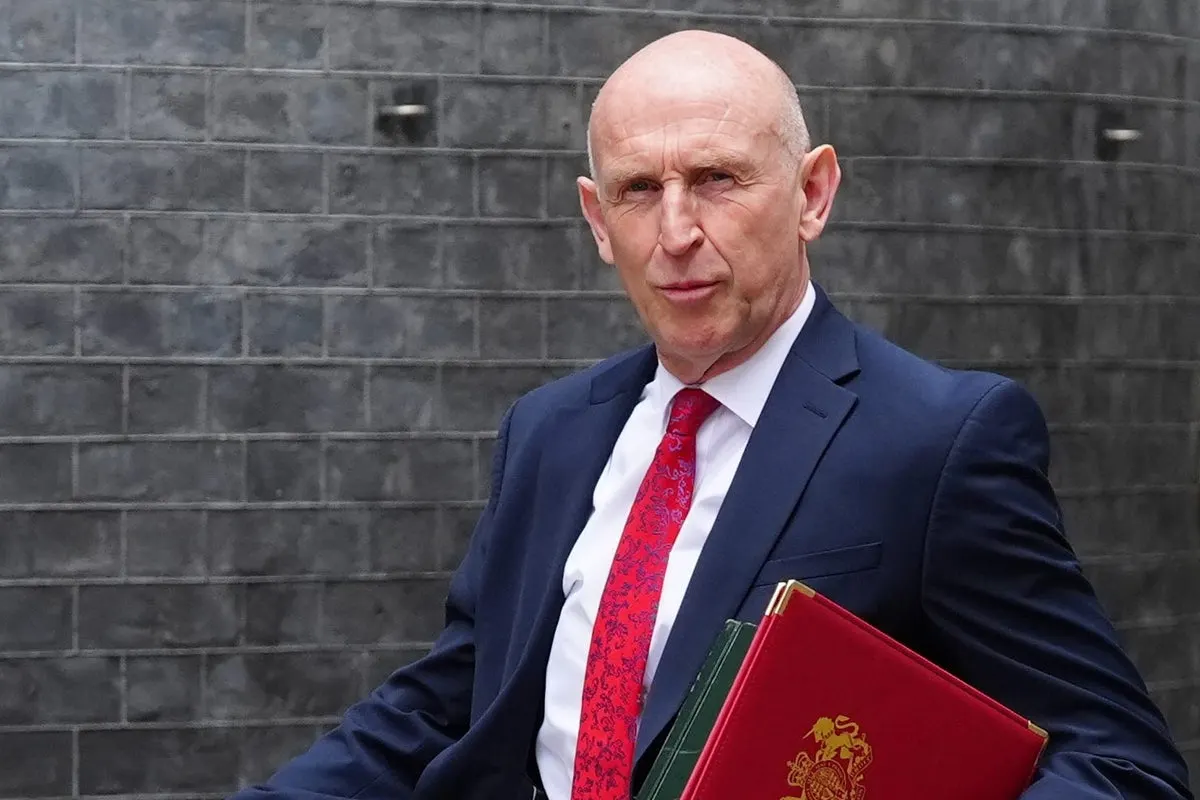
Chancellor John Healey is reportedly weighing windfall taxes on banks and oil companies as part of his first Budget, as he seeks ways to plug a shortfall in public finances without raising taxes on the general public. According to a report by The Telegraph, the measures are being considered to close a £4.7bn gap and are being framed as a more restrained approach than the tax rises seen under his predecessor, Rachel Reeves. The move comes amid competing pressure, with JP Morgan's Jamie Dimon warning against a bank windfall tax over fears it could push jobs overseas, while Scottish first minister John Swinney has urged Prime Minister Andy Burnham to scrap the oil and gas levy following BP's decision to sell its North Sea assets.
Options under consideration include raising the tax on oil and gas firms, extending the current 38 per cent energy levy beyond its planned 2030 end date, and introducing a time-limited tax on bank profits. The Budget is due on 28 October, and speculation has intensified after BP's profits more than doubled between April and June amid soaring oil prices linked to the US-Iran conflict. The Treasury declined to comment on specific proposals. Separately, Green Party leader Zack Polanski has proposed a 38 per cent windfall tax on bank profits above £800 million, which he says could raise £19bn to support small businesses, though Burnham's office has dismissed the Greens' plans as "unrealistic."
- Healey considering windfall taxes on banks and oil firms for October Budget
- Aims to plug £4.7bn gap without raising taxes on the public
- JP Morgan and Swinney have warned against the respective levies
New here? Start with this
Banks and energy firms in the UK have been earning unusually large profits in recent years, partly because of higher interest rates and global energy price shocks following Russia's invasion of Ukraine. A "windfall tax" is a one-off or temporary extra charge on those exceptional profits, on top of normal corporation tax, and there is already a 38 per cent levy on oil and gas firms' profits that is due to end in 2030. Chancellor John Healey, who took over the role and is preparing his first Budget, is weighing whether to extend or increase that energy levy and add a new, time-limited tax on banks' profits.
The idea matters because Healey needs to find about £4.7bn to balance the government's books without raising taxes on ordinary households, and windfall taxes are one way to raise money from businesses instead. The proposal has drawn pushback from industry figures, including JP Morgan boss Jamie Dimon, who has warned that taxing banks could drive jobs overseas, and from Scotland's First Minister John Swinney, who wants the oil and gas levy scrapped after BP announced plans to sell its North Sea assets. The Green Party has separately proposed its own, larger windfall tax on banks to fund support for small businesses.
The Budget is due on 28 October, and the debate reflects a wider argument about how the government should raise revenue: whether by taxing corporate profits seen as excessive, or by other means that could affect businesses' competitiveness and investment decisions.
Both sides, in good faith
The strongest fair case each way — we don't pick a winner.
The case for
Supporters argue that banks and oil and gas firms have benefited from extraordinary circumstances – rock-bottom base rates followed by rapid rises, and geopolitical shocks such as the Ukraine and Middle East conflicts – rather than from exceptional skill or risk-taking, making a case that some of those gains should help close the public finances without reaching into ordinary households' pockets. They point to the existing energy levy as precedent that such measures can be designed as time-limited and targeted, and see a bank or energy windfall tax as a fairer way to fund public services and support smaller, more vulnerable businesses than raising broad-based taxes on wages or consumption.
The case against
Opponents contend that repeated or extended windfall taxes create damaging uncertainty for investors, making the UK a less predictable place to do business at a time when firms like BP are already scaling back North Sea operations and global banks are weighing where to locate jobs and capital. They argue that banks and energy firms already pay substantial corporation tax and sector-specific levies, that profits fluctuate with the cycle and should not be penalised retrospectively, and that discouraging investment in energy production or financial services risks costing jobs and future tax revenue that would outweigh any short-term gain to the Treasury.
Full account
Chancellor John Healey is reported to be weighing up windfall taxes on banks and energy companies as he prepares his first Budget on 28 October, as part of efforts to close a funding shortfall estimated at around £4.7 billion without resorting to broader tax rises on the public. The gap is widely linked to a defence spending commitment inherited from the previous administration under Sir Keir Starmer, and officials are said to view a levy on corporate profits as a comparatively painless way to raise revenue while shielding workers from higher taxes.
Among the options under consideration are an increase to the existing levy on oil and gas producers, an extension of that tax beyond its current 2030 expiry date, and a new, time-limited charge on bank profits modelled on the energy sector windfall tax introduced after Russia's invasion of Ukraine. The idea has gained fresh impetus after BP reported a sharp rise in profits for the second quarter of the year, with underlying earnings climbing substantially amid volatile oil prices linked to the recent conflict between the United States and Iran, echoing the surge in energy company profits that followed the war in Ukraine and prompted similar windfall levies under previous chancellors, including Rishi Sunak.
The prospect of new levies has already drawn criticism from business figures and politicians. JP Morgan chief executive Jamie Dimon reportedly told Mr Healey directly that taxing bank profits could push financial jobs overseas, pointing to what he described as a decline in New York's finance sector linked to its tax burden. Separately, Scotland's First Minister John Swinney has called on Prime Minister Andy Burnham to abandon the oil and gas levy altogether following BP's decision to sell its North Sea assets, while a former Conservative minister who declined a role in the current government warned that resorting to such measures instead of tackling welfare spending and the pensions triple lock would signal a reluctance to confront harder political choices. The Treasury has declined to comment on the specific proposals, saying only that tax decisions are announced at fiscal events.
The debate comes against a backdrop of wider pressure on the public finances, with economists including those at the National Institute of Economic and Social Research cautioning that either tax rises or spending cuts are unavoidable given limited room for additional borrowing. The Green Party has used the moment to press its own, more expansive plan, with leader Zack Polanski proposing a 38 per cent levy on bank profits above £800 million that the party says, based on analysis by Positive Money, could raise around £19 billion to support small businesses; a spokesperson for Mr Burnham dismissed the Greens' broader agenda as unrealistic and unfunded. Reports also suggest that measures to address welfare spending are unlikely to feature prominently in the October Budget, adding to questions over how the government intends to balance the books.
Where outlets differ
The Independent's account (drawing on the Telegraph) foregrounds the political framing of the windfall taxes as a 'subdued' alternative to Rachel Reeves-era tax rises, and gives more space to Swinney's call to scrap the oil and gas levy and to the Green Party's rival windfall tax proposal.
The second source places greater emphasis on the £4.7bn figure being tied specifically to an Armed Forces spending commitment, frames the levy as 'low hanging fruit', and includes additional criticism from Lord Jim O'Neill linking any windfall tax to the government avoiding welfare reform and pensions triple lock changes — details absent from the Independent's report.
Figures on BP's profit growth differ slightly in emphasis: one source describes profits as having 'more than doubled', the other cites a specific quarterly rise of around 78 per cent to £4.2bn, though both attribute the surge to volatile oil prices linked to the Iran conflict.
More coverage
Read the full article at the source →
Originally published by The Independent as “Healey ‘considers windfall tax on banks and oil companies in first Budget’”.