He’s been frozen on Everest for 30 years, now ‘Green Boots’ may finally be coming home
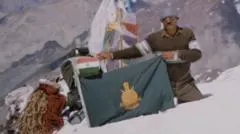
India is seeking a specialist recovery team to retrieve the body believed to be Dorje Morup, an Indian climber who died descending Mount Everest in 1996 and became known as “Green Boots” because of his distinctive lime-coloured footwear. His frozen remains, near the summit on Everest’s Chinese side, have long served as a grim landmark for climbers; recovering them would offer his family a long-delayed chance to bring him home.
Morup, a 48-year-old Indo-Tibetan Border Police lance corporal from Ladakh, was one of three members of an Indian expedition who reached Everest’s 8,849m summit before a blizzard killed them on the descent. More than 300 people have died in the Everest region over the past century, and many bodies remain there because recovery at extreme altitude is dangerous and technically difficult. Although “Green Boots” was previously thought to be fellow climber Tsewang Paljor, survivor accounts and the location of the expedition’s last radio contact have led authorities to believe the body is Morup’s.
In short
- India plans a risky attempt to recover “Green Boots” from Everest.
- Authorities now believe the body is climber Dorje Morup.
- Recovery could finally return Morup’s remains to his family.
Explained simply
Mount Everest rises to 8,849 metres on the border between Nepal and China. Climbing near the summit is physically demanding, and sudden storms can make the descent especially dangerous.
In 1996, an Indian expedition reached the summit, but a blizzard killed three climbers as they came down. One was Dorje Morup, a 48-year-old member of the Indo-Tibetan Border Police from Ladakh.
A body near the summit on Everest’s Chinese side became known to climbers as “Green Boots” because of its bright footwear. Many bodies remain on Everest because bringing them down is hazardous at that altitude; identifying and recovering Morup’s remains could give his family the chance to bring him home.