China warns landslide lake could unleash second flood
Developed over time first seen 2 months ago
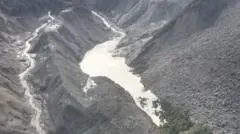
China warned that a debris-dammed lake near the Nepal–Tibet border could cause a second flood after a glacier collapse triggered Wednesday’s deadly flash flood. Although the lake began overflowing and temporarily halted rescue work, officials later said the immediate upstream risk had been brought under control and operations resumed; the main concern remains further erosion, landslides and debris flows.
By Friday, the lake held an estimated 2.5 million cubic metres of water, with a further three million cubic metres expected by the weekend. An avalanche deposited about 50,000 cubic metres of ice debris into it, while forecasts of heavy rain heightened concern; experts said a breach was possible but likely less severe than Wednesday’s flood, and that gradual natural drainage may limit downstream effects.
- Overflowing landslide lake raises fears of a second flood.
- Authorities resumed rescues after controlling the immediate risk.
- Rain and unstable slopes remain significant hazards.
New here? Start with this
The border area between Nepal and Tibet lies in the Himalayas, where steep valleys, glaciers and fast-flowing rivers make communities vulnerable to sudden floods and landslides. Heavy rain, melting ice and earthquakes can all destabilise slopes, sending rock, ice and debris into rivers.
A landslide can block a river and create a temporary lake behind the debris. If water builds up and then breaks through the blockage, it can send a powerful flood downstream with little warning, affecting villages, roads, bridges and rescue teams.
Langtang Lirung is a high mountain in Nepal’s Langtang region, close to the Tibetan border. Rivers including the Bhote Koshi and Trishuli flow through populated parts of Nepal, so changes upstream on either side of the border can have consequences for people further down the valleys.
Full account
Chinese authorities have warned that a debris-dammed lake in Tibet, upstream of the Nepal border crossing at Gyirong Port, may produce another destructive flood. The lake formed after a landslide blocked a river system in the area affected by Wednesday’s flash flood. Officials said the danger had increased as water continued to enter the impoundment and heavy rain affected the region.
China’s Ministry of Water Resources said the barrier lake had begun overflowing and faced a high risk of failure. State television reported on Friday that it held an estimated 2.5 million cubic metres of water, while officials expected a further three million cubic metres to reach it over the following days. Engineering teams were sent to watch water levels and weather conditions.
The warning has disrupted the emergency response. Chinese reports said rescuers were unable to move beyond a village several kilometres from Gyirong Port because of the continuing overflow and the prospect of fresh flooding or debris flows. Rescue operations near the frontier were suspended, while authorities in Nepal advised people to avoid the Bhote Koshi and Trishuli rivers and move to safer places if necessary.
Wednesday’s flood is believed by scientists to have followed the collapse of part of a glacier near Langtang Lirung, sending water, mud and debris downstream. The disaster has left hundreds dead in Nepal and many more missing; Chinese reports also put the number missing on the Tibet side at more than 550. The newly formed lake lies in the same broader mountain area, adding uncertainty to rescue work and to communities downstream.
Where outlets differ
Source 1 describes the lake as overflowing and at high risk of breaching, whereas Source 2 reports that Nepali police had received information that a dam had already burst again; it also notes that the precise river level was unclear.
Source 1 gives an estimated Friday volume of 2.5 million cubic metres, while Source 2 attributes an earlier official estimate of about 2 million cubic metres to China’s water ministry.
Source 1 focuses on the lake’s formation, monitoring and the wider casualty picture. Source 2 places greater emphasis on Nepal’s immediate warning, halted helicopter rescues, people seeking higher ground, and an appeal concerning a missing British pilgrim.
More coverage
Read the full article at the source →
Originally published by BBC World as “‘High risk’ of lake bursting and causing second flood, warns China”.