Technology news and discussion on TalkFuse.
Fibre-optic cables carry data far beyond copper’s reach before signal fades
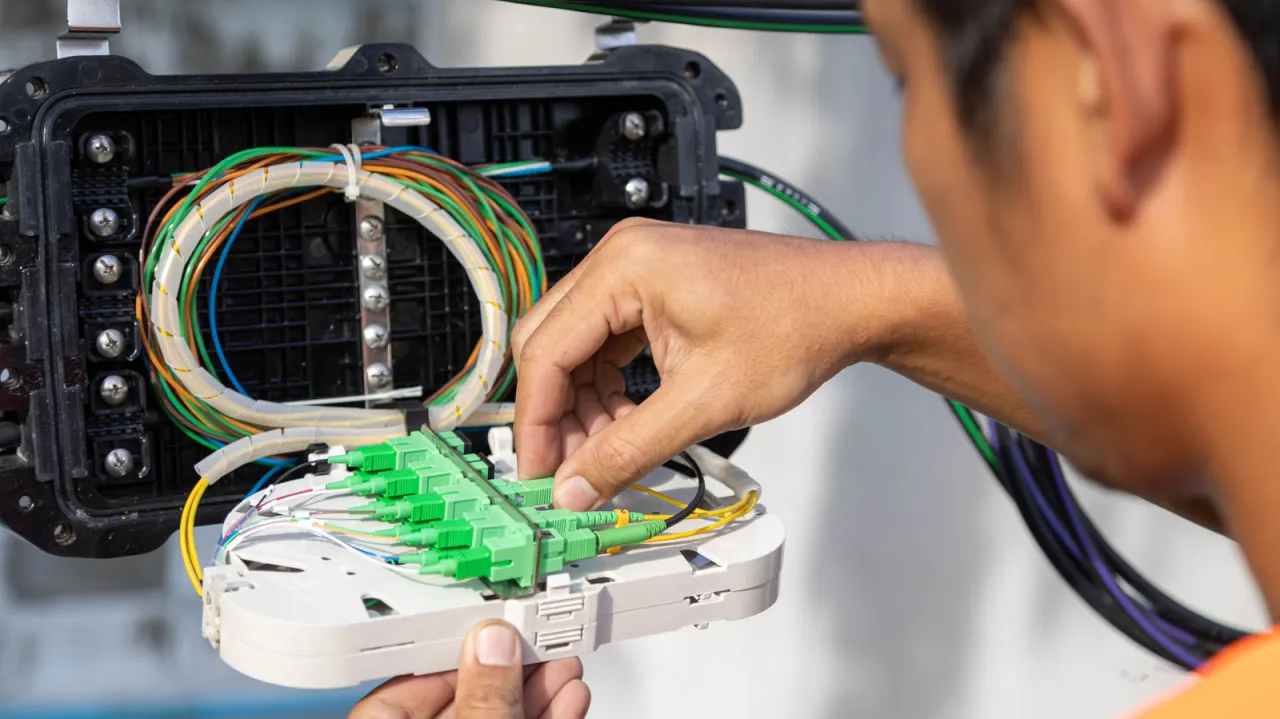
Fibre-optic cables carry internet data as light and can span far greater distances than copper Ethernet cables before signal loss becomes a problem. Their ability to support long links helps make them useful for city networks and subsea connections between continents.
As light travels through glass, absorption and scattering gradually weaken it, a process called attenuation. A single uninterrupted fibre can typically run for several kilometres, while single-mode fibre can carry signals farther than multi-mode fibre; multi-mode links can still cover hundreds of metres, enough for most home networks. The article names the 2Africa system as the world’s longest fibre-optic cable run and says its predecessor, SEA-ME-WE 3, was decommissioned in 2024.
In short
- Fibre can carry data for several kilometres before signal loss limits it.
- Single-mode fibre supports longer runs than multi-mode.
- Home networks are unlikely to hit fibre’s distance limits.
Explained simply
Internet data needs a physical route to travel between homes, businesses and networks in different countries. Fibre-optic cables send that data as pulses of light through thin strands of glass, while copper cables carry electrical signals.
Telecoms companies and network operators use different types of fibre for different distances. Single-mode fibre is suited to longer links, while multi-mode fibre is commonly used over shorter distances, such as within buildings.
Long-distance fibre helps connect cities and carries communications between continents through cables laid on the seabed. These links are part of the infrastructure that lets people and organisations exchange data across large distances.
Read the full article at the source →
Originally published by Engadget as “How long can fiber optic cables be before they lose signal?”.