Over 300,000 public sector staff strike across the Republic of Ireland
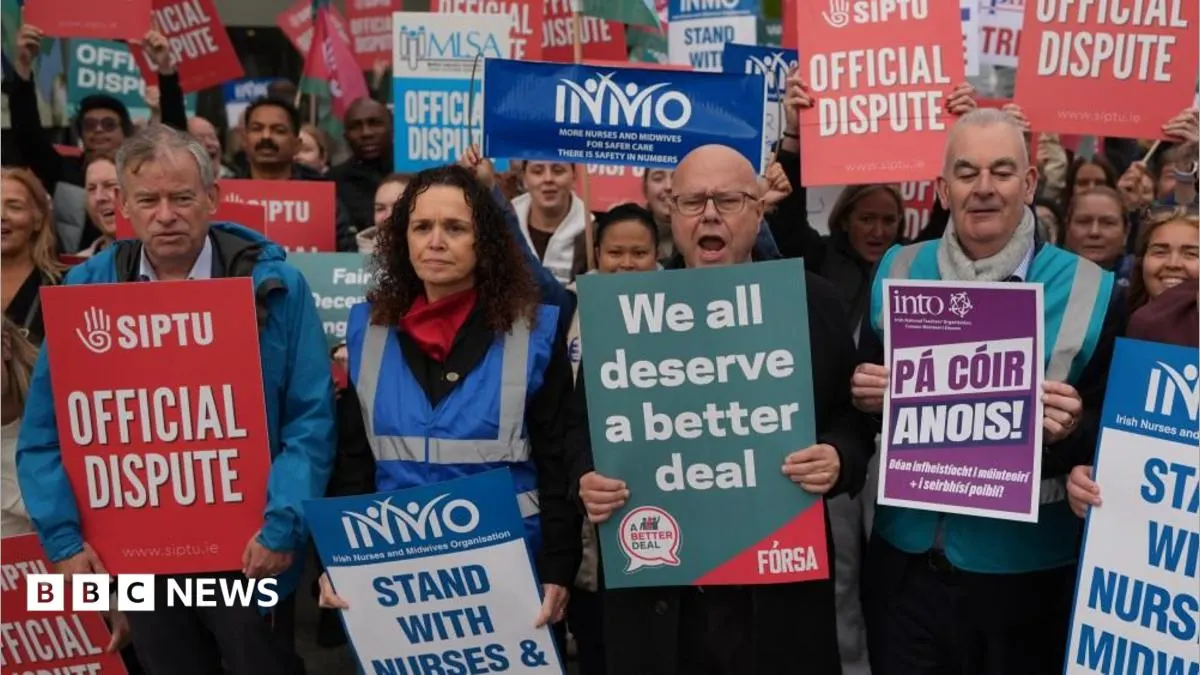
More than 300,000 public sector workers, including nurses, doctors, teachers and civil servants, are striking across the Republic of Ireland amid a pay dispute with the government. The action is expected to disrupt public services, with schools closed and hospital appointments cancelled, and a further 24-hour strike is planned for 21 October.
The dispute follows work-to-rule action by more than 100,000 workers at the end of September and by primary and secondary teachers from early October. Nearly 97% of Fórsa members who voted backed industrial action. Unions say pay is not keeping pace with costs and criticise the government for not establishing formal talks; the expenditure minister called the strike deeply disappointing and warned of significant disruption.
- More than 300,000 Irish public sector workers are on strike.
- Schools and hospital services face major disruption.
- Another 24-hour strike is planned for 21 October.
New here? Start with this
Public sector workers are employed by the state or public bodies to provide services such as healthcare, education and government administration. In the Republic of Ireland, their pay and working conditions are negotiated with the government, often through trade unions that represent groups of workers.
Fórsa is one of Ireland’s largest trade unions, representing many public servants. In a work-to-rule, staff carry out their contracted duties but do not take on extra work or overtime; strikes involve workers stopping work for a set period. Pay disputes can affect the wider public because they involve services people rely on, including schools and hospitals.
Both sides, in good faith
The strongest fair case each way — we don't pick a winner.
The case for
Workers and unions can argue that pay has fallen behind living costs and that a near-universal vote for action gives members a strong mandate to press for fair terms. Striking may be necessary to secure meaningful negotiations and protect public services over time by helping retain staff.
The case against
The government can argue that a strike on this scale imposes immediate costs on patients, pupils and families who rely on public services, including through cancelled appointments and closed schools. It may also contend that pay decisions must be weighed against public finances and the need to reach an affordable settlement through talks.
Read the full article at the source →
Originally published by BBC World as “Hundreds of thousands of workers on strike across Republic of Ireland”.