‘I am still alive’: Indian activist on hunger strike for 26 days loses 11kg
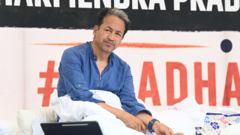
Indian activist and educationist Sonam Wangchuk is now in his fourth week of fasting, having shed more than 24 pounds whilst consuming only salt and water. Removed from Delhi's Jantar Mantar protest site and hospitalised, he maintains his commitment to the fast and will only abandon it if authorities guarantee students will face no reprisals or force from the government.
The hunger strike supports a youth-driven movement calling for education system changes and the removal of Education Minister Dharmendra Pradhan, accused of responsibility for multiple breaches of major national exams. Despite authorities using force against demonstrators on Monday, resulting in injuries to both protesters and police officers, large crowds persist at the protest location, whilst political leaders and the government separately urge him to stop whilst signalling readiness to discuss the movement's grievances.
In short
- Indian activist Sonam Wangchuk on 26-day hunger strike demanding Education Minister Pradhan's resignation over exam security breaches
- Hospitalised but continuing fast unless government guarantees no reprisals against student protesters
- Thousands remain at protest site despite Monday's police crackdown; government expresses openness to dialogue
Steelman: both sides, in good faith
The strongest fair case each way — we don't pick a winner.
The case for
The education system has demonstrably failed, with major exam breaches indicating institutional breakdown that directly harms students' futures. When established channels prove inadequate to secure accountability from elected officials, hunger strikes represent a legitimate form of civil disobedience with historical precedent for catalysing meaningful reform. The activist's reasonable demands for student protection demonstrate principled commitment to systemic change without violence.
The case against
Whilst education reform concerns may be legitimate, using self-harm as political leverage constitutes coercive pressure that circumvents reasoned democratic discourse and proper accountability mechanisms. The government has already signalled willingness to engage, making the health-damaging fast an unnecessary escalation that creates instability rather than productive dialogue. Effective systemic change comes through established parliamentary and administrative channels, and authorities' decision to hospitalise the striker represents appropriate duty of care rather than suppression of legitimate dissent.
Explained simply
Sonam Wangchuk is an Indian activist and educationist who has been on hunger strike for more than three weeks, consuming only salt and water and losing over 11 kilograms. He was removed from a protest site at Jantar Mantar in Delhi and is now in hospital, but he is continuing his fast.
The strike supports a student-led movement demanding major changes to India's education system and calling for the resignation of Education Minister Dharmendra Pradhan. Pradhan is blamed for several significant failures in national examinations, and Wangchuk has said he will not stop the fast unless the government guarantees that young people involved in the protests will not face punishment or intimidation.
The protests have continued to attract large crowds despite confrontations with police that left people injured on both sides. Although the government and political leaders have asked Wangchuk to end his fast, they have indicated they are prepared to discuss the protesters' concerns about education policy.