Iceland votes against reopening European Union membership negotiations
Developed over time first seen 2 months ago
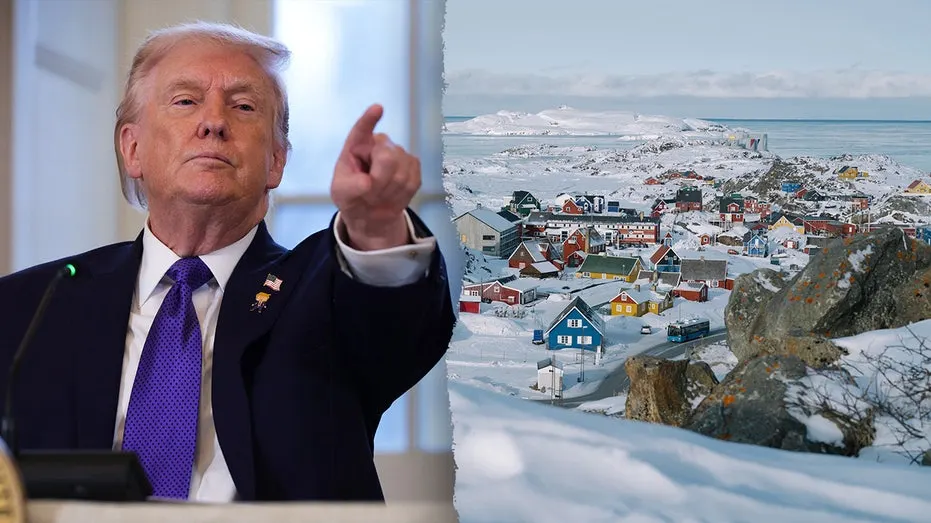
Iceland's voters have rejected a return to European Union accession negotiations, closing a debate that has run since the country's EU bid stalled under a euroskeptic government in 2013. The referendum, held on Saturday and confirmed by national broadcaster RUV on Sunday, saw the "No" side win with 52.8% against 47.2%, ending months of campaigning that gained extra significance from US President Donald Trump's repeated threats towards nearby Greenland, which he mistakenly named several times, prompting some Icelanders to weigh the merits of closer European ties.
Around 265,000 people were eligible to vote in the straight yes-or-no poll, which Iceland's left-leaning coalition government, elected in 2024, had brought forward from its originally planned date next year. The count was tight and geographically split: the "Yes" side led for much of the night before falling behind, with only a few hundred votes separating the camps at one point, and Reykjavik was the only area of the roughly 400,000-strong nation where a majority backed reopening talks. Opponents, led by the influential fishing industry, feared the EU's common fisheries policy would open Icelandic waters to foreign trawlers, while supporters argued that eventual euro adoption would bring lower inflation and greater economic stability. Prime Minister Kristrún Frostadóttir, who backed the measure, said she did not sense bitterness from the result and hoped it would not leave the country divided.
- Icelanders voted 52.8%-47.2% against restarting EU membership talks
- Vote followed Trump's threats towards Greenland and Iceland mix-up
- Fishing industry concerns over foreign trawlers helped drive "No" vote
New here? Start with this
Iceland has just held a referendum on whether to restart talks about joining the European Union, a process it began back in 2009 after its banking system collapsed, but which stalled in 2013 when a more sceptical government took office. The vote was called early by the current prime minister, Kristrún Frostadóttir, whose centre-left government wanted the question settled sooner than the 2027 date originally planned, partly against a backdrop of wider unease in the region, including tensions over Greenland.
The country of fewer than 400,000 people is already tied closely to the EU through the single market and the Schengen open-borders area, so the practical question was narrower than full membership: whether to resume formal talks, which would themselves have needed a further referendum before Iceland actually joined. Much of the public debate focused not on geopolitics but on fishing, a industry that accounts for close to 40% of Iceland's exports, with many opponents worried that EU membership would mean giving up national control over fishing waters.
The result matters because it determines whether Iceland moves any closer to the EU, including eventually adopting the euro, or continues on its current path as a country deeply linked to Europe economically but outside the union itself.
Both sides, in good faith
The strongest fair case each way — we don't pick a winner.
The case for
Advocates for resuming EU membership talks argue that Iceland's economic and security interests are best served by having a formal seat at the table rather than merely accepting rules set by Brussels through the single market and Schengen arrangements it already follows. They point to the stability of the euro as protection against the krona's historical volatility, particularly painful after the 2008 crash, and see full membership as a hedge against an increasingly unpredictable international order, including pressure from larger powers in the Arctic region. For them, negotiating was a low-risk step, since any final terms would have faced a further public vote, and refusing even to explore them meant forgoing information that could have clarified Iceland's options.
The case against
Opponents argue that Iceland's fishing grounds are the bedrock of its economy and national self-determination, and that ceding management of them to the EU's common fisheries policy risks decisions made in Brussels overriding decades of hard-won, sustainably managed domestic control. They value the flexibility Iceland currently enjoys, having secured the practical benefits of the single market and Schengen without the obligations of the customs union or euro adoption, and see no compelling reason to trade that bespoke arrangement for a seat that comes with binding rules on a resource make up nearly 40% of exports. Many also felt that reopening talks now, in an accelerated timetable driven by unrelated geopolitical tensions, pre-empted a fuller public debate that deserved more time rather than urgency.
Full account
Iceland has voted to reject a return to negotiations on European Union membership, a result that closes down – at least for now – a debate that has run through Icelandic politics for well over a decade. According to figures published by public broadcaster RUV, 52.8% of voters said no to resuming accession talks against 47.2% in favour, a margin of roughly 12,600 ballots. Turnout was reported at around 82.5%, described as the highest for any Icelandic vote since 2009, the year the country first applied to join the bloc in the aftermath of its banking collapse. Those talks were shelved in 2013 after a Eurosceptic government took office, and Saturday's referendum asked voters only whether negotiations should restart, not whether Iceland should actually join.
Although the government of Prime Minister Kristrún Frostadóttir framed the vote as a chance to weigh Iceland's long-term place in Europe, much of the domestic argument centred on fishing. Fish and marine products make up close to 40% of Iceland's exports, and opponents of reopening talks – reportedly including around nine in ten firms in the fishing sector – feared that EU membership would eventually force Iceland to cede control over its waters under the bloc's common fisheries policy. Brussels had signalled some flexibility on this point; the EU's enlargement commissioner, Marta Kos, said the bloc recognised Iceland's 'unique specificities' on fisheries and agriculture and was confident that workable arrangements could be found. Supporters of reopening negotiations argued that closer EU ties, including eventual use of the euro, might ease borrowing costs and interest rates, but this failed to overturn deep-rooted resistance built around sovereignty and control of natural resources.
A security dimension also coloured the campaign, though sources differ on how central this was. Iceland has no armed forces of its own and depends on NATO membership and a long-standing defence pact with the United States, a vulnerability underlined by Russia's stepped-up naval activity in the North Atlantic and Iceland's support for Ukraine since Russia's full-scale invasion. President Donald Trump's repeated suggestions that the United States could take control of neighbouring Greenland – a self-governing Danish territory – added a further unsettling factor, not least because Trump has on several occasions mixed up Greenland with Iceland itself. Frostadóttir's government, which had originally pledged to hold a referendum by 2027, brought the vote forward, citing wider international tensions. Even so, coverage varied in how much weight to give this strand: reporting that drew on RTE and the Associated Press placed the Greenland question and NATO security concerns at the centre of the story, while accounts leaning on RUV's domestic reporting treated fishing rights as the dominant issue and security as a secondary factor.
The referendum was formally advisory rather than legally binding, but Frostadóttir had committed in advance to honour the outcome, calling the vote itself, regardless of result, an important moment for public debate about Iceland's international position. She described the contest as tight and said it had raised discussion of Iceland's geopolitical situation to a higher level, adding that her government would continue its work whatever the outcome. The no vote does not permanently rule out a future application, and Iceland's existing ties to Europe – including membership of the European Economic Area and the passport-free Schengen zone – remain unaffected. Reaction abroad included congratulations from Reform UK leader Nigel Farage, who praised Icelanders for choosing to 'keep their independence', while some commentary framed the result as a setback for the EU's wider enlargement ambitions at a time when it had hoped a comparatively low-risk, prosperous new member might help ease scepticism about expansion elsewhere.
Where outlets differ
Fox News's report (citing RTE and AP) was filed before the result was finalised and placed heaviest emphasis on the Greenland/Trump security angle and NATO reliance, whereas the RUV-sourced account treats fishing rights as the primary driver of the no vote and security as secondary.
Turnout and voter-number figures differ slightly across sources: one cites roughly 275,000 eligible voters, another 270,000 eligible with 225,031 votes cast and 82.5% turnout – likely reflecting reporting at different stages before/after final results were confirmed.
Only the Daily Mail-style report includes reaction from EU Enlargement Commissioner Marta Kos and Nigel Farage, framing the result explicitly as a blow to Brussels' enlargement agenda, a framing absent from the other two accounts.
Sources vary on when Frostadóttir made her public comments – some quote her reacting after voting on Saturday, while one account references a government press conference scheduled for Sunday.
The AP/Fox account notes the additional context of Trump ambassador Billy Long's apology for joking about Iceland becoming the '52nd state,' a detail not mentioned in the other two reports.
Coverage
- Fox News — Iceland votes on resuming EU membership talks as Trump’s push for neighboring Greenland looms over debate
- BBC World — Iceland vote on restarting EU talks remains too close to call