In the departure lounge? Air traffic control chief faces showdown with minister over flights carnage – as he confirms misery wasn’t caused by cyber attack
Developed over time first seen 2 months ago
Martin Rolfe, chief executive of National Air Traffic Services (NATS), faces a showdown with Transport Secretary Heidi Alexander amid calls for his resignation after a systems failure caused widespread flight disruption across the UK. In a BBC Radio 4 interview, Rolfe confirmed the chaos was not the result of a cyber attack, promised a "very, very thorough" investigation, and apologised, while arguing that such incidents were ultimately "inevitable" in complex systems.
Around 1,300 flights to and from UK airports were disrupted, with knock-on cancellations and delays continuing into the following morning at hubs including Heathrow, Gatwick, Manchester and Stansted; by 6am, 246 flights had been cancelled at Heathrow and 33 at Gatwick. Rolfe said this was an unprecedented type of fault in NATS's 50-year history and highlighted over £1 billion invested in technology since partial privatisation 25 years ago, but Wizz Air UK's Yvonne Moynihan said it was the third such failure during peak periods, affecting over 10,000 passengers, and raised serious questions about the system's resilience and Rolfe's position.
- Sources
- 2
- Outlets
- 1
- Left · Centre · Right
- 0 · 0 · 2
In short
- NATS boss Martin Rolfe faces resignation calls after flight chaos
- Confirmed no cyber attack; called the failure "inevitable"
- 1,300+ flights disrupted; Wizz Air says it's the third such incident
How this story developed
- 2 months ago Martin Rolfe, chief executive of National Air Traffic Services (NATS), faces a showdown with Transport Secretary Heidi Alexander amid calls for his resignation after a systems failure caused widespread flight disruption across the UK.
Full account
Martin Rolfe, chief executive of National Air Traffic Services (NATS), was facing calls to resign on Friday as a second day of flight disruption hit passengers across the UK, with a meeting with Transport Secretary Heidi Alexander looming before her scheduled appearance in the Commons for the second reading of the Civil Aviation Bill. A technical fault at NATS, which handles air traffic control for 15 UK airports, had already forced airlines to cancel or delay well over a thousand services the previous day, and the fallout continued into the morning with hundreds more flights axed at Heathrow, Gatwick, Manchester and Stansted. By 6am, Heathrow alone had recorded 246 cancellations and Gatwick a further 33, according to tracking data from FlightRadar24.
Speaking to BBC Radio 4's Today programme in what amounted to a defence of his position, Mr Rolfe ruled out a cyber attack as the cause of the failure and said NATS would carry out a comprehensive investigation into what had gone wrong. He stressed that the underlying system was now working normally again but acknowledged a substantial backlog of disruption would take time to clear. Mr Rolfe described the fault as unprecedented in NATS's fifty-year history, arguing that breakdowns of this kind were an unavoidable feature of complex systems despite significant investment in technology and safety since the organisation's partial privatisation twenty-five years ago. He apologised to those affected, while airline executives reportedly reacted with fury, with some branding him a failure who was overpaid for the role.
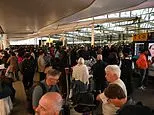
The knock-on effects left many travellers stranded overnight, with passengers at Heathrow's Terminal 4 and at Gatwick resorting to sleeping on the floor, some on yoga mats, as they waited for news of their flights. Among those caught up in the chaos was Formula 1 broadcaster Martin Brundle, who described being held on a grounded aircraft at Heathrow for around nine hours without food and with the toilets out of action, saying a mother with a baby and a passenger with a medical condition were desperate to disembark. Other passengers spoke of confusion and helplessness at being unable to get clear information, with one traveller from Enfield, whose short break to Sweden was cancelled, questioning how such disruption could still occur given the technology available. A couple from Leeds bound for Ho Chi Minh City had their outbound flight pushed back by almost a day.
Passengers across the country were urged to check the status of their flights before travelling, amid warnings that the ripple effects of the failure could continue to disrupt schedules for some time to come. The episode has reignited scrutiny of NATS's resilience and its readiness for unexpected failures, with the coming investigation likely to determine both the technical cause of the fault and whether Mr Rolfe retains the confidence of ministers and the aviation industry.
Where outlets differ
From the full account, which is AI-written from the sources:
One report puts Wednesday's disruption at roughly 1,300 flights, while the other cites a considerably higher figure of up to 1,750 cancelled services — the two accounts do not agree on the scale of the initial disruption.
Only one account includes a specific warning that the knock-on disruption could persist for as long as three weeks; the other does not give a timeframe beyond describing a 'huge tail' of continuing impact.
One report emphasises airline anger and quotes the 'overpaid failure' jibe against Mr Rolfe directly, while the other focuses more on passenger experiences, including named travellers and Martin Brundle's account of being stranded on an aircraft for nine hours.
Only one source specifies that Mr Rolfe's meeting with Heidi Alexander was timed ahead of her Commons appearance for the Civil Aviation Bill's second reading; the other refers more generally to a 'showdown' without that legislative detail.
Steelman: both sides, in good faith
The strongest fair case each way — we don't pick a winner.
The case for
A chief executive should be held accountable when a failure under their leadership causes widespread disruption, particularly if similar incidents have occurred during peak periods. Resignation could demonstrate that the scale of the harm is being taken seriously and create pressure for stronger resilience and clearer answers for passengers and airlines.
The case against
The disruption warrants a thorough investigation, but resignation before its findings could substitute individual blame for understanding the technical causes and fixing them. Rolfe describes the fault as unprecedented in NATS’s history and points to substantial technology investment; supporters may argue that complex systems can fail despite investment, and that accountability should follow evidence about what went wrong.
Explained simply
Air traffic in the UK is managed by National Air Traffic Services (NATS), the organisation responsible for keeping planes safely spaced and coordinated in the skies and around airports. It was partly privatised 25 years ago and has since invested more than £1 billion in its technology. A fault in its systems recently caused widespread disruption, affecting around 1,300 flights and leading to cancellations and delays at major airports including Heathrow, Gatwick, Manchester and Stansted.
The organisation's chief executive is Martin Rolfe, who has led NATS through the incident and is now facing scrutiny over how it happened and whether it could have been prevented. Transport Secretary Heidi Alexander, the government minister responsible for transport policy, is also involved, reflecting the political dimension of a failure that affects large numbers of passengers and the airlines that rely on UK airspace running smoothly.
This matters because it is not the first time a NATS failure has caused disruption during busy periods, prompting questions from airlines and passengers about the reliability of the systems that keep UK air travel running, and about accountability when things go wrong.
Coverage · 2 sources
Bias meters
From 2 rated sources.
- Daily MailRightIn the departure lounge? Air traffic control chief faces showdown with minister over flights carnage – as he confirms misery wasn’t caused by cyber attack
- Daily MailRightFresh misery for travellers as hundreds more flights cancelled today with air traffic control meltdown leaving passengers trapped on planes for hours and forced to sleep on airport floors – as NATS boss faces pressure to quit
Art Business Culture Cybersecurity Government Markets Politics Technology Travel World