Infantino broke trust ‘through deception’ – confederation presidents
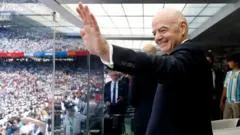
Fifa president Gianni Infantino has been accused of breaking trust "through deception" in an open letter issued jointly by Uefa, Concacaf and the Asian Football Confederation. The letter followed controversy over the Fifa Forward Enterprise proposal, a plan to create a new company to manage commercial and ticketing rights for all Fifa competitions, including the World Cup, with 21% of it sold to a private investment firm. Although the letter does not name Infantino directly, sources have told the BBC it should be read as a signal for him to resign with dignity, marking a serious escalation in tensions between Fifa and its major confederations.
The proposal was scrapped after widespread criticism led by Uefa, which had threatened to boycott all Fifa competitions over the plan. The confederations' letter, signed by presidents and general secretaries, framed the row as being about "the integrity of the game, and the integrity of those elected to lead it," and called for an independent third-party review, after Fifa had already agreed to present a report to its council in October. The dispute follows a Fifa statement issued on Saturday evening that hit back at what it called a "concerted and ongoing effort" to undermine the organisation and its president.
- Uefa, Concacaf and AFC accuse Infantino of deception in open letter
- Row follows scrapped plan to sell 21% of Fifa's commercial rights
- Letter hints Infantino should resign; independent review demanded
New here? Start with this
Fifa is football's global governing body, and its president, Gianni Infantino, is now facing an unusually blunt challenge to his leadership from within the sport's own power structure. The row centres on a proposal called Fifa Forward Enterprise, which would have created a new company to run commercial and ticketing rights across Fifa's competitions, including the World Cup, with a 21% stake sold to a private investment firm. The plan was dropped after strong opposition, led by Uefa, which oversees football in Europe and had threatened to boycott Fifa events over it.
The key players are Fifa itself, led by Infantino, and three of its regional confederations, Uefa, Concacaf (covering North and Central America and the Caribbean) and the Asian Football Confederation, which together represent a large share of the world's national football associations. These confederations have issued a joint open letter accusing Fifa's leadership of "deception," though it does not name Infantino directly.
This matters because confederations rarely challenge a sitting Fifa president so openly, and disputes over who controls football's money and commercial rights can affect how the sport is run worldwide, from World Cup organisation to funding for national federations. The letter calls for an independent review, adding pressure on Fifa beyond the report it had already agreed to give its council in October.
Both sides, in good faith
The strongest fair case each way — we don't pick a winner.
The case for
Those raising the alarm argue that Fifa's leadership owes its member confederations candour and consultation, not a fait accompli. Proposing to sell a 21% stake in the commercial and ticketing rights to all Fifa competitions, including the World Cup, to a private investment firm touches the game's most valuable shared assets, and doing so without transparent process risks eroding the very trust that underpins football's governance. From this view, demanding an independent review and speaking of "integrity" is a legitimate defence of collective ownership and accountability, not an act of disloyalty, especially given how readily the plan was abandoned once scrutinised.
The case against
Infantino's defenders would argue that exploring new commercial structures, including private investment, is a reasonable and necessary part of modernising Fifa's finances and expanding the game globally, and that floating a proposal which is later withdrawn after feedback is exactly how governance is meant to work rather than evidence of deceit. They would note that Fifa had already agreed to bring a report to its council in October, suggesting a process was already under way before the public letter escalated matters. From this perspective, framing a policy disagreement as a call for resignation, without directly naming him, risks looking like a pretext for a wider power struggle between Fifa and the confederations rather than a proportionate response to the underlying issue.