Israel Marks October 7 Anniversary as Communities Balance Rebuilding With Remembrance
Developing story first seen 1 hour ago
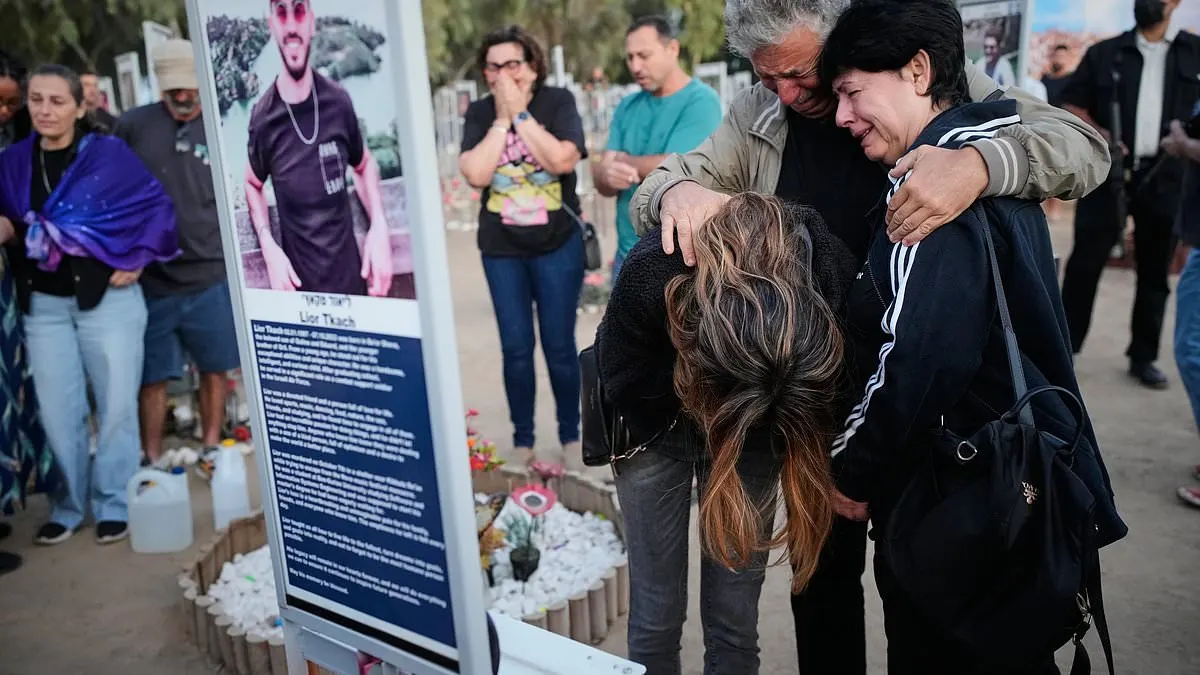
Kibbutz Nir Oz, one of the worst-hit communities in the 7 October 2023 attacks, now grapples with how to rebuild whilst honouring its losses. The final living hostages from the kibbutz were returned in October 2025, marking a turning point for the community as it enters a new phase of recovery and remembrance. Residents are engaged in difficult deliberations about whether to restore destroyed homes or preserve them as lasting evidence, with some community members insisting "people should see what happened, should see the destruction, the pure hatred that happened here."
The kibbutz, located just 1.6 kilometres from the Gaza border, suffered devastating losses that represent approximately one in four of its 400 residents: 41 were killed and 76 were kidnapped. Of those kidnapped, 14 were taken alive to Gaza and subsequently murdered in captivity; remains of the last deceased hostage, Amiram Cooper, were recovered in late October 2025. An Israeli Defence Forces investigation revealed that soldiers did not arrive for 40 minutes after the attackers had withdrawn. Many homes lie demolished, leaving only reinforced concrete safe rooms that ultimately failed to protect residents during the assault.
- Kibbutz Nir Oz marks third anniversary; all local hostages have returned
- One quarter of residents were killed or kidnapped; 41 dead, 76 taken hostage
- Community debates whether to rebuild homes or preserve them as memorial evidence
New here? Start with this
On 7 October 2023, armed attackers crossed into Israel from Gaza, killing over 1,200 people and taking 251 individuals hostage. The assault devastated communities near the Gaza border and left deep scars across Israeli society. This year marks the third anniversary of what remains one of the deadliest attacks in the country's history.
This year's commemoration is notably different from previous anniversaries because all of the hostages taken during the attack have now returned home. Memorials and gatherings across the affected regions—including the Nova music festival site and nearby kibbutzim—allowed Israelis to reflect on the continuing impact of the violence and the lengthy process of hostage negotiations and recovery that followed.
The communities most affected are now facing difficult questions about how to move forward. Some residents in border kibbutzim are deciding whether to rebuild their homes or preserve the damaged structures as physical reminders of what happened, balancing their desire to restore normal life with the need to honour those lost and displaced.
Both sides, in good faith
The strongest fair case each way — we don't pick a winner.
The case for
Those advocating for rebuilding argue that communities must prioritise healing and forward momentum to recover from trauma. Reconstructing homes and infrastructure is essential to restore normalcy, provide residents with functioning lives, and demonstrate resilience in the face of tragedy. Proponents contend that whilst remembrance is vital, preserving damaged buildings as permanent monuments risks trapping survivors in grief and perpetuating psychological wounds that hinder long-term recovery and renewal.
The case against
Those favouring preservation argue that physical evidence of the attack must remain to ensure historical accountability and prevent future denial or minimisation of what occurred. They maintain that preserved sites serve as crucial reminders for survivors' processing and for educating future generations about the reality of the violence. Advocates emphasise that honouring victims requires tangible testimony to the scale of loss, and that hasty rebuilding could feel dismissive of suffering and the magnitude of what communities endured.
Full account
Israel marked the third anniversary of the October 7, 2023 attacks on Wednesday with a significant departure from previous commemorations—this year all remaining hostages have been returned home. The coordinated assault claimed approximately 1,200 lives and resulted in 251 individuals being abducted, triggering the subsequent conflict that has fundamentally transformed the region's geopolitical landscape. This observance therefore represents a transition from uncertainty about captives' fates to a period focused on recovery and collective remembrance.
Commemorative gatherings across southern Israel reflected the profound emotional toll of the attacks. Communities assembled at heavily damaged locations, particularly kibbutzim proximate to the Gaza boundary and the site where the assault commenced. Survivors of captivity provided accounts of prolonged confinement in underground chambers with severely restricted provisions and sanitation. Memorial sites witnessed families placing floral tributes whilst assembled mourners participated in formal observances including flag-raising ceremonies and moments of silence, with uniformed personnel and officials paying respects to fallen colleagues.
Kibbutz Nir Oz exemplified the complex balance between commemoration and reconstruction within devastated communities. The settlement's approximately 400 residents experienced assault in which one quarter were either slain or abducted during the initial assault. Surviving members recounted their final communications with casualties, whilst charred dwellings and bullet-scarred structures provided stark reminders of the violence visited upon the community. Residents expressed commitment to rebuilding and returning, viewing reconstruction efforts as a memorial to those lost, though both emotional and practical obstacles remained substantial.
The anniversary occurred within a substantially transformed regional setting. Israeli military operations in Gaza have produced extensive casualties and displaced approximately two million Palestinians into makeshift accommodations, with over half the territory remaining under military control. Beyond Gaza, Israeli forces maintain occupation of southern Lebanese territory following escalations with Hezbollah, whilst confrontations between Iran and the United States have intensified instability across the Middle East. These developments underscore the far-reaching consequences emanating from the October 7 incident.
The anniversary's observance proved contested in certain quarters, particularly internationally. Pro-Palestinian activists organised commemorative vigils in Australian cities deliberately scheduled for October 7, generating significant political controversy. Government and opposition officials denounced the timing as deliberately provocative and disrespectful to Israeli mourning. Counter-demonstrations occurred and tensions between activists and law enforcement emerged in some venues. This discord reflected deeper disagreement about whether the date should be commemorated exclusively through the lens of Israeli loss or whether it should encompass reflection on subsequent Palestinian casualties and displacement.
Where outlets differ
Source 1 emphasises regional geopolitical implications and military developments beyond Gaza, including Lebanon and Iran-US confrontations; Source 2 concentrates on intimate community narratives within a single kibbutz; Source 3 uniquely addresses international protests and the political controversy surrounding the anniversary's commemoration.
Source 1 highlights the significance of all hostages having been repatriated; Sources 2 and 3 do not emphasise this development.
Source 3 presents the contested nature of the commemoration through political criticism and protest coverage; Sources 1 and 2 focus primarily on Israeli memorial activities and community rebuilding.