Israel Orders British Consulate Reduction in East Jerusalem Over UK West Bank Sanctions
Developing story first seen 2 hours ago
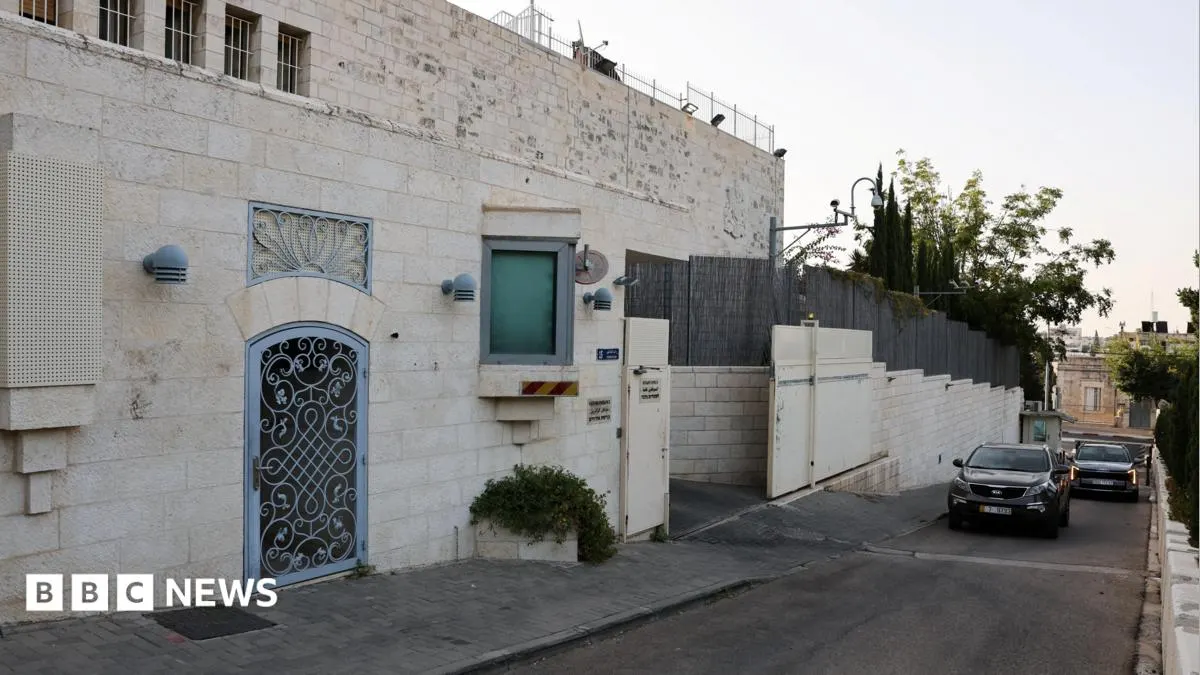
Israel's 30-day deadline for closure of Britain's consulate in East Jerusalem has expired, with signage now physically removed and the facility officially downgraded to a "UK Mission" as part of a negotiated arrangement following UK sanctions on West Bank settlements. The deal allows some British diplomatic presence to continue, though Britain disputes Israel's legal authority to mandate closure and maintains it will rebuild operations over coming months whilst resolving the underlying dispute.
Britain's diplomatic staff at the facility have been cut from 27 to just 7, with the mission no longer providing full consular services or holding formal consulate status. The tension stems from UK sanctions imposed in September targeting Israeli settlements in occupied territory, announced alongside other measures Israel has criticised. Britain states it has temporarily withdrawn additional staff for security reasons and will seek to restore the presence through ongoing discussions whilst not taking retaliatory action during negotiations.
- Deadline expired; consulate downgraded to "UK Mission" with staff cut to 7
- UK disputes Israel's right to close nearly 200-year-old facility
- Dispute centres on UK sanctions targeting West Bank settlements
New here? Start with this
Britain and Israel have significant disagreements over Israeli settlement policy in the West Bank, Palestinian territory that Israel has controlled since the 1967 war. The British government views Israeli settlements there as illegal and recently imposed sanctions to pressure Israel to cease their expansion, which has created tension between London and Jerusalem.
The West Bank is a disputed territory inhabited primarily by Palestinians. Israel has built civilian settlements there since 1967, which most countries and international bodies consider illegal, though Israel disputes this. These settlements are a major obstacle to peace negotiations, as they complicate efforts to establish a viable Palestinian state with contiguous territory.
Diplomatic disputes can significantly affect bilateral relations and broader geopolitical calculations. British diplomatic representation in territories like East Jerusalem is therefore politically sensitive and reflects the state of relations between the countries and their differing views on Israeli-Palestinian issues.
Both sides, in good faith
The strongest fair case each way — we don't pick a winner.
The case for
Israel maintains that the West Bank constitutes disputed territory rather than settled international law, and that the UK's sanctions represent unwarranted interference in sovereign matters affecting its security and national interests. From this viewpoint, targeted pressure on Israel over settlement policies, whilst other nations face less scrutiny for comparable actions, amounts to discriminatory diplomacy that fails to account for Israel's legitimate security concerns and the contested legal status of the territory.
The case against
The UK and the broad international consensus argue that Israeli settlements in occupied Palestinian territory violate international law and represent a material obstacle to peace and Palestinian self-determination. Proponents contend that targeted sanctions constitute a proportionate diplomatic measure to address what they view as systematic violations of international humanitarian law, and that nations have an ethical responsibility to take concrete action rather than passively accepting policies they consider unlawful.
Full account
Israel has moved to enforce its ultimatum against the British consulate in East Jerusalem, following a diplomatic confrontation sparked by UK economic sanctions targeting Israeli settlements in the Palestinian territories. Nevertheless, intensive negotiations have yielded an accord permitting continued British operations at a substantially reduced scale, averting the prospect of deeper bilateral estrangement. The facility, which has maintained a presence since the mid-nineteenth century, formally ceased operations under its traditional designation on Thursday, with its official signage being removed.
The negotiated settlement stipulates that roughly twenty members of Britain's diplomatic staff, including the senior consul, will return to the United Kingdom, whilst seven remaining officials are permitted to maintain the building's operation within severely constrained parameters. The facility has been given a new designation—the 'UK Mission'—in place of its former status. Israeli Foreign Minister Gideon Saar indicated that the arrangement corresponds with Israel's previous announcements, whilst simultaneously confirming that sovereignty over the building remains vested in Britain and that limited diplomatic activity may proceed.
London has positioned this outcome as preserving essential diplomatic continuity regarding Palestinian affairs. British Foreign Secretary Ed Miliband has described the personnel reduction as a security-driven withdrawal of a temporary nature, emphasising that the mission retains operational independence and capability despite its reduced scope. Britain contests Israel's authority to order closure of the facility, maintaining that East Jerusalem falls under occupation according to established international principles. The government has signalled intentions to replenish staff numbers in forthcoming months whilst reaffirming its recent settlement sanctions.
Israel's government has characterised its actions as responses to what it perceives as hostile British conduct, encompassing sanctions policy and diplomatic support for Palestinian independence. However, Israeli officials have advanced a contrasting interpretation of the agreement, asserting that the reconfigured facility will lack consular standing and conventional diplomatic functions. This fundamental disagreement—whether the consulate has undergone 'closure' or 'operational reduction'—underscores persistent tensions between the nations regarding the trajectory of Middle Eastern diplomacy and Palestinian statehood.
Where outlets differ
Source 1 stresses the arrangement's value as de-escalation and references potential UK threats to expel Israeli diplomats, lending significance to the compromise; Source 2 receives less focus on this risk dimension
Source 2 incorporates Israeli government characterisations of broader British policies as fundamentally 'anti-Israel'; Source 1 maintains tighter focus on the consulate closure dispute itself
Source 1 emphasises diplomatic negotiation process; Source 2 provides more extensive direct quotations from government officials and itemises Israel's accumulated policy grievances against Britain
Staffing details: Source 1 identifies twenty departing diplomats; Source 2 explicitly specifies the reduction from 27 to 7 total personnel
Coverage
- BBC World — Most East Jerusalem consulate staff to leave amid UK-Israel dispute
- Daily Mail — Workers remove signage from British consulate in Jerusalem after Israel ordered it to close after Labour announced West Bank sanctions
Cricket Entertainment Geopolitics Middle East Music Politics Sport UK World