‘It was a damn unicorn’: the pioneering, divisive power of Paul Simon’s Graceland at 40
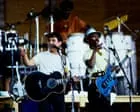
Forty years after its release, Paul Simon's 1986 album Graceland is examined in a new book, Days of Miracle and Wonder by Ashley Kahn, which traces its complex origins and legacy. In the early 1980s Simon was struggling personally and professionally, following an acrimonious Simon and Garfunkel reunion tour, weak album sales and a crumbling marriage to Carrie Fisher, when a bootleg tape of South African mbaqanga music inspired the direction that would become his most celebrated record.
Simon travelled to Johannesburg in February 1985 to record with South African musicians including General MD Shirinda and the Gaza Sisters, Tao Ea Matsekha and the Boyoyo Boys, building songs from their rhythms rather than starting with his usual acoustic guitar approach, a method Kahn likens to hip-hop production. The sessions also drew in Louisiana zydeco players Rockin' Dopsie and the Zydeco Twisters and Los Lobos, but recording took place against the backdrop of apartheid, with Black musicians barred from Johannesburg's streets and public transport after dark, and accusations that Simon had breached the UN's 1980 cultural boycott of South Africa.
- New book explores the making of Paul Simon's 1986 album Graceland.
- Simon built songs around South African musicians' rhythms after hearing a bootleg tape.
- Recording occurred amid apartheid restrictions and UN boycott controversy.