Edinburgh residents urge faster removal of cones from historic statues
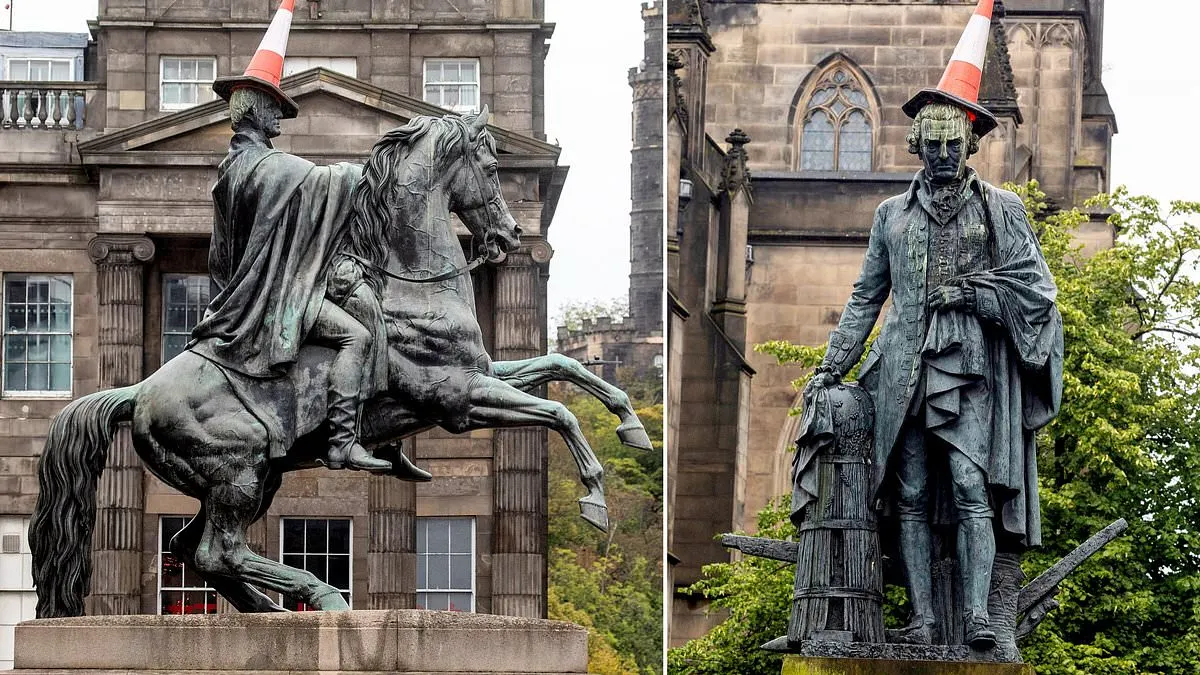
Residents in Edinburgh’s Old Town are calling for traffic cones placed on historic statues to be removed more promptly, saying they detract from the area’s appearance and are not an Edinburgh tradition. The issue matters because the monuments sit within a World Heritage Site and climbing on them could endanger people and damage the structures.
At least five cones were recently seen on the 138-year-old Duke of Buccleuch monument in Parliament Square, while statues of Adam Smith and Sherlock Holmes have also been targeted. The custom began with Glasgow’s Duke of Wellington statue and has spread to places including Shetland, Dundee and the North East, with renewed attention after cones appeared on statues in Boston during Scotland’s brief World Cup campaign. Edinburgh Council says it removes unsecured cones as soon as possible and urges people to stop placing them on monuments.
- Edinburgh residents want cones removed from historic statues.
- At least five were placed on the Duke of Buccleuch monument.
- The council cites safety and potential damage.
New here? Start with this
Traffic cones have been placed on several historic statues in Edinburgh's Old Town, including the 138-year-old Duke of Buccleuch monument in Parliament Square and sculptures of Adam Smith and Sherlock Holmes. These monuments are located within Edinburgh's World Heritage Site, an internationally recognised designation protecting sites of significant cultural and historical importance. The visibility of these cones has prompted discussion within the city.
The practice of placing traffic cones on statues began in Glasgow with the Duke of Wellington statue and has since spread to other Scottish locations including Shetland, Dundee and the North East, as well as Boston in the United States. The trend gained fresh attention recently when cones appeared on statues in Boston during Scotland's World Cup campaign. This custom is not a traditional part of Edinburgh's own culture.
Climbing on historic monuments to place or remove cones carries risks of injury and damage to irreplaceable structures. Edinburgh Council removes unsecured cones as promptly as possible and has asked residents to stop the practice. The council emphasises that preserving these monuments is important to maintaining Edinburgh's status as a World Heritage Site.
Both sides, in good faith
The strongest fair case each way — we don't pick a winner.
The case for
These monuments are precious, irreplaceable cultural assets within a World Heritage Site that merit protection and respect. The climbing required to place cones risks damaging centuries-old structures and endangering people, and Edinburgh residents see the practice as disrespectful to the historical figures commemorated rather than as authentic local tradition.
The case against
The cone tradition is harmless, temporary fun that causes no permanent damage and has become part of modern Scottish culture. Since the cones themselves leave statues completely intact and are easily removed, the urgency of removal demands seems disproportionate, and the practice actually reflects affection and creative civic engagement with these monuments.
Read the full article at the source →
Originally published by Daily Mail as “‘It’s not even our joke!’ Edinburgh residents demand crackdown on traffic cones placed on historic statues”.