Jack Thorne urges fraud laws for writers hiding AI assistance
Developed over time first seen 2 months ago
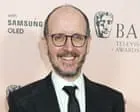
Jack Thorne, co-writer of Netflix's Adolescence and author of Harry Potter and the Cursed Child, warned that some screenwriters are secretly using AI to generate scripts rather than write them, calling this "cheating" that undermines the profession. In a London speech, Thorne, who is president of the Writers' Guild of Great Britain, called for laws making it unlawful to pass off undeclared AI-generated content as one's own work, arguing this should be treated as fraud that employers could prosecute against those responsible. He also criticised the UK government for being "a bit dazzled by tech" and failing to protect writers' copyright from AI companies' mass-scraping of creative material to train their models.
Thorne distinguished between acceptable uses of AI, such as checking spelling or discussing ideas, and using it as "a replacement for writing at all," and urged broadcasters including the BBC and Channel 4 to impose professional sanctions on writers found using AI to generate their work, saying this was essential "to protect the most vulnerable". He also said AI must not be allowed to impersonate actors, directors and writers, and pressed ministers to legislate against copyright infringement, noting that Starmer's government had last year dropped a proposal requiring an opt-out for AI training use after industry backlash, opting instead for a consultation. A government spokesperson responded that copyright laws must protect the UK's creative sector.
- Sources
- 2
- Outlets
- 2
- Left · Centre · Right
- 1 · 0 · 0
In short
- Jack Thorne says some writers secretly use AI instead of writing scripts
- He wants undeclared AI-generated work treated as fraud, prosecutable by employers
- Thorne also criticises government inaction on AI's use of copyrighted material
How this story developed
- 2 months ago Fuller detail emerged of Thorne's remarks, including his comparison of the sanctions broadcasters should impose to the expulsion risk students face for AI-written essays and his framing of AI training as built on "thievery" of copyrighted material, alongside confirmation that ministers dropped the opt-out proposal for AI training data last year in favour of a consultation, with a government spokesperson maintaining that copyright law must protect UK creative industries.
- 2 months ago Jack Thorne, president of the Writers' Guild of Great Britain, used a London speech to accuse some screenwriters of secretly using AI to write scripts and called for laws treating undeclared AI-generated work as fraud, while also accusing the government of being "dazzled by tech" over copyright protections.
Full account
The screenwriter Jack Thorne has called for new legal protections to stop writers secretly relying on artificial intelligence to produce scripts, arguing that undeclared use of AI-generated material should be treated as a form of fraud. Thorne, who co-wrote the acclaimed Netflix series Adolescence and adapted Harry Potter and the Cursed Child for the stage, made the intervention in a speech delivered in his capacity as president of the Writers' Guild of Great Britain (WGGB). One outlet reported the address was titled 'Authorship in the Age of AI'.
Thorne said he had picked up troubling accounts, both from studio executives and from fellow writers, that some in the profession were turning to AI not merely as a supportive tool but as a substitute for the actual work of writing. He drew a sharp distinction between legitimate uses of the technology – such as checking spelling, tidying up formatting, or using it as a sounding board – and using it to generate scripts wholesale from prompts. In his view, the latter amounts to writers failing to do their jobs while still claiming credit and payment, which he said cheats both employers and colleagues in the industry.
To deter this, Thorne argued that passing off AI-written material as one's own should be made unlawful, giving companies the right to pursue legal action, including prosecution, against writers who conceal its use. He used the hypothetical example of pitching a drama to a streaming service and secretly writing the resulting script with AI assistance to illustrate how such deception could constitute fraud against a commissioning broadcaster. He also urged broadcasters such as the BBC and Channel 4 to introduce their own sanctions for writers caught doing this, comparing the potential career consequences to the risk of expulsion faced by students who use AI to cheat on university essays. Protecting less established or more vulnerable writers, he said, made such safeguards essential.
Beyond the conduct of individual writers, Thorne broadened his critique to attack what he sees as government inertia in the face of AI companies harvesting creative work to train their models without consent or payment. According to one account, he accused Sir Keir Starmer's government of being dazzled by the technology sector and failing to defend writers' copyright, warning that decisions taken over the next five years would shape the industry for a century to come; he also said AI should not be permitted to mimic the voices or likenesses of actors, directors and writers. A second report placed more emphasis on Thorne's specific policy demands, including a dedicated regulatory body empowered to intervene in the AI market and a requirement for technology firms to publish audited records of the material used to train their systems, so that what he called unpunished 'stealing' of copyrighted work could be exposed and addressed.
Where outlets differ
From the full account, which is AI-written from the sources:
One source frames the speech primarily around government inaction and copyright, quoting Thorne's direct criticism of Starmer's government as 'dazzled by tech' and his warning about AI impersonating actors, directors and writers; the other foregrounds specific policy proposals, such as a new AI regulatory body and mandatory published training-data audits, and includes the vivid 'eyes wider than Bugs Bunny' quote.
Only one source names the speech's title, 'Authorship in the Age of AI', and includes Thorne's illustrative hypothetical about secretly using AI to write a pitched Mars drama for Netflix.
The two sources attribute slightly different credits to Thorne – one describes him as co-writer of Adolescence, the other additionally credits him with Lord of the Flies – a discrepancy in his writing credits worth noting.
Only one source explicitly locates the speech as taking place in London.
Steelman: both sides, in good faith
The strongest fair case each way — we don't pick a winner.
The case for
Advocates of Thorne's position argue that professional writing rests on a basic contract of honesty between a writer, their collaborators and the audience, and that quietly substituting AI-generated text while claiming sole authorship is a form of deception no different from plagiarism or falsifying credentials. They contend that without legal or contractual consequences, dishonest writers gain an unfair advantage over colleagues who write genuinely, undermining pay rates and trust across the industry. They also see robust copyright protection and opt-out rights as essential to stop AI firms profiting from scraping writers' work without consent or compensation, and view government reluctance to legislate as prioritising tech industry growth over the livelihoods and rights of creative workers.
The case against
Sceptics of new fraud laws in this area argue that criminalising undeclared AI use risks being unworkable and disproportionate, since drawing a clear legal line between acceptable assistance, such as idea generation or editing, and unlawful "replacement" writing is inherently subjective and hard to enforce fairly. They worry that treating this as a matter for criminal or fraud law, rather than industry contracts and guild standards, could chill legitimate experimentation with new tools and expose writers to disproportionate legal jeopardy for a labour-relations issue. On copyright, they may argue that a heavy-handed opt-out mandate could burden AI innovation and that governments must balance protecting creative industries against fostering a competitive technology sector, favouring flexible licensing negotiations over blanket restrictions.
Explained simply
Jack Thorne is a British screenwriter best known for Netflix's Adolescence and the stage play Harry Potter and the Cursed Child. He also serves as president of the Writers' Guild of Great Britain, a trade union representing professional writers across TV, film, theatre and other media. His comments touch on a growing debate within the creative industries about how artificial intelligence tools, which can now generate scripts and other written material, should be used and regulated.
The row centres on two related issues. The first is writers secretly using AI to produce scripts rather than declaring it, which Thorne argues damages trust in the profession and should carry legal consequences. The second is a longer-running dispute between the creative industries and the UK government over copyright, since AI companies have been using published books, scripts and other creative works to train their systems, often without permission or payment to the original authors.
This matters because it touches on how writers are paid and credited, how broadcasters such as the BBC and Channel 4 might police AI use among the writers they commission, and how the government decides to balance support for the tech industry against protections for creative workers. The government has previously consulted on changing copyright rules for AI training but has not yet settled on a final approach.
Coverage · 2 sources
AI Government Politics Technology UK World
Read the full article at the source →
Originally published by The Guardian as “Jack Thorne warns some fellow scriptwriters are using AI ‘to cheat’”.