World news and discussion on TalkFuse.
Japan’s Sanae Takaichi says wants ‘constructive and stable’ China ties
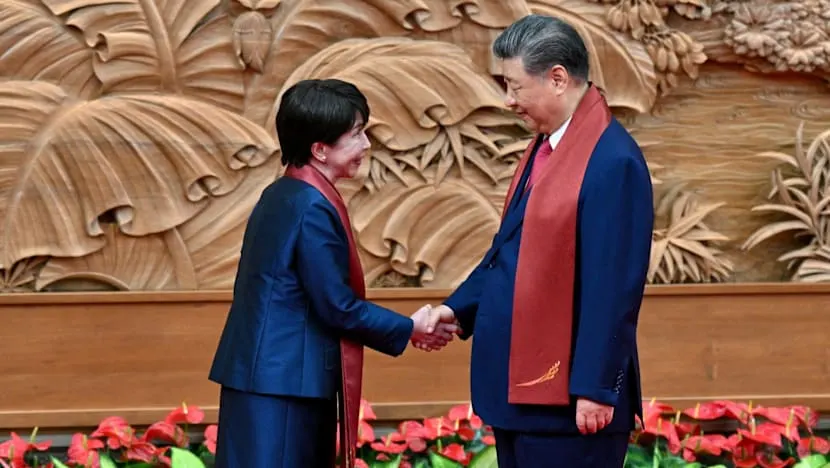
Japanese Prime Minister Sanae Takaichi said she wants a “constructive and stable relationship” with China, during her first visit there since taking office. Her comments come after remarks last year suggesting Japan could intervene militarily if China used force against Taiwan, which sharply worsened relations.
Takaichi said Japan’s position on Taiwan remains unchanged under the 1972 joint communique, in which Japan said it understood and respected Beijing’s position that Taiwan is part of China. She called China an important neighbour and said dialogue was needed to address outstanding issues. Takaichi had not held formal talks with President Xi Jinping by Thursday afternoon, though they had shaken hands twice; she also met Russia’s Vladimir Putin for more than 30 minutes amid disputes over a detained Japanese national and the seizure of a Japanese tobacco company’s Russian assets.
In short
- Takaichi called for stable ties with China.
- She said Japan’s 1972 Taiwan position is unchanged.
- She also held her first face-to-face talks with Putin as prime minister.
Steelman: both sides, in good faith
The strongest fair case each way — we don't pick a winner.
The case for
A constructive, stable relationship with China serves Japan’s interests by reducing the risk of conflict, supporting trade and giving both governments a channel to address disputes. Takaichi’s reaffirmation of Japan’s longstanding position on Taiwan and her emphasis on dialogue can be seen as reassurance that Japan seeks to manage tensions while maintaining room for discussion.
The case against
A conciliatory tone and reliance on dialogue may not ease tensions if Beijing sees them as insufficient or if disputes over Taiwan and other issues remain unresolved. Critics could argue that Japan should pair diplomatic engagement with clear deterrence and firm support for regional security, lest calls for stability weaken its ability to respond to coercion.
Explained simply
Japan and China are major neighbours with close economic ties, but their relationship is shaped by disagreements over security and history. Taiwan is self-governing, while Beijing claims it as part of China and opposes other countries supporting its independence.
Japan’s approach to Taiwan is set out in a 1972 agreement with China. Japan said it understood and respected Beijing’s position on Taiwan, while maintaining its own relations with the island; how to balance that position with regional security remains sensitive.
Sanae Takaichi is Japan’s prime minister, and Xi Jinping is China’s president. Their governments must manage tensions over Taiwan and other disputes while maintaining dialogue and trade between the two countries.
Asia Government Politics World