Judge slaps down Ghislaine Maxwell’s bid for release as he trashes ‘new evidence’ claims in Epstein case
Developed over time first seen 2 months ago
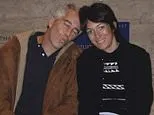
US District Judge Paul Engelmayer has rejected a self-filed petition from Ghislaine Maxwell seeking to overturn her sex trafficking conviction and 20-year sentence, ruling that her "new evidence" claims were meritless and, where relevant, actually reinforced the case against her rather than undermining it. The decision closes off another legal avenue for Maxwell, who remains the only person imprisoned over Jeffrey Epstein's abuse network, and lands amid sustained public scrutiny of the Epstein case following pressure on the Trump administration to release related files.
Maxwell, 64, had drawn on recently released Justice Department files to argue that a juror concealed a history of sexual abuse and was biased against her, that Epstein's 2007 Florida plea deal should have shielded her from prosecution, that victims' lawyers acted improperly as "de facto prosecutors", and that her sentencing judge wrongly weighed dismissed perjury allegations. Engelmayer, sitting in the Southern District of New York, dismissed the filing as "lengthy and rambling" and its arguments as "all meritless and all or almost all frivolous", noting the juror claim had already been rejected on appeal and that Maxwell had "distorted" other material. Her conviction and sentence have already been upheld by the Second Circuit, and the Supreme Court declined last October to hear her challenge to the 2007 non-prosecution agreement; she is currently held at the minimum-security Federal Prison Camp Bryan in Texas.
- Judge Engelmayer rejects Maxwell's bid to overturn conviction, calling claims frivolous
- New DOJ file evidence deemed irrelevant or actually incriminating
- Maxwell, 64, remains jailed in Texas; appeals already exhausted
New here? Start with this
Maxwell, 64, was convicted in 2021 of sex trafficking for recruiting and grooming teenage girls for the late financier Jeffrey Epstein to abuse, and is serving a 20-year sentence. She is the only person to have been jailed over Epstein's abuse network, since Epstein himself died in prison in 2019 before facing trial. She has since tried various legal routes to overturn her conviction, including appeals and a bid to use Epstein's 2007 plea deal in Florida as protection from prosecution elsewhere.
The case sits within the much wider and highly charged controversy over the so-called Epstein files, the collection of investigative records connected to Epstein that many believe could reveal further details about his network and associates. There has been sustained public and political pressure, including on the Trump administration, to release these files in full, which has kept scrutiny on Maxwell's case and any developments in it.
Judge Paul Engelmayer is the US District Judge overseeing this latest challenge, a petition Maxwell filed herself, without a lawyer, arguing that new evidence and various legal errors meant her case should be reopened. Understanding his ruling requires knowing that Maxwell's original conviction has already been through the appeals process and been upheld, including a rejection by the Supreme Court, so this petition represented one of her remaining avenues to challenge it.
Both sides, in good faith
The strongest fair case each way — we don't pick a winner.
The case for
Those who see the ruling as correct would argue that Maxwell has already had extensive due process: a jury trial, an unsuccessful appeal to the Second Circuit, and a Supreme Court that declined to hear her challenge to the Florida plea deal. They would say courts have repeatedly and carefully examined her claims, including the juror issue, and found them wanting, so a judge dismissing a further self-filed petition as frivolous is simply applying settled law rather than denying her a fair hearing. Given the seriousness of the trafficking of minors for abuse, they would argue finality matters, and that repeated relitigating of the same rejected arguments risks trivialising the harm done to victims who have already testified once.
The case against
Those sympathetic to Maxwell's broader grievance would argue that she remains the only person imprisoned over Epstein's abuse network, and that this fact alone should invite scrutiny of whether prosecutors pursued all culpable parties or made her a convenient sole target. They would say concerns about juror impartiality, the role of victims' lawyers in shaping the prosecution, and the scope of the 2007 Florida non-prosecution agreement raise genuinely difficult legal questions that deserve serious engagement even if a judge ultimately rejects them, rather than being dismissed in dismissive terms such as "rambling" or "frivolous". For advocates of robust appellate rights, even a defendant whose crimes are widely condemned is entitled to have novel arguments addressed on their substance rather than have the characterisation of the filing itself become part of the story.
Full account
A US federal judge has thrown out Ghislaine Maxwell's bid to have her conviction and 20-year prison sentence quashed, dismissing the fresh evidence she cited as largely irrelevant and, where relevant, damaging rather than helpful to her case. In a ruling issued in the Southern District of New York, Judge Paul Engelmayer described Maxwell's self-drafted petition as lengthy and rambling, concluding that her arguments were all meritless and almost entirely frivolous. Maxwell, 64, was convicted in December 2021 of five felony counts over her role assisting Jeffrey Epstein in the sexual abuse of young girls, and was sentenced the following June. She remains the only person convicted in connection with Epstein's abuse, and is currently held at a minimum-security facility, Federal Prison Camp Bryan, in Texas.
Maxwell, representing herself in the filing, had pointed to material recently released by the Justice Department, including documents disclosed under the Epstein Files Transparency Act, arguing that it exposed juror misconduct, cast doubt on a 2007 non-prosecution agreement covering Epstein in Florida, and revealed improper influence over prosecutors by lawyers acting for Epstein's victims. She also claimed she had been unfairly singled out for prosecution while other associates of Epstein escaped charges. Engelmayer rejected each strand in turn, finding that most of her claims had already been raised and dismissed on appeal or could have been raised earlier, and were therefore barred procedurally in any case.
On the substance, the judge found no basis for Maxwell's assertions. He noted that the Second Circuit Court of Appeals had already examined and rejected her claim that a juror who had experienced sexual abuse concealed this during jury selection, concluding the juror had acted fairly and impartially. He said Maxwell had failed to identify anyone else who had participated in Epstein's abuse to a comparable degree, undermining her selective-prosecution argument, and that she had misrepresented the scope of Epstein's 2007 Florida plea deal, which was explicitly confined to that district and did not extend to New York. Engelmayer also found no evidence that victims' lawyers had usurped the role of prosecutors, concluding the government alone had decided to pursue the investigation into Maxwell. Overall, he described the evidence presented against her at trial as overwhelming.
Epstein, the financier at the centre of the case, was found dead in a Manhattan jail cell in August 2019 while awaiting trial on sex-trafficking charges; his death was ruled a suicide by the city's medical examiner, and the FBI said it found no evidence of criminal wrongdoing in connection with it. The two accounts of the ruling largely align on the substance of Engelmayer's findings and his blunt characterisation of Maxwell's petition, though they differ in emphasis: one report gives more attention to the detail of Maxwell's individual arguments, including the selective-prosecution and Florida plea deal claims, while the other places greater weight on the judge's broader procedural reasoning and his description of the trial evidence as overwhelming, and notes related comments from Justice Department figures about the wider Epstein investigation continuing.
Where outlets differ
One account focuses in more depth on the specifics of Maxwell's individual legal arguments (the juror bias claim, the Florida plea deal, selective prosecution, and the role of victims' lawyers), while the other gives a more condensed summary and instead emphasises the judge's finding that trial evidence was 'overwhelming' and that most claims were procedurally barred.
One report notes contextual detail about Epstein's death (ruled suicide, no evidence of foul play found by the FBI) and Maxwell's current custodial situation, which the other omits.
One source references related remarks from a former attorney general and a DOJ official about transparency and pursuing new suspects in the Epstein case, reflecting a US political angle not present in the other account.
There is a minor discrepancy in exact timing: one account states the opinion was issued and reported the same day, while the other specifies it was filed on a Monday and made public the following day.