Judge considers Trump’s $100,000 monthly fee for early post access
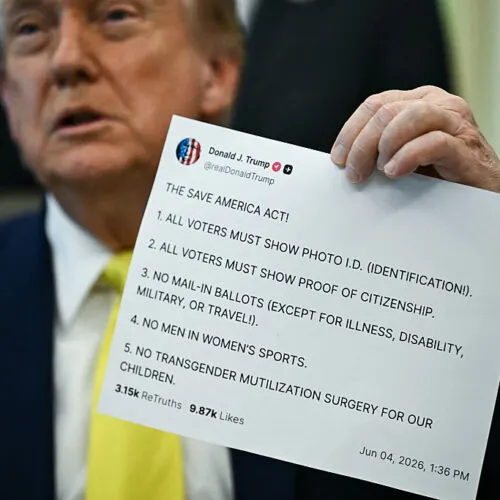
A federal judge is weighing whether Donald Trump can charge news organisations up to $100,000 a month for instant access to Truth Social posts, some of which announce major government decisions. The case raises questions about whether a sitting president can personally profit from selling early access to information about his administration.
The news groups suing argue the fees create unequal access and breach constitutional protections and the Presidential Records Act. The Justice Department says Trump’s posts are a public service and compared them with Franklin D. Roosevelt’s radio addresses, but Judge Paul Oetken questioned that comparison and asked whether even a brief delay for the public would harm the press. A decision is expected in the coming weeks.
- Trump may charge up to $100,000 monthly for instant post access.
- News groups say the fees create unequal access to government information.
- A federal judge is expected to decide the case in the coming weeks.
New here? Start with this
Donald Trump uses Truth Social, a social media platform he founded, to communicate directly with the public and announce government decisions. Since journalists and the public rely on these posts for information about his administration, Truth Social has become an important news source.
Trump has proposed charging news organisations up to $100,000 monthly for early access to these posts before the general public sees them. News groups have sued to block the fee, arguing it creates unequal access to government information and violates constitutional principles about the public's right to know about their government.
The case centres on a novel question: whether a sitting president can profit from selling advance access to announcements about their administration. Presidents have always communicated directly with the public, but charging fees for this access is unprecedented.
Both sides, in good faith
The strongest fair case each way — we don't pick a winner.
The case for
Truth Social is fundamentally a private platform that Trump owns, and news organisations monetise their access to any privileged information they obtain. The posts eventually become public, so the public is not permanently denied information about government decisions—there is merely a brief delay. Presidents have historically communicated directly with citizens through private channels, and this represents a modern equivalent. If posts that will eventually be widely distributed face only a slight delay before public access, this may not constitute the constitutional harm critics claim.
The case against
Constitutional protections governing press access and presidential records exist precisely because information about government decisions should not be subject to financial barriers that create unequal access. When a sitting president personally profits from delaying public access to announcements about his administration's actions, it creates a conflict of interest and weaponises information asymmetry. News organisations covering government should not be required to pay substantial sums to perform their democratic function of informing the public. The Presidential Records Act and freedom of the press protections are designed to prevent exactly this scenario, where a president's private profit motive affects the timing and access of government information.
Read the full article at the source →
Originally published by Ars Technica as “Judge weighs if Trump can charge $100K for early access to Truth Social posts”.