Fruit fly inspired algorithm solves electronic nose learning and memory challenges
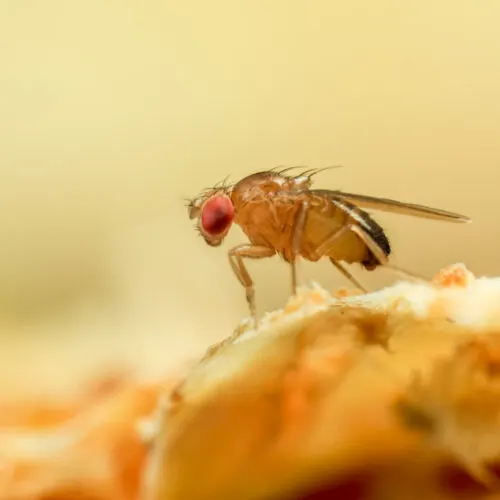
Researchers at the Okinawa Institute of Science and Technology have developed an algorithm called Spi-Fly that mimics how fruit flies process and remember smells, aiming to overcome two persistent weaknesses in existing "electronic nose" technology: the need for huge amounts of labelled training data and "catastrophic forgetting," where learning a new odour erases memory of previously learned ones. The work matters because commercial odour-sensing devices, used in food safety, environmental monitoring and security screening, remain expensive, narrow in scope and difficult to retrain for new tasks, whereas fruit flies achieve rapid, durable smell recognition with a brain smaller than a poppy seed.
The approach draws on "sparse coding," the technique flies use to assign each odour a unique neural "barcode": signals from odour receptors are randomly and sparsely relayed to around 2,000 Kenyon cells, which are then sharply suppressed by inhibitory neurons so that only a small, distinctive subset stays active. Spi-Fly, developed by Kevin Max and Yang Shen and detailed in a paper in Neuromorphic Computing and Engineering, replicates this in simulation using pre-recorded sensor data, converting readings into spikes projected onto a sparse hidden layer with mutual neuron inhibition, before passing signals to an output layer for classification.
In short
- New algorithm Spi-Fly mimics fruit fly smell-processing to fix electronic noses
- Uses "sparse coding" barcodes instead of dense, forgetting-prone neural networks
- Could enable cheaper, more adaptable odour sensors without retraining from scratch
Explained simply
Electronic noses use sensors to detect and distinguish smells. They can be used to check food for spoilage, monitor pollution and screen for hazardous substances, but many systems are costly, handle only a limited range of odours and need substantial labelled examples before they can learn to recognise new ones.
Researchers at the Okinawa Institute of Science and Technology developed Spi-Fly, an algorithm based on how fruit flies process smells. In a fly’s brain, odour signals activate a small, distinctive group of nerve cells, creating a pattern the fly can recognise later.
Spi-Fly imitates this process in computer simulations, turning sensor readings into patterns that can be used to classify odours. The work addresses two challenges in electronic noses: needing lots of labelled training data and losing earlier capabilities when taught new odours.
Read the full article at the source →
Originally published by Ars Technica as “Just like a fruit fly, a new algorithm never forgets old scents”.