King’s Tardis entrance as Commonwealth Games begin
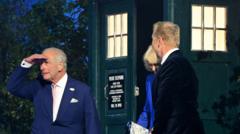
King Charles III officially opened the Glasgow 2026 Commonwealth Games after arriving at the Hydro Arena in a Doctor Who Tardis with Queen Camilla. The ceremony celebrated Scottish and Glaswegian culture while welcoming athletes and Para-athletes from 74 nations and territories, marking Glasgow’s rescue of an event whose future had appeared uncertain after Victoria withdrew as host in 2023.
The indoor event drew about 10,000 people, smaller than the 40,000 audience at Glasgow’s 2014 opening ceremony, and featured a Loch Ness Monster display, bagpipes, drummers and performances by Scottish musicians. Scotland’s team received the loudest reception, while organisers said the city had prepared the Games in around 18 months by reusing venues and staging eight fewer sports than in 2014.
- Glasgow 2026 Commonwealth Games opened with a Tardis entrance by King Charles.
- Athletes from 74 nations and territories joined the ceremony.
- Glasgow revived the event after Victoria withdrew as host.
New here? Start with this
The Commonwealth Games is a global sporting event bringing together athletes from nations and territories across the Commonwealth, held every four years. The Games feature both able-bodied and Para-athletes competing across various sports, and represents one of the world's largest multi-sport gatherings.
Glasgow's hosting of the 2026 Games was far from certain. Victoria, Australia had originally been chosen to host the event but withdrew in 2023, leaving the Games without a home and raising questions about its future. Glasgow stepped in to stage the event in approximately 18 months by reusing existing venues and reducing the number of sports compared to previous Games.
This year's event brings together athletes from 74 nations and territories. The opening ceremony celebrated Scottish culture through traditional music and performances, whilst the Games itself is smaller in scale than Glasgow's previous hosting in 2014, with fewer sports and a more compact format suited to the compressed preparation timeline.
Both sides, in good faith
The strongest fair case each way — we don't pick a winner.
The case for
Supporters of Glasgow's approach argue that the creative Tardis entrance and streamlined format represent intelligent, modern event hosting. Rather than expensive sprawl, reusing venues and staging the Games in 18 months demonstrates that major international competitions need not impose ruinous costs on host cities. The scaled event still celebrated Scottish culture brilliantly and welcomed athletes from 74 nations—proving that Commonwealth solidarity can thrive without pageantry inflation. This is sustainable, inclusive hosting that prioritises community benefit over prestige spectacle.
The case against
Critics contend that the whimsical Tardis entrance, however entertaining, undermines the ceremonial gravity befitting a royal opening of an international Games. The attendance collapse—from 40,000 in 2014 to 10,000—combined with fewer sports and reused venues, suggests the Commonwealth Games have lost public appeal and international standing. Rather than smart adaptation, this represents a diminished event that raises fundamental questions about whether the Games format, as currently constituted, justifies the investment or remains culturally resonant.