Labour MPs warn on Burnham’s EU push – as Europhile politicians rush to defend free movement and paying into Brussels coffers
Developed over time first seen 1 day ago
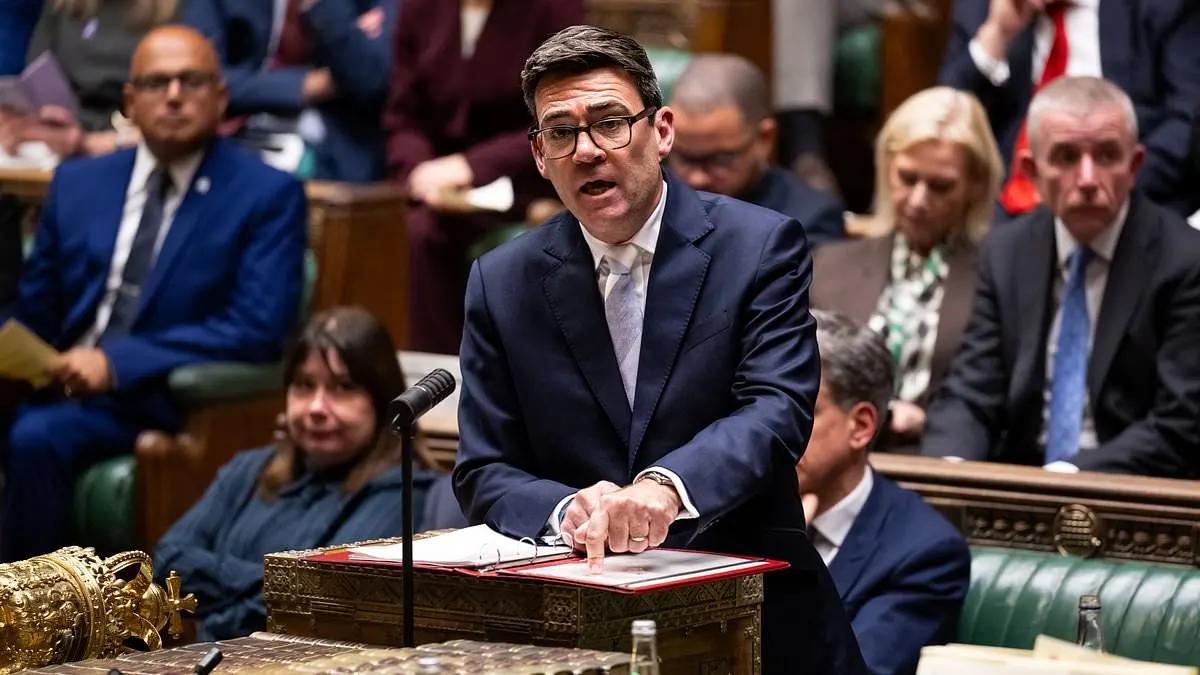
Prime Minister Andy Burnham has signalled his intention to pursue closer ties with the European Union, stating that current relations are "not good enough" and that talks will take place at an EU summit next month. He has indicated openness to exploring all options for the UK's future relationship with the EU, and has declined to rule out a manifesto commitment to rejoin. However, several Labour backbenchers have expressed serious concerns about reopening Brexit debates, warning that revisiting the question would be damaging to British politics.
During a Parliamentary debate, some pro-EU MPs voiced enthusiasm for free movement and contributions to Brussels budgets as part of closer engagement. However, Labour backbenchers Jonathan Hinder (Pendle and Clitheroe) and Jonathan Brash (Hartlepool) have cautioned against the prospect. Hinder warned that reigniting a "full-blown debate" similar to the 2016 referendum would be "not good at all" and argued that many voters felt Westminster had ignored their concerns. Both MPs emphasised that the manifesto red lines against rejoining the customs union and single market should be maintained, and that any return to the EU would require a referendum.
- PM Burnham signals desire for closer EU ties; Labour MPs warn against reopening divisive debates.
- Backbenchers cite constituency concerns and warn referendum would likely fail.
- Manifesto red lines on customs union and single market should stay in place.
New here? Start with this
The United Kingdom left the European Union through a referendum in 2016 and has since operated independently of the bloc. Since then, the question of how closely Britain should relate to Europe has remained divisive in British politics, with different groups holding distinct views. This tension has become an issue within the Labour government under Prime Minister Andy Burnham.
Some Labour politicians favour pursuing closer ties with the European Union, including measures such as free movement of people and UK contributions to EU budgets. Other Labour MPs have raised concerns about reopening this debate, warning that it could damage the country by reigniting divisions from the 2016 referendum.
The disagreement reveals that Britain's relationship with Europe remains contested territory in politics. Any move towards significant closer integration would require approval from voters through a referendum, making this a question with substantial political weight.
Both sides, in good faith
The strongest fair case each way — we don't pick a winner.
The case for
Advocates of closer EU ties contend that Britain's economic interests are best served by deeper integration with Europe, highlighting tangible benefits of free movement for business, research, and cultural exchange alongside the trade advantages of EU membership. They argue that democratic principle requires the ability to reconsider major strategic decisions when public opinion or circumstances shift, rather than remaining permanently bound by past referendum results; they maintain that freezing one question indefinitely betrays genuine democratic flexibility.
The case against
Cautious backbenchers argue that repeatedly reopening settled questions—particularly one as divisive as Brexit—corrodes political stability and social cohesion when many voters believe their concerns were already dismissed. They contend that constant revisiting of major decisions exhausts political capital needed for other priorities, signals that democratic verdicts are impermanent and can be overturned, and risks fracturing party unity when the manifesto explicitly committed to maintaining distance from the customs union and single market; they hold that respecting previous decisions and moving forward is itself an economic and democratic value essential to functioning governance.
Full account
Prime Minister Andy Burnham has set out plans for closer ties with the European Union, telling MPs that the current terms of the UK’s relationship with the bloc are “not good enough”. He said a summit with EU leaders in Brussels on 20 November would provide an opportunity to pursue practical agreements, while calling for a wider discussion about the relationship over the longer term. His remarks have renewed a debate within Labour about how far the government should go and whether revisiting questions raised by the 2016 referendum would deepen political divisions.
The government is seeking an agreement on food and drink standards intended to reduce barriers for businesses, alongside arrangements on emissions trading and closer co-operation on energy and immigration. It also wants a reciprocal scheme under which younger people from the UK and EU could live, work or study abroad. Burnham has said the proposed agreements could add the equivalent of more than £10 billion a year to the UK economy by 2040. He has also said he will raise concerns about the potential effect on British firms of EU measures favouring manufacturers within the bloc. The scope and terms of any agreements remain subject to negotiation.
Those talks have prompted questions about what the EU might seek in return. The reports describe possible demands concerning mobility for under-30s, tuition fees for EU students, a UK financial contribution and alignment with EU rules. During a parliamentary debate, politicians favouring closer European ties argued that free movement and contributions to EU budgets could be worthwhile. Conservative leader Kemi Badenoch accused Burnham of unpicking the post-Brexit settlement. Within Labour, Pendle and Clitheroe MP Jonathan Hinder warned that a full-scale return to the arguments of the referendum would be damaging. He said some constituents already felt that Westminster held their views in contempt.
The disagreement extends beyond the proposed summit. Burnham has declined to rule out a future Labour manifesto pledge to rejoin the EU, although he has framed his immediate position as a discussion of the available long-term options. Former Labour leader Lord Kinnock told la Repubblica that he believed rejoining was Burnham’s eventual aim, describing his European commitment as longstanding. That is Kinnock’s assessment, rather than an announced government policy. For now, the central questions are whether the government can secure the economic benefits it forecasts, what commitments a deal would require, and how Labour will manage differing views about the UK’s future relationship with the EU.
Where outlets differ
Source 1 concentrates on Labour’s internal debate, Hinder’s warning and Kinnock’s interpretation of Burnham’s long-term aims. Source 2 gives more detail about the proposed summit agreements, the government’s economic forecast, Conservative criticism and possible EU demands. Both describe closer UK-EU ties, but neither establishes that the reported EU demands have been accepted or that rejoining is government policy.