Entertainment news and discussion on TalkFuse.
Levelling Up with LG: How 5K is Changing the Gaming Monitor in 2026
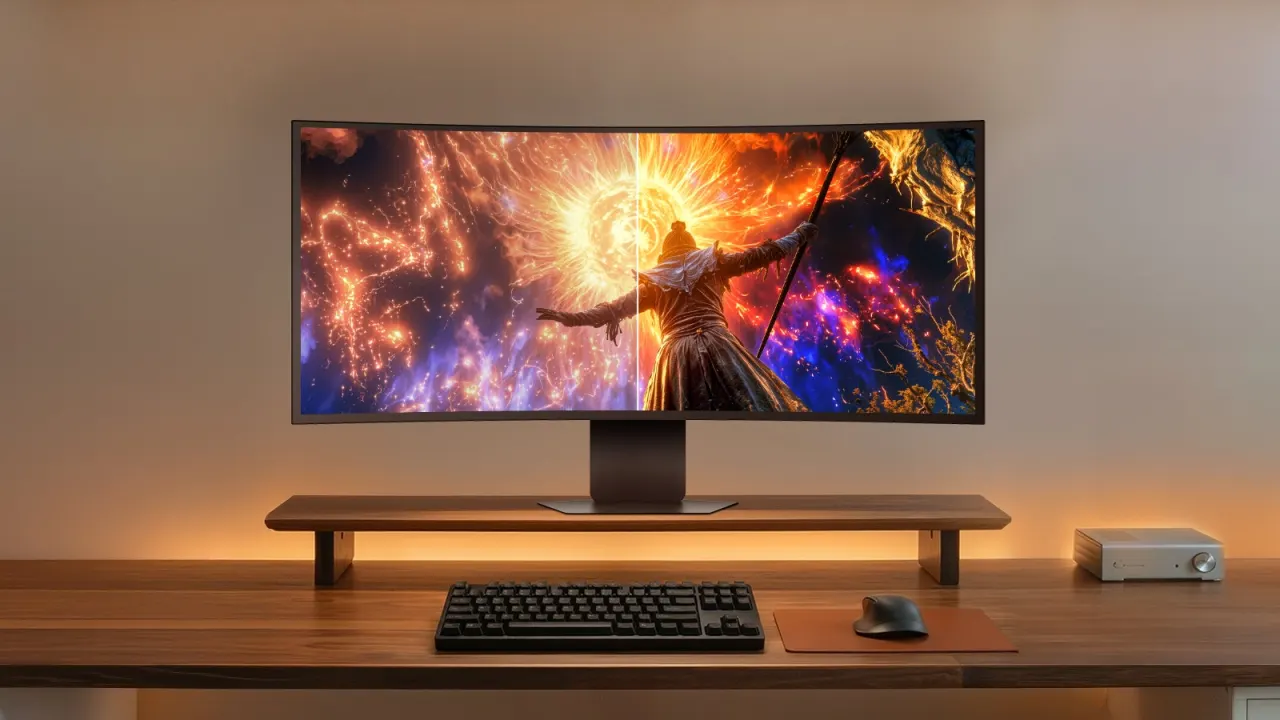
LG has launched two new gaming monitors, the 27-inch UltraGear evo GM9 and the 39-inch ultrawide UltraGear evo GX9, both offering 5K resolution and an industry-first feature that upscales lower-resolution game footage to 5K directly on the monitor. Because the upscaling is handled by the display rather than the PC, gamers can benefit from sharper visuals without needing to upgrade their existing hardware, addressing a common bottleneck for high-resolution gaming setups.
The GM9 uses a Hyper Mini LED panel with a 5120×2880 resolution (218PPI), 1250 nits peak brightness and HDR 1000, alongside a "Dual Mode" that can switch from 165Hz at full 5K to 330fps at 1440p via DisplayPort 2.1's UHBR20 bandwidth. The GX9 is an OLED ultrawide with a curved 5120×2160 (5K2K) screen, 1500 nits peak brightness, HDR True Black 500, a 1.85M:1 contrast ratio and a 0.03ms response time, aimed at gamers wanting greater immersion and productivity space.
In short
- LG unveils GM9 and GX9 gaming monitors with 5K resolution.
- On-device AI upscaling boosts visuals without needing a PC upgrade.
- GM9 offers Dual Mode; GX9 is a 39-inch curved OLED ultrawide.
Explained simply
A gaming monitor is the screen that displays a computer game, and its resolution describes how much visual detail it can show. Higher resolutions can make images sharper, but they also demand more from a computer’s graphics hardware, which can limit performance or mean an upgrade is needed.
LG makes monitors as well as other electronics, and UltraGear is its gaming monitor range. Its new models include a standard-shaped screen and a wider, curved screen; features such as high refresh rates, which allow motion to appear smoother, are aimed at different gaming preferences.
The monitor-based upscaling described here processes lower-resolution game images on the screen itself to make them fit a 5K display. This could make higher-resolution screens usable with existing computers, though the result depends on the source image and the display’s processing.