Meta Launches Muse Charm: Portable Wearable Device for AI Assistant
Developing story first seen 22 minutes ago
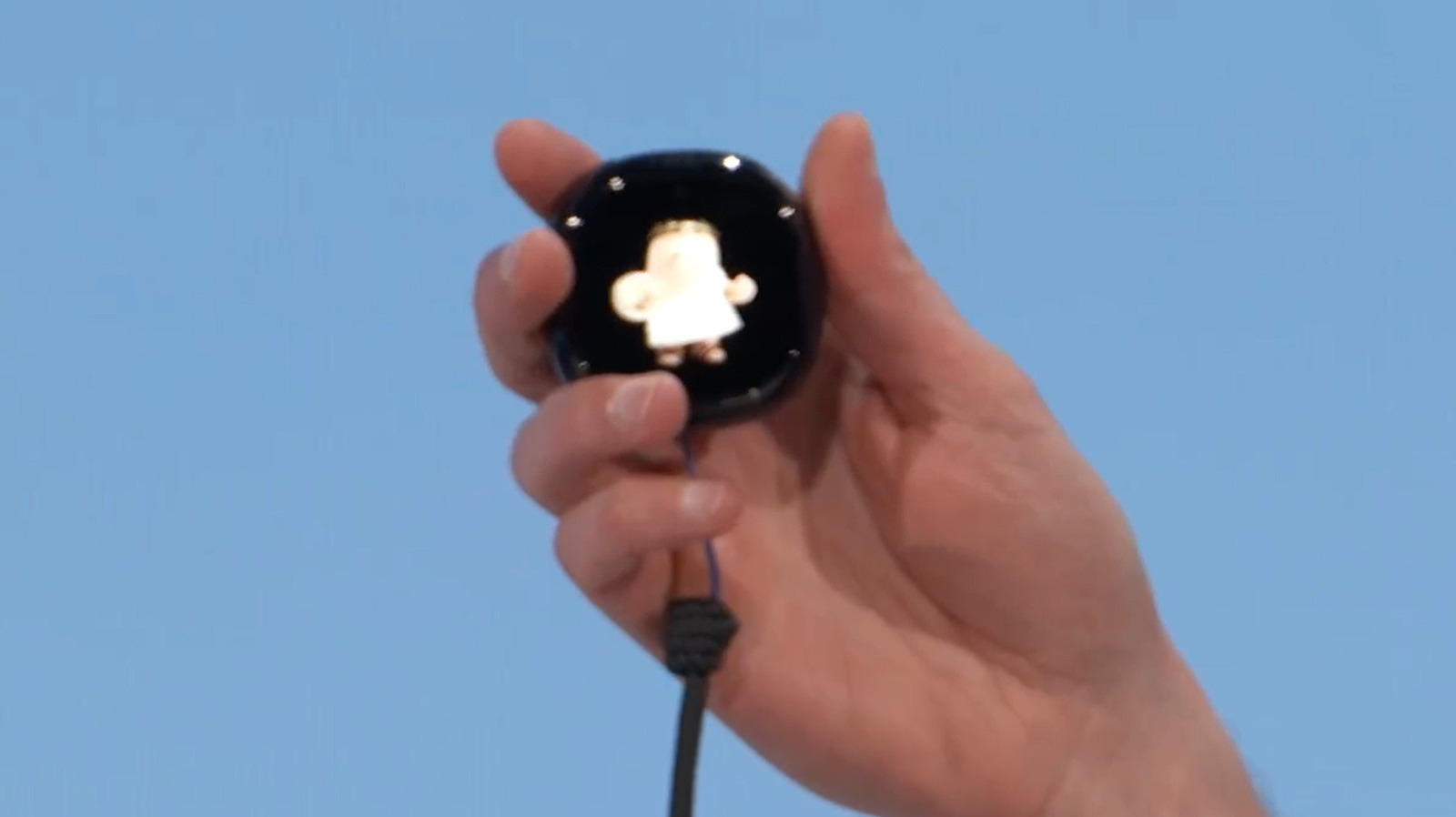
Meta has introduced the Muse Charm, a compact wearable device designed to bring its Muse AI assistant directly to users. Unveiled by CEO Mark Zuckerberg at the company's Connect event, the device represents Meta's ambition to make artificial intelligence more integrated into daily portable use rather than confined to smartphones.
The Muse Charm functions as a keychain-sized gadget featuring a display screen, multiple input methods including a fingerprint sensor and microphone array, plus an integrated camera. The design enables users to interact with an animated AI avatar on the device, positioning it as a constantly accessible alternative for engaging with Meta's AI capabilities and establishing the company's vision of ubiquitous, wearable artificial intelligence.
- Meta unveiled the 'Muse Charm,' a portable keychain device housing the Muse AI assistant, demonstrated by CEO Mark Zuckerberg at Connect
- The compact gadget features a screen, fingerprint sensor, multiple microphones, and camera for multimodal AI interaction
- The device prioritises making AI assistance constantly available and wearable rather than dependent on traditional smartphone interfaces
Full account
Meta has unveiled its first dedicated hardware designed to house Muse, the company's newly developed artificial intelligence assistant. Chief executive Mark Zuckerberg presented the device, known as the Muse Charm, during Meta's Connect developer conference, marking the technology firm's entry into the emerging and largely experimental sector of specialised AI hardware. The announcement reflects Meta's ambitions to establish an early foothold in what many perceive as a defining battleground for the technology industry.
The Muse Charm resembles a bulky wristwatch from which the band has been removed, dominated by a prominent display screen and equipped with a lanyard for carrying. Users initiate interaction with Muse by pressing a biometric fingerprint sensor positioned on the device's top right edge, triggering voice communication with the assistant. The screen presents an animated avatar—customisable in appearance—that serves as Muse's visual embodiment. According to Zuckerberg, the device eliminates the need to unlock a mobile telephone or access an application, positioning Muse as an always-accessible conversational companion scaled to fit on a keychain.
The Muse Charm incorporates a forward-facing camera, an array of microphones, and fingerprint identification technology to enable full interaction with Meta's AI platform. The device compresses Meta's complete Muse experience, encompassing real-time voice processing and animated avatar rendering, into a portable form factor. Beyond conversational capabilities, Muse can perform actions on a user's behalf—a functionality Meta is expanding to encompass computer control on Apple's macOS operating system and electronic mail account management. The mechanism by which the device maintains connection to Meta's infrastructure has not been disclosed.
Meta targets a December holiday-season retail launch, though the company has constructed only a limited number of prototype units to date. The device's final design and materials remain subject to refinement, with Zuckerberg indicating an intention to employ translucent casing that reveals the internal architecture, which he characterised as embodying an 'elevated hacker aesthetic.' Additional technical details are anticipated in coming weeks. The Charm's debut underscores Meta's determination to succeed in the highly competitive arena for next-generation computing hardware, though whether this particular offering will establish a sustainable market category remains uncertain.
Where outlets differ
Source 1 provides detailed technical specifications (camera, multiple microphones, fingerprint sensor) and hardware design philosophy (translucent casing, 'hacker aesthetic'); Source 2 omits these particulars
Source 1 compares the device unfavourably to the Rabbit R1 and emphasises Meta's competitive urgency; Source 2 employs a Tamagotchi metaphor and maintains neutral framing
Source 1 explicitly notes Muse's recent creation (under one month old) and details new capability expansions (Mac control, email management); Source 2 does not reference these elements
Source 1 specifically states the device's connectivity method to Meta's servers was not explained; Source 2 does not address this gap
Source 1 emphasises design aesthetics and material finalisation as ongoing work; Source 2 focuses on the overall form factor metaphor and keychain portability concept
Coverage
- The Verge — Meta is making a standalone Muse AI gadget
- Engadget — Meta unveils prototype keychain bringing Muse AI assistant to life
AI Americas Art Business Companies Culture Gadgets Technology World