Meta will now alert parents if teens ‘repeatedly’ search for self-harm content on Facebook
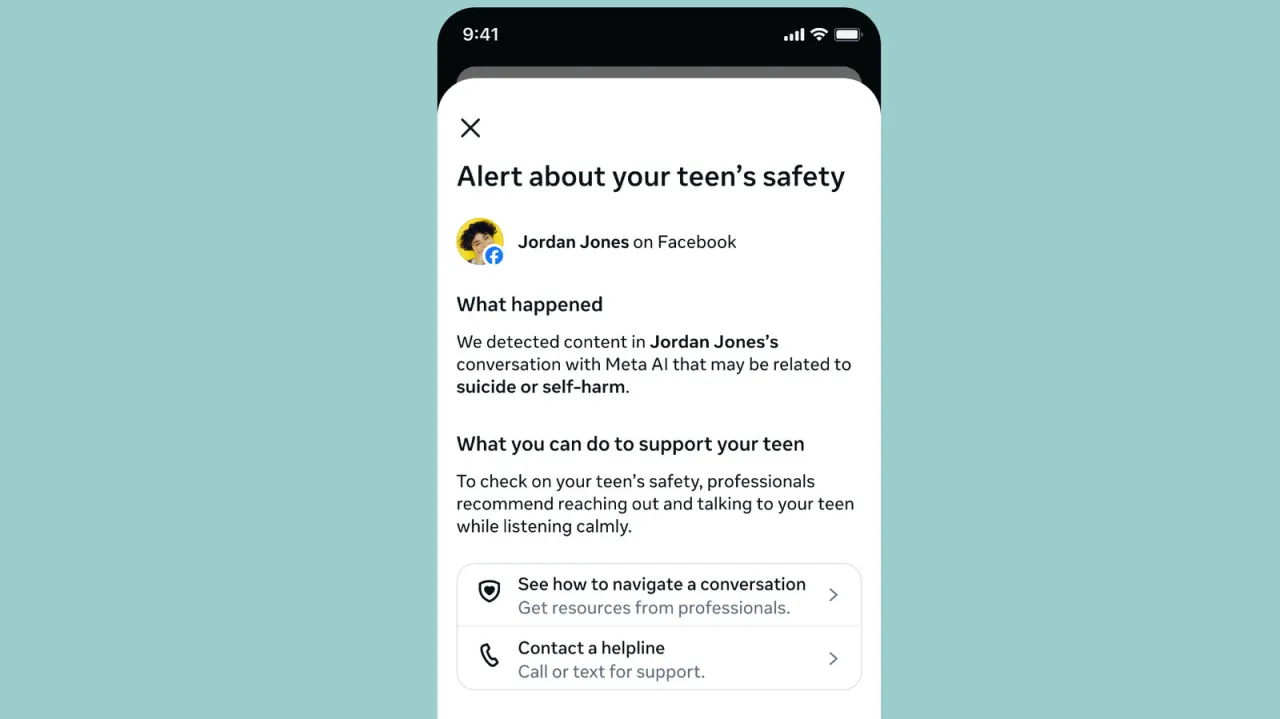
Meta is expanding parental alerts to Facebook teen accounts when it detects repeated searches for suicide or self-harm content over a short period. It will also notify parents if a teen’s conversation with Meta AI suggests they may be at risk, extending a feature already introduced on Instagram.
Meta has not disclosed the precise alert thresholds, saying they involve a few searches in a short period and are designed to avoid unnecessary notifications. Alerts can arrive by text, email, WhatsApp or app notification; they do not reveal search terms or chat contents, but encourage parents to talk with their teen and provide helpline resources. The feature is part of Meta’s supervised teen accounts, which also aim to limit exposure to sensitive content and interactions with adults.
In short
- Meta is extending self-harm risk alerts to supervised Facebook teen accounts.
- Parents may also be notified about concerning chats with Meta AI.
- Alerts omit specific searches and chat contents, and include support resources.
Steelman: both sides, in good faith
The strongest fair case each way — we don't pick a winner.
The case for
The alerts could help parents notice signs of serious distress that might otherwise go unseen, giving them a chance to check in and connect their teen with support. Because the notices omit search terms and chat contents and include guidance, they may offer a way to prompt care while respecting some of the teen’s privacy.
The case against
Even carefully limited alerts may make teens feel monitored and less willing to seek information or speak candidly online, potentially reducing trust between them and their parents. Since Meta has not disclosed the precise thresholds, families cannot judge when an alert will be sent, and false alarms or missed warning signs could undermine confidence in the system.
Explained simply
Meta is the company that owns Facebook and Instagram. Its teen accounts include supervision tools that let parents oversee some settings, while limiting teenagers’ exposure to certain content and interactions.
Suicide and self-harm content can be difficult for young people and their families to deal with. Online platforms use safety measures to respond to signs that someone may be at risk, but deciding when to intervene involves balancing support with privacy and avoiding unnecessary alerts.
Meta AI is the company’s artificial intelligence assistant, which users can chat with. A possible risk signal in a search or chat does not by itself establish that a teenager is in immediate danger.