Musk’s SpaceX to build $100bn launch site in Louisiana
Developed over time first seen 2 months ago
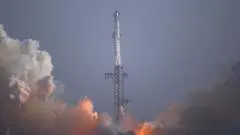
SpaceX, Elon Musk's rocket company, has confirmed it will build its largest launch site to date, a $100bn (£73bn) facility called Starbase, Louisiana, marking a major expansion beyond its existing Texas headquarters and Florida operations. The move underscores Musk's ambitions to dramatically scale up Starship flight frequency for missions to Earth orbit, the Moon and Mars, and comes as the newly listed company seeks to reassure investors of its growth prospects following June's record-breaking Nasdaq stock market debut.
The 125,000-acre site is expected to break ground next year, with the first Starship launch targeted for 2029, and will create more than 3,000 direct jobs plus an estimated 8,100 indirect roles, according to Louisiana's economic development agency, which said wages there would run 192% above the regional average. It shares its name with SpaceX's existing Starbase site in Texas, incorporated as a city in 2025. The announcement follows other recent expansion moves by Musk's companies, including a $16.8bn AI chip-making complex in Texas called Terafab, unveiled jointly with Tesla in August, as SpaceX pushes into artificial intelligence and data centres even as its shares remain over 30% below their post-IPO peak, albeit still above their $135 offer price.
- SpaceX to build $100bn Starbase launch site in Louisiana
- Construction starts 2026, first Starship launch targeted 2029
- Over 11,000 jobs expected; part of Musk's wider AI expansion
New here? Start with this
Elon Musk's rocket company SpaceX has revealed plans for a huge new launch facility in Louisiana, called Starbase, at a cost of around $100bn. It would sit alongside the firm's existing sites in Texas and Florida, adding another base from which to launch its Starship rocket, the vehicle SpaceX is developing for missions to orbit, the Moon and Mars.
SpaceX is a private company, though it recently listed shares on the Nasdaq stock exchange in a record-breaking debut, a sign of how much investors value its ambitions in space. The Louisiana project is part of that wider push, aiming to launch Starship far more often than is currently possible from its other sites.
The scale of the plan matters because it would bring thousands of jobs and a large amount of investment to the region, while also representing a major step in SpaceX's long-term goal of frequent, large-scale rocket launches. Construction has not yet begun, and the first launch from the new site is not expected for several years.
Both sides, in good faith
The strongest fair case each way — we don't pick a winner.
The case for
Supporters argue that a $100bn facility bringing more than 3,000 well-paid jobs, at wages nearly triple the regional average, is a transformative opportunity for a Louisiana community, delivering long-term economic development, skills training and infrastructure investment that the region could not otherwise attract. They see the project as reinforcing America's leadership in commercial spaceflight, expanding capacity for lunar, Martian and orbital missions, and demonstrating the value of public-private partnership in reviving industrial regions.
The case against
Critics, while not opposed to space exploration itself, raise concerns that a 125,000-acre facility of this scale could bring significant environmental disruption to local ecosystems, coastal wetlands and communities, echoing concerns already raised about SpaceX's Texas site. They also question whether public incentives and infrastructure support for a company controlled by one of the world's richest men represent the best use of state resources, and whether promised jobs and economic benefits will fully materialise for existing residents rather than primarily benefiting incoming workers and shareholders.
Full account
Elon Musk's SpaceX has unveiled plans to build what it says will be its largest rocket facility to date on the Louisiana coast, in a project the company has valued at $100bn (£73bn). The site, to be called Starbase, Louisiana, will occupy around 125,000 acres (roughly 195 square miles) at Pecan Island, on land that was returned to the state by Exxon Mobil as part of a settlement over claims the oil firm contributed to coastal erosion. Site works are expected to begin within the next couple of years, with SpaceX targeting the first Starship launch from the new base in 2029.
According to details released by the company, the facility will eventually house five separate launch complexes, each with two pads, alongside a propellant plant, power generation infrastructure, vehicle-processing buildings and housing for staff and their families. SpaceX says the base is intended to support thousands of Starship flights annually, carrying missions to Earth orbit, the Moon and Mars. Louisiana's southern position is also said to offer a practical advantage: it would allow Starship to launch on southward, polar trajectories suited to deploying satellites for the orbital data-centre network Musk has branded "Starmind", while sitting close to natural gas supplies needed to produce the methane fuel the rocket burns.
Louisiana's state government has framed the project chiefly in economic terms, estimating that it will directly create more than 3,000 jobs paying, on average, almost double the wider region's typical salary, plus a further 8,100 jobs indirectly through the local supply chain. State officials have described it as a project that will turn Louisiana into a major centre for advanced aerospace manufacturing and launch activity. SpaceX has also committed to working with the state on environmental restoration around the site, including rebuilding marshland and wildlife habitat and strengthening storm defences, reflecting the land's history of coastal damage under its previous owner.
The new base becomes SpaceX's third launch site, adding to its existing operations in Texas, where a company town was formally incorporated as the city of Starbase in 2025, and in Florida. The announcement follows a landmark few months for SpaceX, whose shares began trading on New York's Nasdaq exchange in June in the largest stock market flotation on record; they have since fallen by more than 30% from their post-listing peak, though remain above their original offer price. It also comes shortly after SpaceX and Musk's other company, Tesla, revealed a separate $16.8bn Texas facility, dubbed Terafab, to manufacture AI chips for Musk's broader ambitions in artificial intelligence, robotics and space-based computing.
Where outlets differ
The BBC-style report places more emphasis on financial and market context — the record Nasdaq listing, the subsequent 30% share price fall, and the jobs/wage figures supplied by Louisiana's state economic development agency — while giving fewer technical specifics about the site itself.
The other report goes into more engineering and strategic detail: it specifies five launch complexes with ten pads in total, explains the rationale for the site's location (polar launch trajectories for Starmind data satellites and proximity to natural gas for fuel production), and includes a direct quote from Musk describing the project as building a 'spaceport that, until now, has only existed in science fiction'.
Only the second account names Louisiana's governor, Jeff Landry, as involved in the announcement, and only it explains the site's backstory — that the Pecan Island land was handed back to the state by Exxon Mobil as part of a legal settlement over coastal land loss.
The two accounts give slightly different timelines: one says construction is 'due to start next year' without naming a year, while the other specifies that site production work begins in 2027; both agree the first Starship launch from the site is targeted for 2029.