Science news and discussion on TalkFuse.
Muslims poised to outnumber Christians globally by 2035 amid demographic shifts
Developed over time first seen 2 days ago
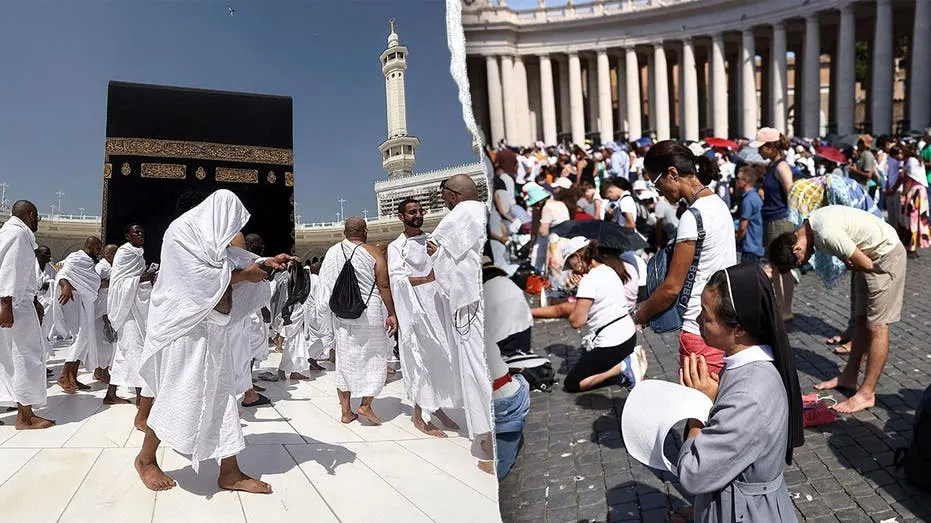
A Pew Research Center study projects that Muslims could outnumber Christians worldwide by 2035, largely because Muslim populations are younger and have higher fertility rates. The projected change reflects broader demographic shifts in which Muslims and Christians are expected to grow faster than the world’s population overall.
Muslim women had an average of 3.1 children, compared with 2.5 for Christian women, and gave birth to 252 million babies between 2020 and 2025, versus 208 million among Christian mothers. By 2070, Pew projects more than half of Christians will live in sub-Saharan Africa, while Pakistan will have the largest Muslim population; the global Muslim population could exceed 3.6 billion, compared with just under 3 billion Christians. In the United States, Christians are projected to fall below half the population by 2070, while people with no religious affiliation could reach about 41%.
- Sources
- 2
- Outlets
- 2
- Left · Centre · Right
- 0 · 0 · 2
In short
- Muslims could become the world’s largest religious group by 2035.
- Higher fertility and younger populations drive the projected shift.
- Christianity is projected to grow in sub-Saharan Africa.
How this story developed
- 22 hours ago New coverage adds detail on how religious populations are expected to shift by 2070, with sub-Saharan Africa becoming home to more than half of the world’s Christians.
- 1 day ago A Pew Research Center study projects that Muslims could outnumber Christians worldwide by 2035, largely because Muslim populations are younger and have higher fertility rates.
Explained simply
Pew Research Center studies how religious populations change over time by looking at factors such as age, births and migration. Its projections describe possible future patterns; they depend on demographic trends continuing and are not certainties.
Christianity and Islam are the world’s two largest religions, but their followers are distributed differently across countries and age groups. A population with more young adults may have more people reaching parenthood in the years ahead, while differences in average family size can also affect how quickly a group grows.
These shifts could change where most Christians and Muslims live, as well as the religious make-up of individual countries. Projections for the United States also include people who identify with no religion, a category that has grown in recent decades.
Coverage · 2 sources
Bias meters
From 2 rated sources.