NASA abandons Swift telescope rescue after spacecraft fault
Developed over time first seen 2 months ago
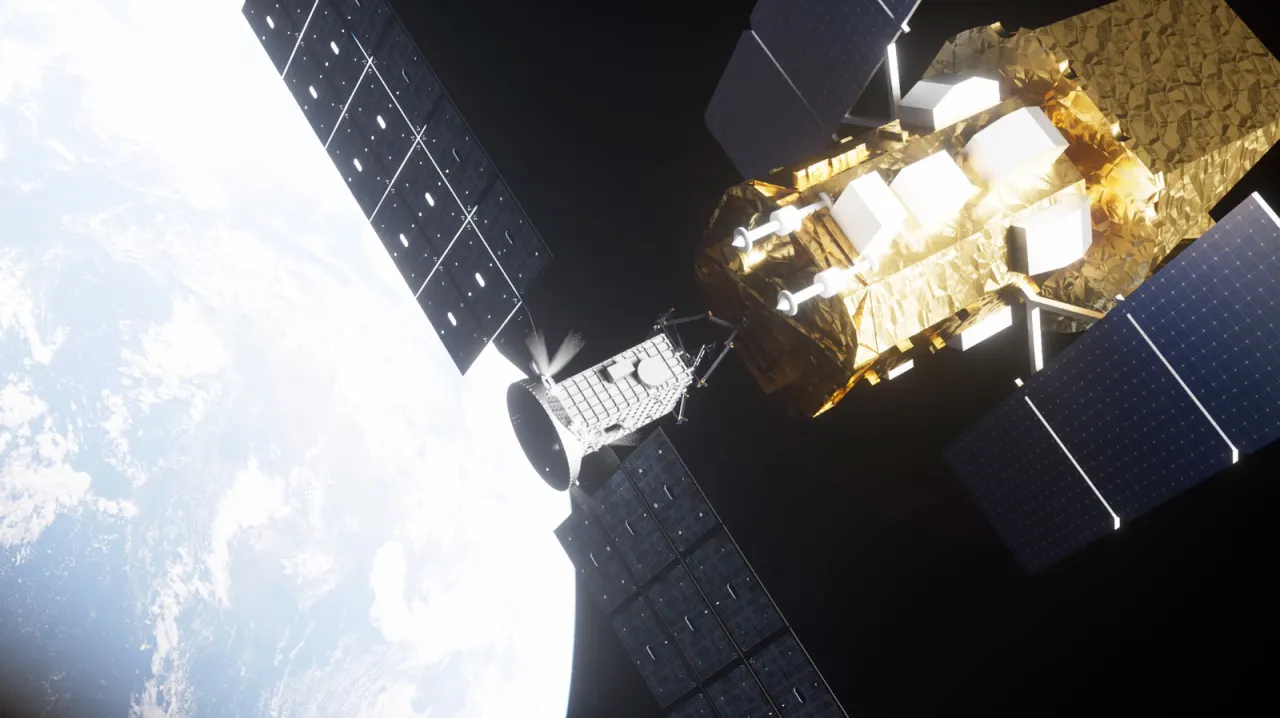
NASA has abandoned its attempt to boost the ageing Swift Observatory into a higher orbit, meaning the telescope is now expected to re-enter Earth's atmosphere and burn up later this year. The agency confirmed the rescue was called off because Katalyst Space's LINK spacecraft, sent to dock with and tug the observatory, continued to suffer an attitude control fault first reported in late July that left it spinning and struggling to communicate, alongside a partial loss of its thruster system, even though NASA and Katalyst had still sounded hopeful as recently as last month.
Katalyst had under a year to build LINK for the Swift Boost mission, which launched in early July, in what officials called a "high-risk, high-reward" first-of-its-kind attempt to save Swift, whose orbit has been decaying faster than expected amid rising solar activity. With the boost off, LINK will still attempt to rendezvous with Swift so NASA and Katalyst can gather data to inform future satellite-servicing missions. Swift, launched in 2004 to study gamma-ray bursts and since relied on for rapid follow-up of cosmic events, will not gain the extra decade of life the mission was meant to provide; NASA says it will lean on existing missions to cover the gap while it looks for new ways to respond quickly to such events.
- NASA scraps plan to boost Swift Observatory to a higher orbit
- Rescue spacecraft LINK suffered an uncorrectable attitude control fault
- Swift will re-enter and burn up in the atmosphere later this year
New here? Start with this
NASA's Swift Observatory has been flying since 2004, watching gamma-ray bursts and other short-lived cosmic events that need a rapid response to catch. Its orbit has been dropping faster than expected because of increased solar activity, which pushes satellites down through drag on the upper atmosphere. That decay put Swift on course to burn up, prompting NASA to look at ways of saving it.
The rescue plan, called Swift Boost, involved a private company, Katalyst Space, building a small spacecraft named LINK to dock with Swift and push it into a higher, safer orbit. LINK was built in under a year and launched in early July, an ambitious timeline for what NASA described as a "high-risk, high-reward" first attempt at this kind of in-orbit rescue.
Soon after launch, LINK developed serious technical problems, including trouble controlling its orientation and communicating with ground teams, as well as partial loss of its thrusters. These faults are the reason NASA has now stepped back from using LINK to move Swift, leaving the telescope's re-entry and destruction expected later this year.
More coverage
Read the full article at the source →
Originally published by Engadget as “NASA calls off mission to rescue the falling Swift observatory”.