Norway and Finland leaders hold rare call with Putin
Developing story first seen 2 hours ago
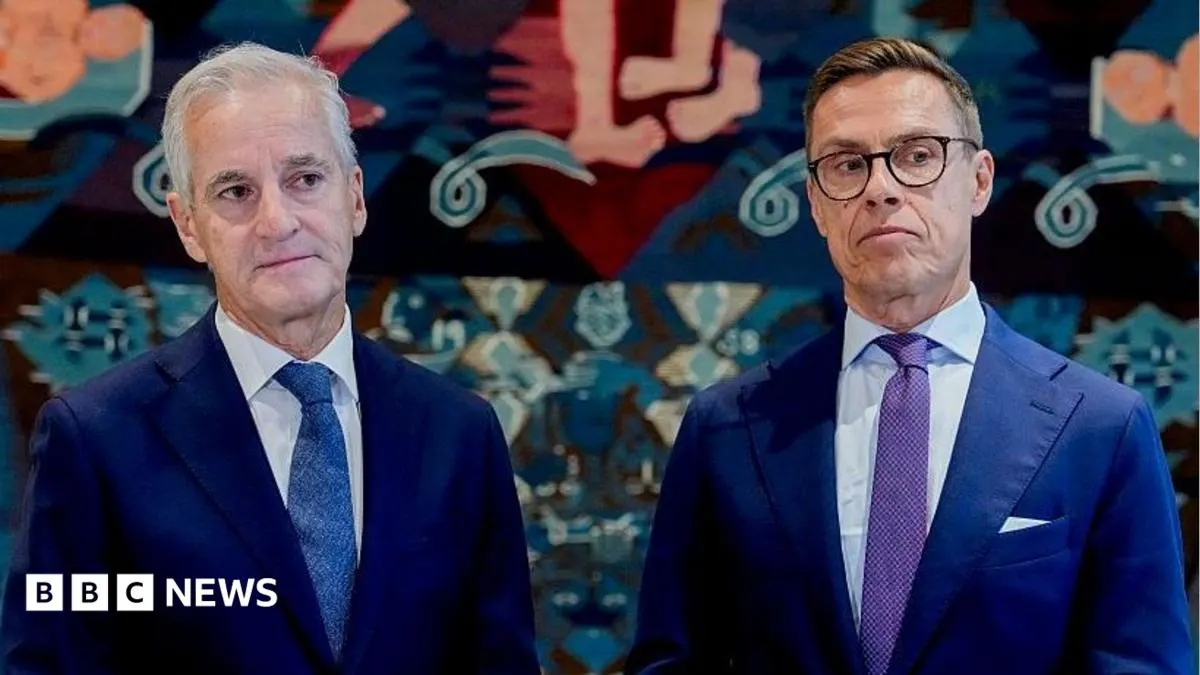
Finnish President Alexander Stubb and Norwegian Prime Minister Jonas Gahr Støre have held a rare joint call with Vladimir Putin, seeking to discuss possible negotiations to end Russia’s war in Ukraine. The two leaders said they acted on their own initiative, not on behalf of Europe as a whole, and argued that the war’s outcome will affect European security.
The call took place in Helsinki and was described by Stubb as frank and substantive. Putin said EU and Nato policies were prolonging the war, while Ukrainian President Volodymyr Zelensky later discussed the conversation and diplomacy with the Nordic leaders. Ukraine, Russia and the US are expected to hold three-way talks in Abu Dhabi in November; Denmark’s prime minister said the call had not been co-ordinated with other European leaders.
- Sources
- 2
- Outlets
- 2
- Left · Centre · Right
- 0 · 1 · 1
In short
- Nordic leaders spoke directly with Putin about ending the war.
- They stressed the call was their own initiative.
- Abu Dhabi talks with Ukraine, Russia and the US are planned for November.
How this story developed
- 1 hour ago Finnish President Alexander Stubb and Norwegian Prime Minister Jonas Gahr Støre held a rare joint call with Vladimir Putin to discuss Russia’s war in Ukraine and possible future negotiations.
- 1 hour ago Finnish President Alexander Stubb and Norwegian Prime Minister Jonas Gahr Støre have held a rare joint call with Vladimir Putin, seeking to discuss possible negotiations to end Russia’s war in Ukraine.
Full account
The leaders of Norway and Finland have held a rare 90-minute telephone conversation with Russian President Vladimir Putin, saying the discussion addressed Russia’s war against Ukraine and possible diplomatic efforts to end it. Finnish President Alexander Stubb and Norwegian Prime Minister Jonas Gahr Støre said they had initiated the call in their national capacities, rather than representing Europe as a whole. Both countries share a border with Russia.
Støre described the exchange as direct and said there were substantial differences between the participants’ positions. Stubb said the war’s outcome would affect Nordic and wider European security, while Støre pointed to its human and material toll. The Kremlin’s account said Putin argued that a lasting peace would require Russia’s interests to be taken into consideration. It also said the three leaders had agreed to maintain direct telephone contact.
The initiative drew criticism from Denmark and Sweden. Danish Prime Minister Mette Frederiksen said the conversation had not been coordinated with other European leaders and urged caution about giving Putin a diplomatic opening. Swedish Prime Minister Ulf Kristersson said he had not been told in advance and reiterated that any peace must be on Ukraine’s terms. Støre said allies had been informed beforehand, though that did not amount to joint coordination.
Ukrainian President Volodymyr Zelensky spoke with Stubb and Støre after their call. He thanked them for their support and said they had raised the need for Russia to take genuine steps to reduce tensions around Ukrainian energy and infrastructure. The conversation followed recent meetings in Oslo between the Nordic leaders, Zelensky and US envoy Steve Witkoff; Ukraine, Russia and the United States have since agreed to resume trilateral talks, with a meeting planned in Abu Dhabi. The accounts place the call amid wider diplomatic activity and continuing attacks, but differ in which developments they foreground.
Where outlets differ
From the full account, which is AI-written from the sources:
One report stresses that the leaders acted only for their own countries and gives more detail on the planned Abu Dhabi negotiations, allied briefings and Poland’s cautiously hopeful assessment. The other foregrounds objections from Denmark and Sweden, describes the call as the first direct exchange with Putin by Ukraine’s principal European allies since Emmanuel Macron spoke with him in July 2025, and sets it against reported attacks and a tentative local truce around Oleshky. Their descriptions of advance notice also differ in emphasis: Støre said allies had been informed, while Danish and Swedish leaders said the call had not been coordinated with them or shared with them in advance.
Right-leaning outlets 1
Only here: european, fury, direct, talks, ending
Every side used: norway, finland, leaders, hold, putin
Headline columns compared word for word; nothing in them is AI-written.
Steelman: both sides, in good faith
The strongest fair case each way — we don't pick a winner.
The case for
Supporters could argue that direct, frank contact with Putin is a practical way to explore whether negotiations can reduce the killing and bring the war towards an end. Since the outcome will affect European security, Nordic leaders have a legitimate interest in testing diplomatic openings while keeping Ukraine’s leaders informed.
The case against
Critics could argue that an unco-ordinated call risks weakening a common European approach and gives Putin an opportunity to present his claims about Nato and the EU directly to European leaders. They may also question whether talks led by outside powers can help Ukraine unless Kyiv’s interests and consent remain central.
Explained simply
Russia’s full-scale invasion of Ukraine began in February 2022. The fighting has involved Ukraine and Russia, while the United States and European countries have supported Ukraine in different ways and pressed for an end to the war.
Vladimir Putin is Russia’s president, Volodymyr Zelensky is Ukraine’s president, and Alexander Stubb and Jonas Gahr Støre lead Finland and Norway. Both Nordic countries are members of Nato, the military alliance whose members pledge to support one another if attacked.
The war’s outcome could affect security across Europe and the future relationship between Russia and its neighbours. Countries have pursued diplomacy alongside military and economic measures, but any negotiations would involve difficult questions about Ukraine’s territory and security.
Coverage · 2 sources
Bias meters
From 2 rated sources.
Europe Government Politics World