Nvidia extends Halos safety system to robotics as physical AI grows
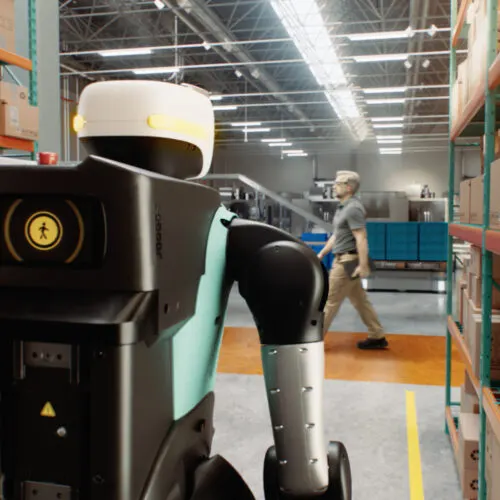
Nvidia is extending its Halos safety system from autonomous vehicles to robotics, aiming to help companies reduce the risk that robots harm people. The move addresses safety as a potential bottleneck to deploying increasingly capable AI models and robot hardware, and supports Nvidia’s wider bet on physical AI.
Halos combines computing hardware with software that monitors components, isolates safety-critical workloads and checks sensor data for corruption. It also includes virtual simulations and an inspection lab programme for developers. Nvidia says the system must allow custom safety rules because a vacuum, warehouse forklift and humanoid robot face different risks; CEO Jensen Huang said physical AI was generating nearly $10 billion in annual revenue for Nvidia.
- Nvidia is extending Halos safety tools to robots.
- The system combines hardware, monitoring software and simulation.
- Different robots need safety rules suited to their settings.
New here? Start with this
Physical AI describes artificial intelligence systems that control robots and other machines operating in the real world. As these systems become more powerful and capable, companies are using them in warehouses, factories, hospitals and homes to perform complex tasks. However, because robots operate near people and handle valuable equipment, safety is a critical concern.
A malfunction or error in a robot's systems could injure someone or cause significant damage, so these machines need built-in protections. Safety systems must monitor the robot's components, verify sensor data is correct, and ensure that if something goes wrong, the robot fails in a safe way. The more advanced and autonomous a robot becomes, the more important these protections are.
Halos is a safety system created by Nvidia, a company that develops computer chips and artificial intelligence software. It was originally designed to protect self-driving cars from malfunctions and errors. The system uses specialised hardware and monitoring software to check whether each component is working correctly and to shut down dangerous functions if something goes wrong.
Both sides, in good faith
The strongest fair case each way — we don't pick a winner.
The case for
Those supporting Nvidia's extension of Halos argue that well-designed technical safeguards are essential for responsibly deploying physical AI at scale. They emphasise that the system's comprehensive approach—combining hardware monitoring, software isolation, sensor validation, and testing infrastructure—provides genuine risk reduction whilst enabling beneficial innovation. Proponents contend that companies have strong incentives to ensure safety (liability exposure, regulatory scrutiny, reputational risk) and that customisable safety rules allow appropriate risk calibration for different robot applications.
The case against
Critics argue that industry self-regulation, however sophisticated, has proven insufficient for public protection in other technology domains and cannot substitute for independent external oversight. They contend that commercial entities face inherent pressure to accelerate deployment and reduce costs, and that customisable safety standards risk becoming inadequate where companies adopt permissive interpretations. They maintain that autonomous systems capable of physical harm warrant government-mandated safety validation comparable to pharmaceutical or aviation oversight, with corporate technical measures complementing rather than replacing independent scrutiny.
Read the full article at the source →
Originally published by Ars Technica as “Nvidia’s big bet on physical AI aims for safer robotaxis, humanoid robots”.