World news and discussion on TalkFuse.
One of UK’s last surviving D-Day heroes dies aged 100
Developing story first seen 2 hours ago
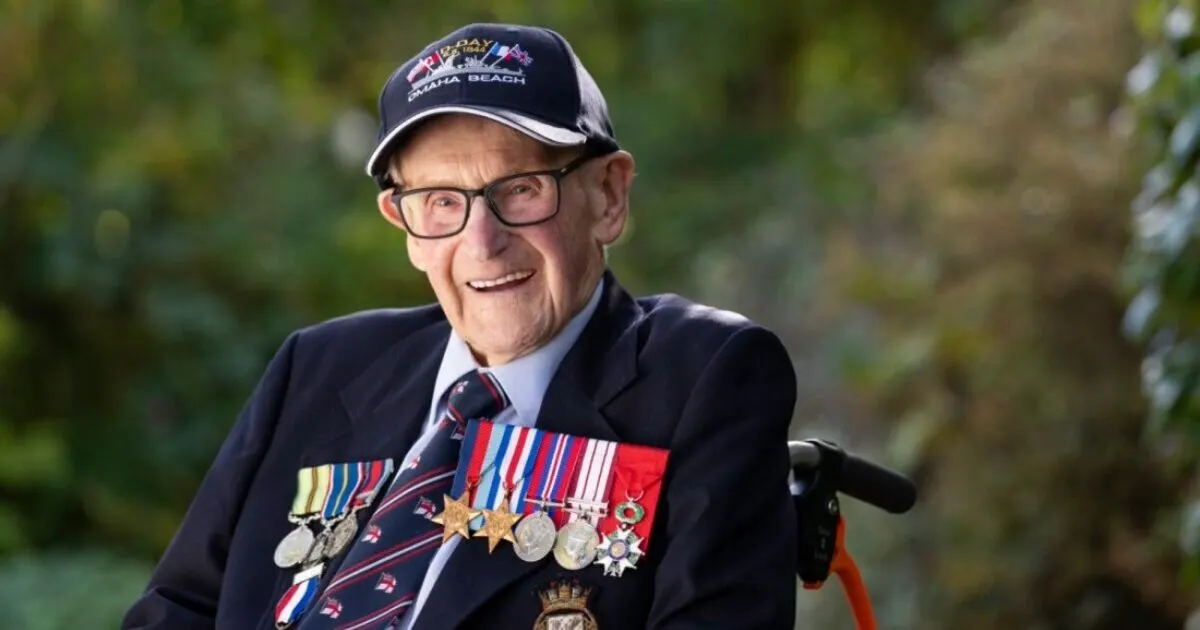
New details confirm that Charlie Horne died on 3 November at Erskine Veterans Charity’s Edinburgh Home, aged 100, just weeks before his 101st birthday. One of the UK’s last surviving D-Day veterans, he was among a generation whose firsthand connection to the Second World War is dwindling as Remembrance approaches.
Horne was 18 when he served aboard a wooden minesweeper clearing sea lanes off the French coast; his vessel came under fire on 6 June 1944. He later served in Asia and North Africa, left the Royal Navy in 1947 and returned to fishing. He had three daughters with his wife Jenny, who died in 2009, and was awarded France’s Legion d’honneur. Separately, the Royal British Legion raised a record £1,703,851 on London Poppy Day, with around 2,500 personnel and volunteers collecting donations.
- Sources
- 2
- Outlets
- 2
- Left · Centre · Right
- 0 · 0 · 2
In short
- D-Day veteran Charlie Horne has died aged 100.
- He served on a minesweeper under fire off France in 1944.
- London Poppy Day raised a record £1.7 million.
How this story developed
- 39 minutes ago Charlie Horne, one of the UK’s last surviving D-Day veterans, has died aged 100 at a veterans’ home in Edinburgh.
- 44 minutes ago New details confirm that Charlie Horne died on 3 November at Erskine Veterans Charity’s Edinburgh Home, aged 100, just weeks before his 101st birthday.
Full account
Charlie Horne, one of the United Kingdom’s last surviving veterans of the D-Day landings, has died aged 100. He died on 3 November at Erskine Veterans Charity’s Edinburgh Home, where he had lived since the summer. He was from Prestonpans, East Lothian, and would have turned 101 in a few weeks.
Horne was 18 when he served aboard a small wooden minesweeper clearing routes off the Normandy coast on 6 June 1944. The vessel came under fire as Allied troops landed. In later accounts, he recalled being frightened but focused on the task and the crew members depending on one another. He described ships breaking apart, men in the water and shells coming from the shore, and said the experience stayed with him.
Born into a fishing family, Horne was already a seaman before joining the Royal Naval Patrol Service. His minesweeper destroyed eight mines after setting out from Plymouth, but the risks continued beyond D-Day. Horne kept a diary of the operation, recording wreckage, casualties in the water and the loss of another minesweeper after it struck a mine. His wartime service continued in Asia and North Africa. He left the Navy in 1947 and returned to fishing.
After the war, Horne married Jenny, with whom he had three daughters. She died in 2009. He often spoke of the lives he was able to build after returning home, while remembering the young men who did not survive. His service was later recognised with the Legion d’honneur, France’s highest order of merit. Erskine chief executive Wing Commander Ian Cumming said Horne’s death was especially poignant ahead of Remembrance, as the generation with direct experience of the Second World War dwindles.
Where outlets differ
From the full account, which is AI-written from the sources:
The first report describes Horne as one of the UK’s last surviving D-Day veterans; the second calls him one of Scotland’s last and specifies that his minesweeper helped clear mines off Omaha Beach.
The second report gives more detail from Horne’s diary, including the vessel’s mine tally and the loss of another minesweeper. The first focuses more on his post-war family life, the charity’s response and nearby Remembrance events.
The reports present different recollections of the landings: the first includes a shorter earlier comment about being scared and carrying on, while the second quotes a more detailed reflection given ahead of Remembrance Sunday.
Coverage · 2 sources
Bias meters
From 2 rated sources.