Our 10 favorite scenes from T2: Judgment Day
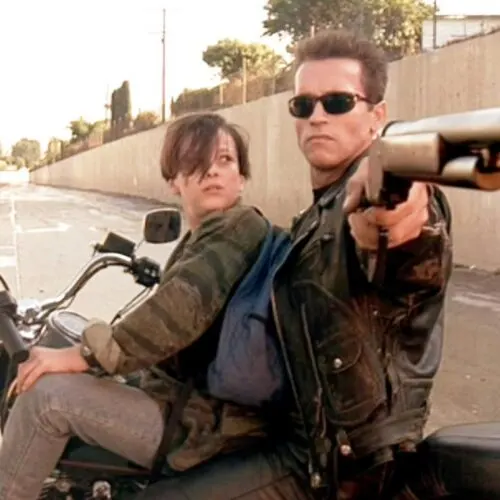
To mark the 35th anniversary of Terminator 2: Judgment Day, StudioCanal is returning James Cameron’s 1991 science-fiction action film to cinemas this weekend in a 3D version. Ars Technica uses the re-release to revisit ten favourite scenes, arguing that the sequel remains a landmark for its action, character relationships and visual effects.
– The original Terminator was an unexpected commercial success, grossing $78 million from a $6.4 million budget. – Cameron wrote the sequel in roughly six weeks and recast Schwarzenegger’s T-800 as John Connor’s protector. – The film’s emotional centre is presented as the developing bond between the T-800, John Connor and Sarah Connor. – Released in 1991, it grossed $520 million against an estimated $70 million production budget. – Robert Patrick’s liquid-metal T-1000 is highlighted as a major screen villain and technical achievement. – Industrial Light & Magic expanded its staff and invested more than $3 million in equipment and software for the effects. – The film won four Oscars, including recognition for its visual effects, and helped popularise CGI in mainstream cinema. – Cameron says the restored 3D theatrical release is the best way to experience the film.
- Terminator 2 returns to cinemas for its 35th anniversary.
- The article celebrates ten standout scenes.
- Its effects and character dynamics remain central to its reputation.
New here? Start with this
The Terminator films follow a future war between humans and machines. In the first film, Arnold Schwarzenegger played a machine sent back in time to kill Sarah Connor, whose son John is destined to lead human resistance. The original’s unexpected commercial success led to a sequel.
James Cameron wrote and directed the 1991 film, bringing back Schwarzenegger and Linda Hamilton as Sarah, with Edward Furlong as John. The sequel changes the T-800’s role, making it John’s protector, while Robert Patrick plays a new, shape-shifting machine called the T-1000.
The story’s focus on the three characters’ relationships sits alongside its large-scale action and computer-generated effects. Industrial Light & Magic developed new tools for the film, which won four Oscars and helped bring computer-generated imagery into mainstream cinema.