Pauline Hanson reveals who she will let migrate to Australia if she becomes Prime Minister: ‘We don’t need any more Uber drivers’
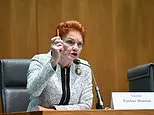
One Nation leader Pauline Hanson has said that, if she became Australia's Prime Minister, she would restrict migration to only those with skills the country genuinely needs, remarking "we don't need any more Uber drivers." The comments form part of her party's broader push for tougher immigration controls, reflecting ongoing debate in Australia over migration levels, skills shortages and the strain on housing and infrastructure.
Hanson's remarks single out low-skilled or gig-economy roles as an example of migration she considers unnecessary, contrasting this with migrants who could fill genuine skills gaps. The comments come amid wider scrutiny of Australia's immigration system and follow a pattern of hardline rhetoric from Hanson and One Nation on border control and population growth.
In short
- Pauline Hanson says she'd limit migration to only "needed" skilled workers as PM
- She singled out Uber driver-type jobs as unnecessary for migrants
- Comments reflect One Nation's long-standing hardline immigration stance
Steelman: both sides, in good faith
The strongest fair case each way — we don't pick a winner.
The case for
Advocates of a more selective approach argue that immigration policy should be shaped primarily around genuine skills shortages, such as medicine, engineering and skilled trades, rather than sectors where local supply is already ample. They contend that unrestrained low-skilled migration can depress wages in entry-level jobs, add pressure to housing and infrastructure already under strain, and dilute the economic case for migration, which is usually framed around raising national productivity. On this view, prioritising migrants whose qualifications match specific labour-market gaps is a rational and defensible use of a finite migration intake, not a judgement on the worth of any individual.
The case against
Critics argue that singling out particular jobs, such as driving for Uber, nail technicians or dog walking, risks stigmatising both migrants and the workers, many of them Australian-born, who do these jobs, implying some forms of honest work are less deserving of respect than others. They point out that service-sector roles meet real consumer demand, generate tax revenue, and are often taken up by migrants as a first step before moving into other work, so filtering people out by occupation may overlook their broader potential contribution and family or humanitarian circumstances. They also note that rhetoric framing certain migrants as undesirable has historically been used to target specific communities, and caution that occupation-based exclusion can function as a proxy for that even when framed in purely economic terms.
Explained simply
Australia sets migration policy through its federal government, which decides who can enter to work or settle and what visa rules apply. Pauline Hanson leads One Nation, a political party that campaigns for tighter immigration controls.
Debate over migration often centres on how many people Australia should admit and whether newcomers can help fill shortages in particular jobs. It is also linked to concerns about housing, public services and population growth, making migration a recurring issue in Australian politics.