Culture news and discussion on TalkFuse.
Penn State slammed for hosting ‘disgusting and abhorrent’ lecture on ‘need to decolonize’ Holocaust museums: ‘Lost their minds’
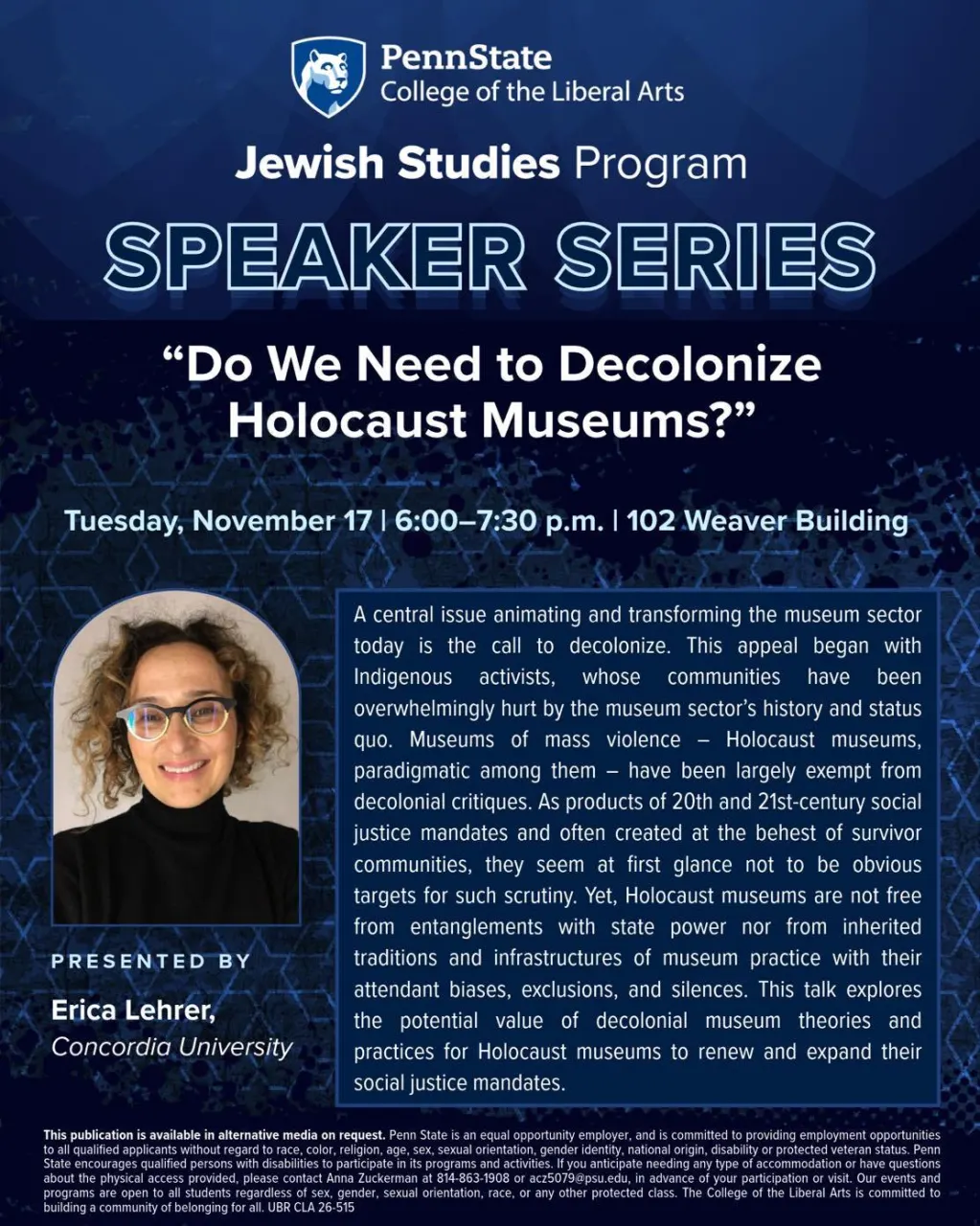
Penn State’s Jewish Studies Program hosted a lecture asking whether Holocaust museums should be “decolonized”, prompting strong criticism online. The event matters because critics said the framing could politicise or undermine institutions that preserve the history of the Holocaust and honour its victims and survivors.
The speaker was Erica Lehrer, a Concordia University professor and former fellow at the United States Holocaust Memorial Museum. The event description said it would examine whether decolonial museum theories could help Holocaust museums renew and expand their social justice aims, while noting their links to state power and museum traditions that can involve bias and exclusion. The supplied article ends mid-quotation from the advocacy group Stop Antisemitism.
In short
- Penn State hosted a lecture on decolonising Holocaust museums.
- The event description focused on museum practices and social justice aims.
- Critics said the framing risked politicising Holocaust remembrance.
Steelman: both sides, in good faith
The strongest fair case each way — we don't pick a winner.
The case for
Supporters could argue that asking how Holocaust museums reflect state power and museum traditions is a legitimate scholarly inquiry, not a denial of the Holocaust or disregard for its victims. They may see decolonial approaches as a way to identify whose experiences are included or excluded and to help museums pursue their stated social justice aims more thoughtfully.
The case against
Critics could argue that applying a decolonisation framework to Holocaust museums risks importing a political lens that obscures the Holocaust’s specific history and the institutions’ work of preserving evidence and honouring victims and survivors. Given persistent antisemitism and Holocaust distortion, they may reasonably worry that the framing could weaken public trust or make remembrance seem contingent on current political disputes.
Explained simply
The Holocaust was the Nazi-led persecution and murder of six million Jews during the Second World War. Holocaust museums preserve evidence and memories of the genocide, and honour its victims and survivors.
Erica Lehrer, a professor at Concordia University and former fellow at the United States Holocaust Memorial Museum, spoke at an event hosted by Penn State’s Jewish Studies Program. Its description asked whether ideas about decolonising museums could help Holocaust museums broaden their social justice work, while examining how museums can reflect state power and exclude some perspectives.
The discussion matters because Holocaust museums play a central role in public education and remembrance. The event’s framing drew criticism from people who said it could politicise or undermine that work.