Prime Video’s Blade Runner 2099 Explores Power Shift Between Humans and Replicants in New Limited Series
Developing story first seen 2 hours ago
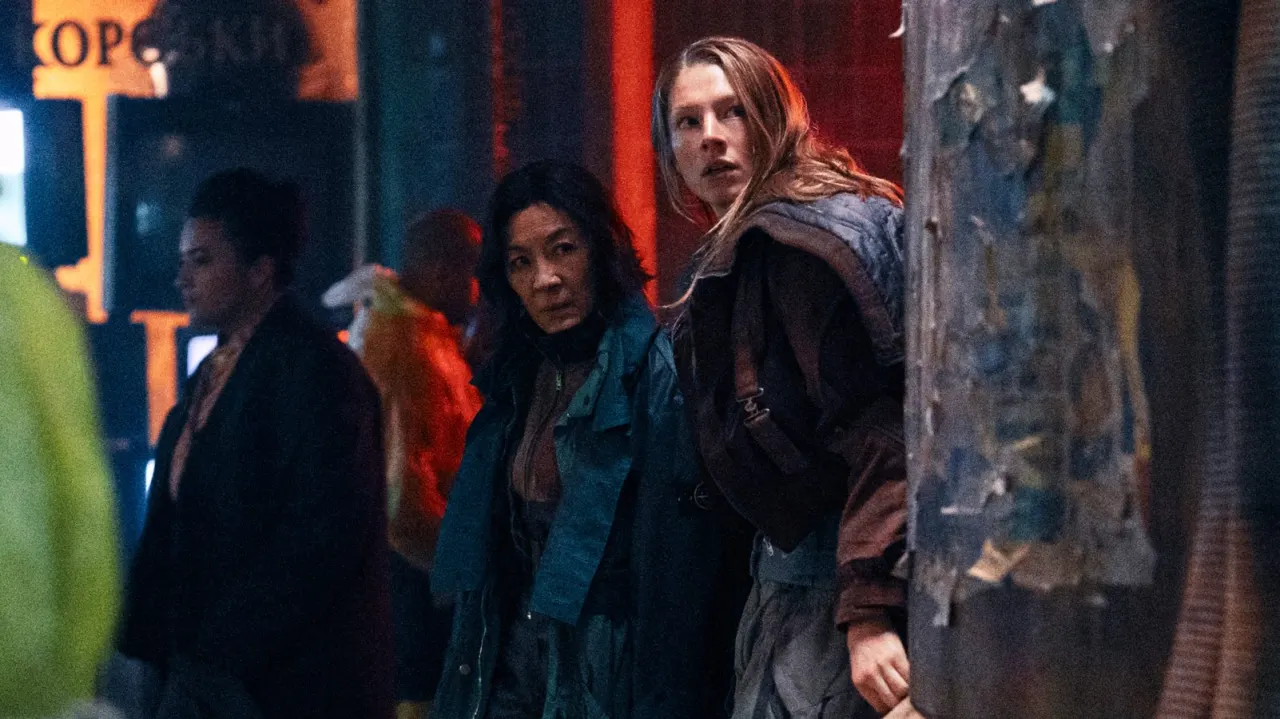
The new trailer and key art for Prime Video’s *Blade Runner 2099* introduce a story about a changing balance of power between humans and replicants. The series is set in a reborn Los Angeles, 50 years after *Blade Runner 2049*, and follows a fugitive’s hunt for a truth that could destabilise the city.
Hunter Schafer plays Cora, who takes on the identity of a Blade Runner in a final attempt to stop running. She is partnered with Olwen, a replicant played by Michelle Yeoh who is days from dying, as they pursue a runaway. The eight-episode limited series, created and showrun by Silka Luisa, premieres in full on Prime Video on 25 November.
- Prime Video released a new trailer and key art for *Blade Runner 2099*.
- Hunter Schafer and Michelle Yeoh lead the eight-episode series.
- The story unfolds 50 years after *Blade Runner 2049*.
New here? Start with this
The Blade Runner franchise imagines a future where artificial beings called replicants exist alongside humans. The universe explores tensions between these two groups, raising questions about identity, mortality and what makes something—or someone—truly alive. Blade Runner 2099 continues this story, set 50 years after the previous film Blade Runner 2049, in a reimagined Los Angeles.
The eight-episode series follows Cora, played by Hunter Schafer, a fugitive who takes on the identity of a Blade Runner—officials tasked with pursuing renegade replicants. She is paired with Olwen, a replicant character played by Michelle Yeoh with only days left to live, as they hunt a runaway whose discovery could destabilise the city.
The series marks an expansion of the Blade Runner universe under new creative direction from showrunner Silka Luisa. It will premiere on Prime Video on 25 November, bringing the franchise's exploration of power, identity and coexistence to a new platform and audience.
Full account
Prime Video has unveiled an eight-episode limited series continuation of the Blade Runner franchise, nearly 45 years following Ridley Scott's original 1982 film. The project was showcased at New York Comic-Con with a new trailer and panel featuring cast and creators discussing the work's development and narrative ambitions.
Set in Los Angeles five decades after the events of Blade Runner 2049, the world has undergone profound transformation. The metropolis has been fundamentally reshaped, though not through human design or agency. Into this altered landscape arrives Cora, a fugitive woman seeking to escape her circumstances by adopting a new identity—that of a Blade Runner. This leads to an uneasy partnership with Olwen, a replicant officer whose artificially determined lifespan is rapidly approaching its conclusion. Together they pursue a fugitive concealing a truth with potential to destabilise the delicate equilibrium sustaining their fractured city.
During the Comic-Con panel, Hunter Schafer, portraying Cora, described her character's desperation. With her previous work destroyed by law enforcement, she infiltrates the Blade Runner organisation using a false identity whilst attempting to protect her younger brother during this covert mission. Michelle Yeoh, cast as Olwen, revealed that her character embodies an awareness of mortality—someone conscious that time is running out and determined to address unfinished matters before the end arrives.
Showrunner Silka Luisa explained the creative choice to visualise Olwen's deteriorating condition. The replicant officer displays discoloured fingernails with a distinctive blue tint, a visual indicator acknowledging the character's approaching death. This technique draws inspiration from the original Blade Runner film, where similar physical markers appeared. Throughout the series, as Olwen draws nearer to expiration, this visual cue becomes increasingly prominent, offering viewers a constant reminder of the character's limited remaining existence.
The narrative centre involves a mystery surrounding Olwen's actual mission. Whilst ostensibly tasked with locating human insurgents and resistance fighters, her true objective involves discovering a missing colleague named Merrick, a fellow Blade Runner. Luisa noted this represents an unprecedented occurrence within the fictional universe.
On a broader scale, the series confronts significant existential themes. According to Luisa, the narrative establishes that an anticipated replicant uprising has finally occurred, resulting in humanity's defeat and fundamental subordination. The original film examined mortality at an individual level, with replicant characters desperately seeking extended existence. This new series extends the inquiry to civilisational scope—exploring how humanity might respond upon recognising its own extinction, whether acceptance becomes achievable, and whether our species can preserve its essential nature when confronted with annihilation.
Where outlets differ
Panel date discrepancy: Source 1 indicates Saturday evening, whilst Source 2 references Sunday
Source 1 emphasises narrative detail and creative decision-making from the panel discussion; Source 2 prioritises production infrastructure, franchise history and ensemble cast
Source 1 provides detailed technical explanation of the blue fingernails visual metaphor; Source 2 does not address this design choice
Source 1 centres on the Merrick mystery plot element; Source 2 emphasises the replicant uprising and human defeat as central premise
Source 2 contextualises the project within original franchise history (1982 film, 2017 sequel with Ford and Gosling); Source 1 does not
Only Source 2 provides premiere date, episode count and complete production company credits