Entertainment news and discussion on TalkFuse.
Quake Champions ends free-to-play model with $10 Steam edition
Developed over time first seen 2 months ago
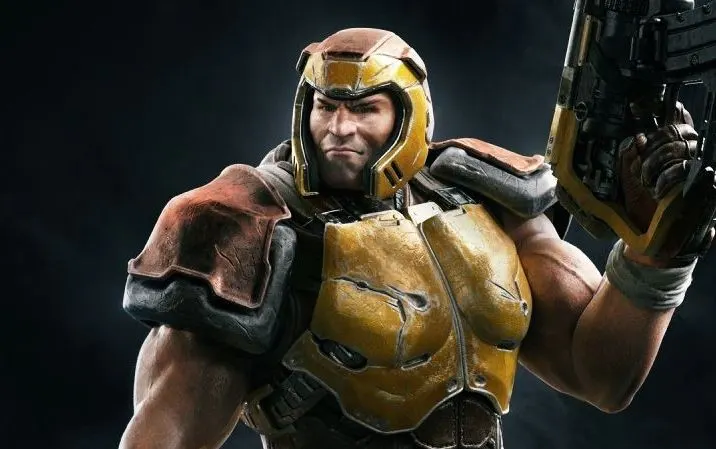
Quake Champions has been converted from a free-to-play live-service game into a $10 one-off purchase on Steam. The September 2026 change removes battle passes and microtransactions, simplifying access to the arena shooter and ending its live-service model.
Existing players receive the paid version at no extra cost, while new players must buy it. Progression and cosmetics remain, recent Platinum purchases are being refunded, and no further content updates are planned.
- Sources
- 3
- Outlets
- 3
- Left · Centre · Right
- 0 · 0 · 0
In short
- Quake Champions is now a $10 Steam purchase.
- Battle passes and microtransactions have been removed.
- Existing players keep access, but development has ended.
How this story developed
- 2 months ago The change reverses Quake Champions' shift to live-service operations in 2017.
- 2 months ago The conversion permanently ends Quake Champions' live-service model, removing all battle passes and microtransactions from the game.
- 2 months ago Quake Champions is transitioning from a free-to-play live-service model to a $10 one-time purchase on Steam, with existing players receiving the paid version at no additional cost.
Full account
Following nearly a decade of operation as a free-to-play title, Quake Champions is undergoing a fundamental transformation into a premium release priced at ten dollars on Steam. The shift represents a complete abandonment of the free-to-play monetisation model that has defined the game since its 2017 launch, eliminating battle passes, randomised loot containers, and cosmetic currencies that previously served as revenue streams.
Players who previously engaged with the title through limited promotional periods will automatically receive unrestricted access to the full game, whilst those who invested money in premium currencies during the preceding two months will receive refunds. The removal of the in-game marketplace constitutes a particularly dramatic overhaul, as id Software has entirely excised the infrastructure surrounding player spending. Accompanying this commercial restructuring, the developer has implemented a community moderation system enabling players to vote for the removal of rule-breakers and disruptive individuals, alongside general network optimisations and server infrastructure improvements.
The timing of these changes cannot be separated from Microsoft's broader organisational restructuring, which has seen the dismissal of 3,200 development staff across the gaming division. id Software, which operates under parent company ZeniMax, faced immediate impact from these cuts, losing more than one hundred employees in the initial wave of redundancies. This personnel reduction has forced the studio to concentrate its remaining resources on a narrow portfolio of established franchises—primarily Minecraft, Halo, and Fallout—whilst abandoning development on secondary projects including a Perfect Dark reboot.
The announcement that no further content additions are presently scheduled suggests Quake Champions operates in a maintenance capacity rather than as an active development priority. The server infrastructure consolidation, whilst economically prudent, carries potential consequences for players outside primary geographic regions who may experience either diminished server availability or elevated latency. Notwithstanding these constraints, the preservation of Quake Champions as a functioning product—albeit in reduced form—represents an alternative to outright service termination, reflecting Microsoft's efforts to streamline its gaming operations toward core franchises and revenue generators.
Where outlets differ
From the full account, which is AI-written from the sources:
SOURCE 1 (PC Gamer headline only) emphasises the 'cleansing' aspect with language of shedding 'grime' and renewal; SOURCE 2 frames the transition primarily through the lens of corporate restructuring and Microsoft's layoff programme, positioning the game change as a symptom of broader strategic consolidation rather than purely as a product improvement
Steelman: both sides, in good faith
The strongest fair case each way — we don't pick a winner.
The case for
This shift eliminates predatory monetisation practices by removing battle passes, microtransactions, and the psychological manipulation inherent in live-service design. Players gain a simpler, fairer product where spending is optional and disconnected from gameplay progression, protecting consumers from FOMO-driven spending spirals. Existing players are rewarded with complimentary access whilst new purchasers understand exactly what they receive—a complete game without hidden seasonal costs or engagement metrics designed to extract ongoing spending.
The case against
Converting to a paid model erects barriers for new players and fundamentally narrows accessibility compared to free-to-play, fragmenting an open community. The decision to cease content updates signals decline rather than genuine commitment to long-term support, and without live-service revenue streams, developers lack resources for meaningful seasonal updates that sustained player engagement. This represents a retreat that breaks the implicit contract with players who invested under a live-service promise, replacing their expectation of evolving content with a static product that may struggle to retain viability.
Explained simply
Quake Champions is a competitive arena shooter released in 2017 as a free-to-play game, meaning players could download and start playing without spending money. The game supported itself through optional cosmetic purchases and seasonal battle passes, which are paid content bundles that unlock cosmetic rewards over time.
This free-to-play model became the dominant way to operate online multiplayer games from the early 2010s onwards. Developers adopted it to attract large audiences whilst relying on a smaller percentage of engaged players to fund ongoing development through cosmetic purchases.
The game is now shifting to a direct purchase model where new players must buy it outright for a fixed price. This eliminates the optional cosmetic shop and seasonal passes, moving away from the free-to-play approach that has defined how the game operates for the past nine years.
Coverage · 3 sources
Read the full article at the source →
Originally published by PC Gamer as “Quake Champions takes a shower, shedding all its 2017 live-service grime and becoming a $10 game”.