QUENTIN LETTS: The PM was like an autumn bluebottle in your bedside lampshade, deranged by fear of being swatted…
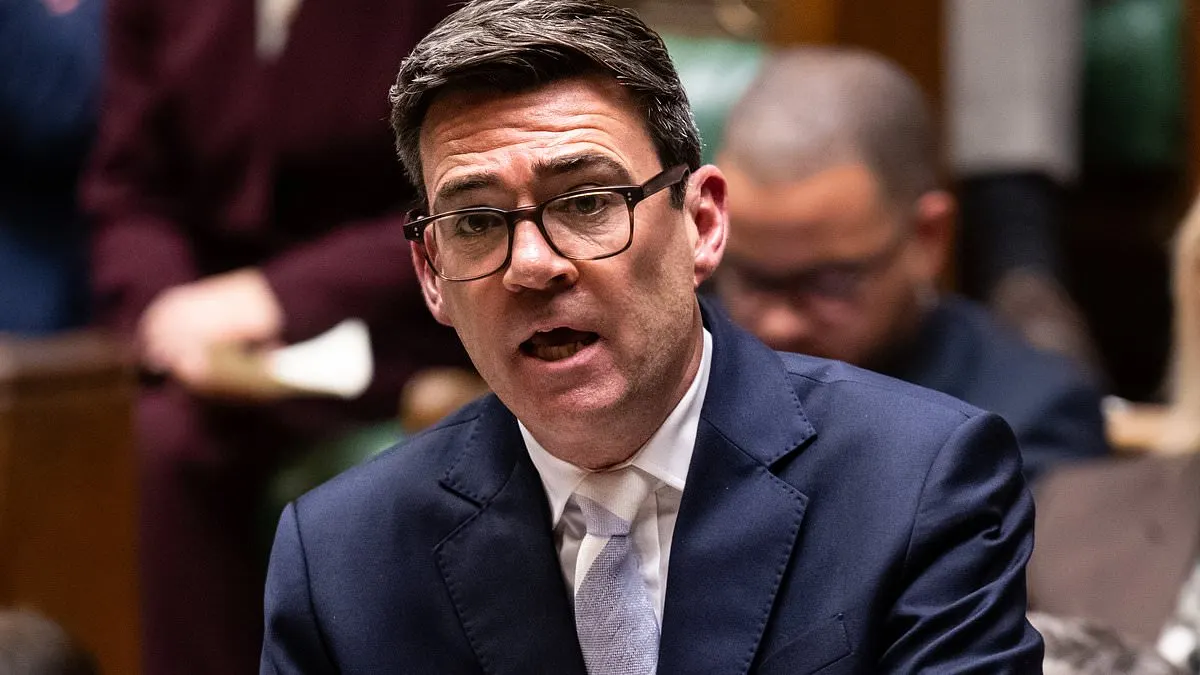
Quentin Letts argues that Prime Minister Andy Burnham appeared unfocused and unclear during a Commons statement billed as an international update. Letts says Burnham spent little time on Ukraine and Iran, instead setting out plans to renegotiate aspects of the UK’s relationship with the EU, a shift he portrays as politically expedient ahead of a possible early election.
The column criticises Burnham’s remarks as vague and contradictory, particularly on whether a referendum might be among the options and on alleged Russian interference in the Brexit vote. Letts also describes exchanges with Conservative leader Kemi Badenoch and Labour MPs Jonathan Hinder and Melanie Onn, who pressed Burnham on the EU, freedom of movement and the euro. These are the columnist’s interpretations of the Commons performance, not neutral reporting.
- Letts says Burnham’s Commons statement lacked clarity.
- Burnham outlined plans to revisit aspects of EU relations.
- The column highlights conflicting remarks on a referendum and Russia.
New here? Start with this
The UK’s relationship with the European Union changed after the 2016 referendum, when voters chose to leave. The UK formally left in 2020, and politicians still debate how closely to work with the EU on trade, travel and other matters.
The prime minister sets out the government’s position in the House of Commons, where MPs from different parties can question it. Kemi Badenoch leads the Conservatives, while Labour MPs Jonathan Hinder and Melanie Onn can also challenge their own party’s government. Questions about closer EU ties can involve issues such as freedom of movement, the euro and whether voters should have a say.
Both sides, in good faith
The strongest fair case each way — we don't pick a winner.
The case for
A supporter might argue that Burnham was right to use the statement to explain how the UK could improve practical cooperation with the EU, even if that meant ranging beyond the immediate crises in Ukraine and Iran. Reconsidering parts of the relationship could serve national interests, while keeping options open on a referendum or closer integration may reflect a wish to consult the public rather than prejudge the outcome.
The case against
A critic might argue that a statement presented as an international update should have focused clearly on urgent conflicts, and that shifting to EU policy risked looking politically timed rather than strategically necessary. On a consequential issue, ambiguity about a referendum, freedom of movement and the euro could leave voters and Parliament unsure what the government intends, weakening trust and accountability.