Record 234 pedestrians killed or seriously injured by cyclists last year with 70 hit at crossing
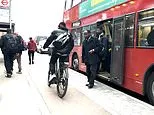
Cyclists killed or seriously injured a record number of pedestrians in Britain last year, according to newly released Department for Transport figures, with 234 people struck in total and 70 of those hit while using a designated crossing such as a zebra, pelican or traffic-light crossing. The figures show a sharp rise from 137 crossing-related casualties recorded in 2016, an increase of 71 per cent, and are putting pressure on Transport Secretary Heidi Alexander to make pedestrian safety a policy priority.
Older pedestrians appear particularly at risk, with 61 people aged over 65 seriously injured in 2025, double the figure for 2021, while another 61 were hurt on footways or verges, suggesting cyclists riding on pavements. Campaigners have pointed to several contributing factors, including "floating bus stops" with cycle lanes running between the pavement and the stop, where cyclists often fail to give way to pedestrians, as well as silent e-bikes and illegally modified delivery bikes capable of far exceeding the legal 15.5mph limit. The government said it had introduced new offences and tougher penalties for dangerous cycling and pledged that offenders would face "the full force of the law".
- Cyclist-pedestrian casualties hit a record 234 last year in Britain.
- 70 victims were struck at zebra, pelican or traffic-light crossings.
- Floating bus stops, silent e-bikes and illegal delivery bikes cited as factors.
New here? Start with this
Britain's roads have seen a marked rise in pedestrians being hurt by cyclists, with new Department for Transport figures showing the trend has worsened significantly over the past decade. Crossings, footways and verges – places where pedestrians would normally expect to feel safe from moving traffic – are recorded as common locations for these incidents. Older people appear especially affected, alongside concerns about cycling on pavements.
Several developments in cycling infrastructure and technology have been cited as possible factors. These include so-called "floating bus stops", a design where a cycle lane runs between the pavement and the bus stop itself, as well as the growing use of e-bikes, which can be near-silent, and delivery bikes that are sometimes illegally modified to travel faster than the legal limit. The Department for Transport, led by Transport Secretary Heidi Alexander, sets road safety policy and cycling law for England.
The issue matters because it touches on the balance between promoting cycling, which governments encourage for health and environmental reasons, and protecting pedestrians, particularly those who are older or less mobile. It also raises questions about how crossings and cycle lanes are designed, how new and modified bikes are regulated, and what penalties apply when cyclists cause harm.
Both sides, in good faith
The strongest fair case each way — we don't pick a winner.
The case for
The sharp rise in pedestrian casualties, particularly among vulnerable older people and at designated crossings, represents a serious public safety crisis requiring firm action. The specific problems identified—silent e-bikes, illegally modified delivery bikes exceeding speed limits, and poor behaviour at crossings—suggest either recklessness or deliberate disregard for pedestrian safety. Stronger legal penalties and rigorous enforcement are necessary to establish clear consequences and deter dangerous cycling behaviour.
The case against
Whilst these casualties are regrettable, cyclists remain responsible for a tiny fraction of serious injuries compared to motor vehicles, which cause thousands of deaths annually. Rather than penalising cyclists in ways that discourage cycling—with its proven benefits for public health and the environment—policymakers should address root causes: poor infrastructure design like badly conceived floating bus stops, inadequate signage about responsibilities, and unsafe crossing layouts. Better infrastructure and clearer education would likely prove more effective at reducing harm than an enforcement-focused approach.