Business leader urges Burnham to prioritise Brexit trade reforms
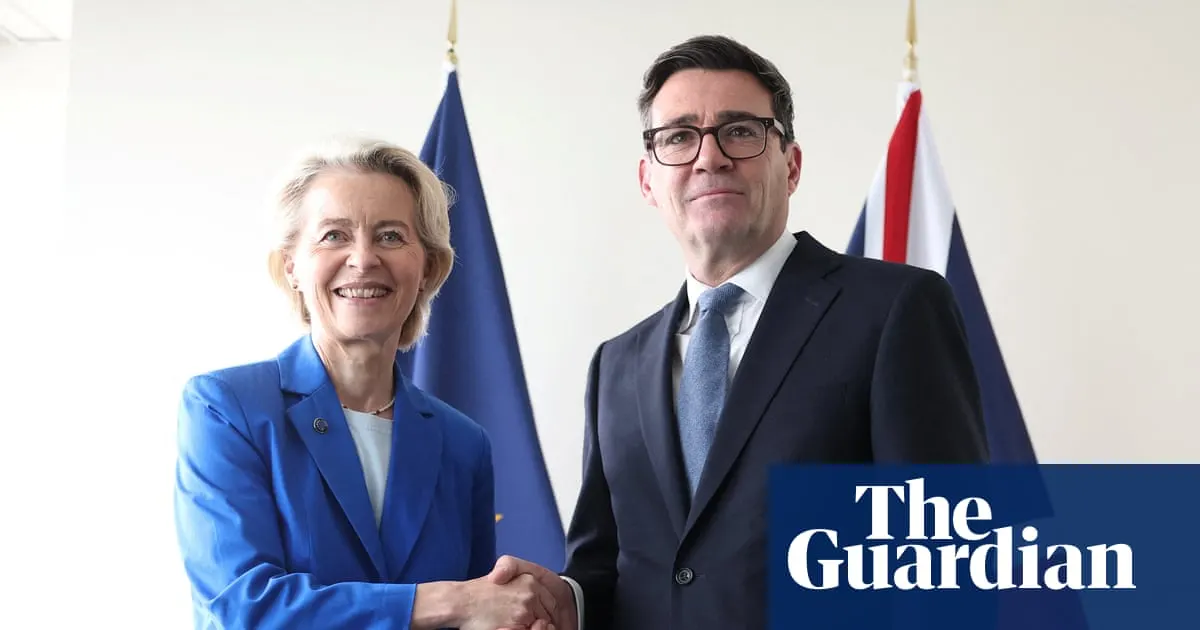
Shevaun Haviland, head of the British Chambers of Commerce, says repairing Brexit’s economic damage should be a priority as Andy Burnham reassesses Labour’s approach to the EU. She backs the prime minister’s willingness to revisit the issue, arguing that the current trading relationship is still failing many businesses.
More than half of business leaders surveyed by the BCC say the deal introduced in 2021 is not helping them, and Haviland says the difficulties have not eased as companies adapted to its rules. Estimates put the economic cost so far at up to £240bn, with income per person 6% to 8% lower than it might otherwise have been; the Office for Budget Responsibility estimates a long-term GDP reduction of about 4%. The BCC plans to consult its 50,000 members, who employ more than 6 million people, on options including rejoining the EU, while Haviland also urged the government to use the budget to ease business costs.
- Business groups say the UK’s EU trading arrangements remain difficult for firms.
- The BCC will consult members on options, including rejoining the EU.
- Haviland also called for budget measures to ease business costs.
New here? Start with this
Brexit is the UK’s departure from the European Union, which changed the rules for trade between them. A new trading arrangement took effect in 2021, bringing new requirements for businesses that sell goods across the UK–EU border.
The British Chambers of Commerce represents businesses across the UK, and Shevaun Haviland is its director general. Andy Burnham is the Labour mayor of Greater Manchester; the wider debate concerns how the UK should handle its relationship with the EU and the effects of the current trade rules on businesses and the economy.
Both sides, in good faith
The strongest fair case each way — we don't pick a winner.
The case for
Revisiting the UK’s relationship with the EU could reduce trade friction, improve business access to markets and address costs that firms say remain difficult despite adapting to the 2021 deal. Given the reported economic estimates and the BCC survey, proponents argue that examining options openly is a practical way to support growth, investment and jobs.
The case against
Changing the trading relationship could bring fresh uncertainty and adjustment costs for businesses, while closer EU ties may involve obligations or compromises that some consider undesirable. Opponents could argue that the government should focus first on targeted fixes and domestic measures to ease business costs, rather than reopen a settlement whose alternatives and benefits are not yet established.
Business Europe Geopolitics Politics UK World
Read the full article at the source →
Originally published by The Guardian as “Repairing Brexit economic damage should be Burnham’s top priority, business chief says”.