UK retiree builds 920-valve computer from Soviet-era tubes
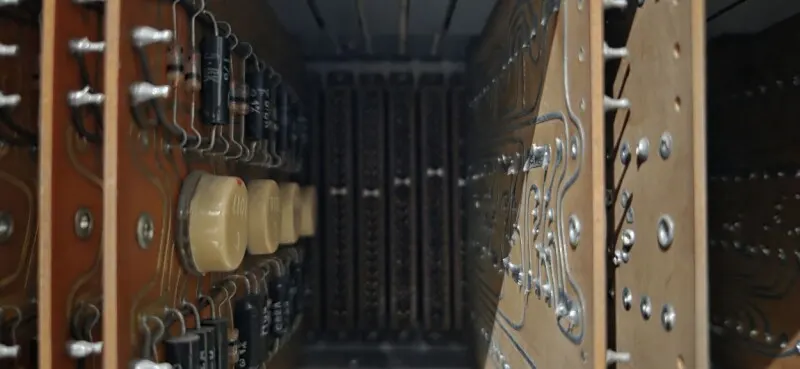
A retired UK man known only as "Mike" has built a working computer inside his spare room using 460 recycled Soviet-era vacuum tubes, documenting the project on his own website and Hackaday. The build is notable because each 6N3P tube, originally rated for about 500 hours of life, had already been used and stored for over 50 years, forcing Mike to design and test custom component values rather than rely on textbook specifications. It represents an extreme hobbyist take on retro computing, going far beyond restoring old consoles or 1980s PCs.
The finished machine contains 920 thermionic triodes across 46 ten-tube circuit boards mounted on five backplanes, uses NOR logic gates similar to the Apollo guidance computer, and can perform 16-bit maths via a 4-bit instruction set. It takes 10 to 15 minutes to stabilise after power-up, warming the whole room in the process, and currently outputs a 64-bit Fibonacci sequence via a repurposed British Rail station clock display. Mike, who calls tube computing "an addiction" and has now built three such machines since 2021, plans to finish its input/output system so it can run a simple flight simulator based on a 1920s airship voyage from Brighton to Paris.
In short
- Retiree builds working computer from 460 Soviet-era vacuum tubes
- Machine uses 920 triodes, NOR logic, takes 15 minutes to warm up
- Next project: an airship flight simulator using a repurposed clock display
Explained simply
Vacuum tubes, also called thermionic valves, are electronic components that can switch or amplify electrical signals. Before transistors became common, computers used large numbers of tubes to carry out calculations and control operations. Their size, heat and limited working life made tube-based computers very different from modern machines.
Mike’s project uses 460 old Soviet-made tubes, each containing two triodes, which together form the computer’s electronic circuits. He has had to account for the tubes’ age and past use when choosing and testing other components. The machine’s design uses NOR logic, a way of building circuits that process information.
The build is part of a hobbyist interest in earlier computing, taken to a scale beyond restoring vintage computers. Tube machines need time to warm up and produce considerable heat, while their many components make them complex to build and maintain. The project also shows how computing can be built from basic electronic parts, rather than relying on the compact chips found in today’s devices.
Read the full article at the source →
Originally published by The Register as “Retired man turns spare room into Soviet-era supercomputer”.