World news and discussion on TalkFuse.
Khanna proposes $1,700 family payments to offset Iran war costs
Developing story first seen 6 hours ago
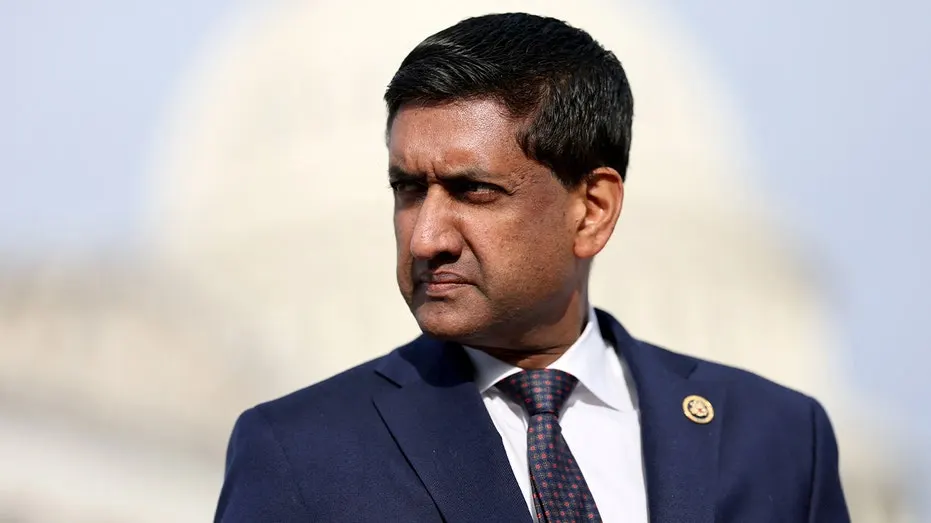
Newly added context sets Khanna’s proposed $1,700 family payments against President Trump’s earlier pledge of $5,000 checks, which did not materialise after Republicans lost control of Congress. Khanna says his proposal would offset higher household costs linked to the Iran war and urges Congress to approve it in January.
His earlier bill to redirect unused Pentagon funds for taxpayer compensation remains at the committee stage and does not specify a payment amount. Economist Mark Zandi estimated the conflict had cost the average household about $2,000, or $265 billion nationwide; AAA put petrol at $3.81 a gallon on Monday, about 75 cents above a year earlier, and diesel at nearly $6.
- Sources
- 2
- Outlets
- 2
- Left · Centre · Right
- 0 · 0 · 2
In short
- Khanna proposes $1,700 checks for every American family.
- He wants Congress to approve them in January.
- His earlier compensation bill remains in committee.
How this story developed
- 4 hours ago Khanna framed the proposal as a chance for Democrats to address voters’ affordability concerns after midterm losses, and contrasted it with Donald Trump’s earlier $5,000-check pledge, which never came to fruition after Republicans lost control of Congress.
- 4 hours ago Ro Khanna proposed $1,700 payments to American families to offset costs linked to the Iran war, while his earlier bill to redirect unused Pentagon funds remained in committee without setting an amount; Mark Zandi estimated the conflict had cost households about $2,000 on average, and fuel prices were markedly higher than a year earlier.
Full account
US Representative Ro Khanna has proposed a $1,700 payment to every American family, saying it would help cover higher household costs linked to the war in Iran. In a video posted on X, the California Democrat called on the House and Senate to approve the payments in the first week of January and send the measure to President Donald Trump. He cited increases in fuel, food and electricity bills, which he attributed to the conflict and disruption to oil transport routes.
The proposal follows Khanna’s earlier opposition to funding the war. In September, he introduced a bill to use certain unspent Pentagon funds to compensate taxpayers and their dependants for the war’s economic effects. That legislation does not set a payment amount and, according to the reports, has remained at the committee-referral stage. The sources do not describe a new bill specifying the $1,700 payment, nor do they say how it would be financed.
The reports place Khanna’s proposal against estimates of the conflict’s economic impact. Mark Zandi, chief economist at Moody’s Analytics, put the cost at about $2,000 per household, or $265 billion across the country, including energy and borrowing costs as well as military spending. The accounts also cite AAA figures showing average US petrol at $3.81 a gallon on Monday, around 75 cents higher than a year earlier, while diesel was close to $6 a gallon, up about $2.23 year on year. Petrol had risen above $4 after the war began in February before easing in recent weeks.
Khanna framed the payments as a chance for Democrats to respond to voters’ concerns about affordability after their midterm gains. Trump has defended higher prices as a cost of preventing Iran from obtaining a nuclear weapon. Before the election, he had promised a $5,000 payment to every adult citizen if Republicans kept control of Congress; they lost both chambers. Republican leaders questioned that plan, citing the national debt, inflation risks and the need for congressional approval. It remains uncertain whether Khanna’s idea will face similar objections among Democrats or gain enough support to pass.
Where outlets differ
From the full account, which is AI-written from the sources:
The two reports are substantially alike in their account of Khanna’s proposal, the earlier Pentagon-funds bill, the economic estimates and fuel prices. Source 1 includes additional framing: it says Khanna is a frequent critic of Trump’s war and notes his prior call to block all war funding. It also includes a separate headline reference to warnings that investigations into the Trump administration could hinder the Democrats’ affordability agenda, but gives no details in the supplied text.
Source 1 also mentions past Trump payment proposals, including a DOGE-linked dividend, and carries a headline about voters’ response to the proposed $5,000 checks. Source 2’s supplied text instead ends with a truncated reference to other proposed payments, so it does not provide the same detail. Both reports say it is unclear whether Khanna’s proposal will meet Democratic resistance, though Source 2 states this explicitly.
Steelman: both sides, in good faith
The strongest fair case each way — we don't pick a winner.
The case for
Supporters could argue that $1,700 checks would offer timely relief to families facing higher fuel and other living costs linked to the war, and that sharing the burden recognises costs borne by households. They may see redirecting unused Pentagon funds as a way to compensate the public while prompting Congress to address affordability concerns.
The case against
Critics could argue that a flat payment may not match households’ actual costs or target those most affected, and that committing public funds requires scrutiny of the proposal’s cost and trade-offs. They may also question whether the estimated war-related burden justifies this specific payment, particularly since Khanna’s earlier bill sets no amount and remains in committee.
Explained simply
The United States has been involved in a war with Iran, and the conflict has added to costs for households, including fuel. Congress controls federal spending, so payments to families would need lawmakers’ approval.
Ro Khanna is a Democratic member of the House of Representatives, one of the two chambers of Congress. He has previously proposed using Pentagon money not spent on other purposes to compensate households, but that bill remains under committee consideration and does not specify how much each family would receive.
The proposal comes amid concerns about affordability and recent midterm election losses for Democrats. The estimates of the conflict’s cost to households are based on economic analysis, while the average cost for any particular family may differ.
Coverage · 2 sources
Bias meters
From 2 rated sources.
Americas Culture Food Middle East World
Read the full article at the source →
Originally published by Fox News as “Ro Khanna pitches $1,700 checks for Americans to offset Iran war costs: ‘A chance to deliver’”.