Rocket Report: Europe splashes some cash on launch startups; Pallas-1 nears debut
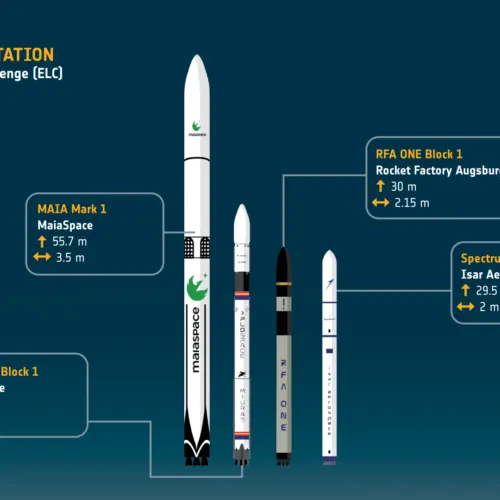
This Rocket Report round-up covers developments in launch services across Europe, India, Japan and the United States.
– The European Space Agency awarded major contracts to launch start-ups: €197.8 million to Germany’s Isar Aerospace, €186.9 million to Rocket Factory Augsburg, and €158.9 million to Spain’s PLD Space, with a MaiaSpace award still being finalised. – The funding is intended to strengthen Europe’s independent access to space by supporting small-launcher development and operations. – Analysis of India’s launch sector argues that Skyroot’s Vikram-1 success alone cannot address shortages in spaceports, suppliers and medium- to heavy-lift launch capacity. – Japanese radar-imaging firm Sarmony plans to launch its first demonstration satellite on Space One’s Kairos rocket in 2028, despite Kairos failing to reach orbit on all three of its launches so far. – A Falcon 9 launch from Florida marked the final planned Florida-based Starlink mission on that rocket, with future missions expected to use Starship.
- ESA commits over €543 million to three European launch start-ups.
- India still lacks sufficient launch capacity despite Skyroot’s progress.
- SpaceX plans to shift Florida Starlink launches from Falcon 9 to Starship.
New here? Start with this
Europe has relied heavily on other countries’ rockets to put satellites into space, and the European Space Agency is seeking more launch options based in Europe. Isar Aerospace, Rocket Factory Augsburg and PLD Space are newer companies developing rockets, while MaiaSpace is another European launcher in development.
India’s private rocket industry is also growing, with Skyroot among the companies working to launch satellites. A launch system depends on more than rockets: spaceports, suppliers and vehicles able to carry larger payloads all affect how often a country can launch and what it can send into space.
In Japan, Sarmony is developing radar-imaging satellites, which can observe Earth through clouds and at night, and Space One is building the Kairos rocket to carry them. In the United States, SpaceX’s Falcon 9 has carried many Starlink internet satellites into orbit; Starship is the company’s larger rocket, intended to take over some future missions.
Art Business Celebrity Companies Culture Entertainment Europe Space Technology World