Russia threatens British factory strikes over military support to Ukraine
Developed over time first seen 2 months ago
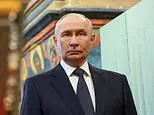
A former senior Russian official has warned that British drone factories could face a "semi-military" response from "unknown sources" in retaliation for the UK sharing cruise missile blueprints with Ukraine, marking one of the most explicit threats yet against UK targets over the war. Andrei Fedorov told BBC Newsnight that Vladimir Putin was under "serious" domestic pressure to act against Britain, while Kremlin spokesman Dmitry Peskov separately said Russia's military was already gathering data to locate and destroy any missile production sites, accusing Britain of "adding fuel to the fire." The row overshadowed Prime Minister Andy Burnham's first official trip abroad, a visit to Kyiv where he met President Volodymyr Zelensky, chaired the "coalition of the willing" group, and confirmed plans to travel to the US next month with European leaders to press Donald Trump on Ukraine's defence needs.
At the heart of the dispute is Britain's decision to hand Ukraine blueprints for British-made components of the Scalp missile, a French variant of the Storm Shadow cruise missile, enabling Kyiv to produce the long-range weapon domestically. Burnham dismissed the Kremlin's framing, asking "who started the fire?", and reaffirmed UK support for Ukraine following intensified Russian strikes, including an attack on a shopping centre that killed at least 16 people. Separately, Burnham said he was "really confident" a shortage of US-made Patriot interceptor missiles, which Zelensky hopes to secure 300 of before winter, was "fixable" through negotiation involving multiple international partners, after Trump earlier backtracked on allowing Ukraine to manufacture the Patriots itself.
- Sources
- 2
- Outlets
- 2
- Left · Centre · Right
- 0 · 1 · 1
In short
- Ex-Russian official warns of possible strikes on UK drone factories
- Row follows UK sharing Scalp/Storm Shadow missile blueprints with Ukraine
- Burnham to lobby Trump on Ukraine's defence needs next month
How this story developed
- 2 months ago A Kremlin adviser has given the most explicit warning yet of possible Russian action against UK targets, telling BBC Newsnight that "unknown sources" could mount a "semi-military" response against British drone factories in retaliation for the UK sharing cruise missile blueprints with Ukraine.
- 2 months ago Russia has issued threats of military retaliation against the United Kingdom, targeting defence and drone manufacturing facilities in response to increased British military assistance to Ukraine. The Kremlin, viewing UK support as direct participation in the conflict, made the warnings through official channels.
- 2 months ago A former senior Russian official has warned that British drone factories could face a "semi-military" response from "unknown sources" in retaliation for the UK sharing cruise missile blueprints with Ukraine, marking one of the most explicit threats yet against UK targets over the war.
Full account
Russia has raised the prospect of a covert or 'semi-military' response against factories in Britain that supply drones and missile components to Ukraine, after the UK deepened its involvement in Kyiv's defence production. The threat emerged as Prime Minister Andy Burnham made his first trip abroad since taking office, travelling to Kyiv to meet President Volodymyr Zelensky and chair a meeting of the 'coalition of the willing', the grouping originally established by the UK and France under his predecessor Sir Keir Starmer. During the visit, Burnham confirmed that the European defence manufacturer MBDA had been cleared to share details of British-made components used in the long-range SCALP missile, a French equivalent of the UK's Storm Shadow, so that Ukraine could begin producing the weapon domestically.
The disclosure prompted a sharp reaction in Moscow. Andrei Fedorov, a former Russian deputy foreign minister who now appears regularly as a pro-Kremlin commentator, told the BBC's Newsnight that President Vladimir Putin was under significant domestic pressure to act against Britain, which Moscow now regards as directly involved in the conflict. He said the response need not be official or acknowledged by the Russian state, suggesting it could include cyber attacks 'from an unknown source' or, more strikingly, a 'semi-military' operation against British enterprises manufacturing drones or missile components for Ukraine. Fedorov did not rule out such facilities being struck by parties not formally linked to Russia, and said Putin had described the situation as a 'Pandora's box' having been opened.
The comments echoed a warning delivered separately by Kremlin spokesman Dmitry Peskov, who accused Britain of 'participating in this war' on Ukraine's side and said the UK was obstructing any progress towards peace. Peskov said Russia's armed forces were already working to identify and destroy production sites for missiles and other military equipment supplying Ukraine, framing the blueprint-sharing arrangement as a significant escalation rather than a routine act of continued support.
Burnham rejected the Kremlin's characterisation, calling the threats against the UK 'outrageous' and responding to accusations of fuelling the conflict by asking who had started it in the first place. He indicated that UK support for Ukraine would continue undiminished, and separately outlined plans to travel to the United States next month alongside other European leaders to press President Donald Trump on Ukraine's defence requirements — a trip that would be his first to the US as prime minister, should it proceed. The exchange came against a backdrop of intensifying Russian strikes, including an attack on a shopping centre the previous week that killed at least sixteen people, and growing concern in Kyiv over dwindling supplies of Patriot interceptor missiles, with Zelensky said to be seeking around 300 of the systems before winter.
Where outlets differ
From the full account, which is AI-written from the sources:
Source 1 places more emphasis on the personal and symbolic language used by Moscow, including the claim that Russia views Britain as 'evil number one' and Putin's 'Pandora's box' remark, and gives more detail on hackers targeting 'concrete enterprises' tied to Storm Shadow components.
Source 2 provides broader context largely absent from Source 1: Burnham's planned trip to Washington with European leaders to lobby Trump, the fact this was his first US visit as PM, the recent deadly strike on a shopping centre, and Ukraine's shortage of Patriot missiles ahead of winter.
Source 2 also includes Fedorov's specific claim that pressure on Putin was coming from 'public opinion polls' and Russian media/journalists, a detail not present in Source 1.
Source 1 frames the threat as covering both drone factories and Storm Shadow/SCALP component production broadly, while Source 2's framing of the 'semi-military' threat is narrower, focused specifically on drone factories.
Centre outlets 1
Only here: drone, face, attacks, unknown, sources
Right-leaning outlets 1
Only here: russia, threatens, attack, british, semi
Every side used: factories
Headline columns compared word for word; nothing in them is AI-written.
Steelman: both sides, in good faith
The strongest fair case each way — we don't pick a winner.
The case for
Advocates of continued UK support argue that Ukraine has a sovereign right to defend itself against an unprovoked invasion, and that helping it produce Storm Shadow-derived missiles domestically strengthens deterrence without crossing any recognised red line, since the technology has already been supplied and used. They contend that yielding to Kremlin threats of factory strikes would set a dangerous precedent, effectively giving Moscow a veto over British industrial and foreign policy, and that firmness now is the surest way to bring the war to an end on acceptable terms. From this perspective, Burnham's blunt rejoinder reflects a principled refusal to be intimidated out of supporting an ally under attack.
The case against
Others argue that expanding weapons production for Ukraine on British soil raises the risk of direct confrontation with a nuclear-armed state, and that the government has a primary duty to protect UK citizens, workers and infrastructure from retaliation, however remote the threat may seem. They contend that rhetoric from Kremlin-linked figures should not be dismissed lightly, and that ministers ought to weigh the marginal military benefit of blueprint-sharing against the exposure it creates for named factories and their employees. From this vantage point, caution and clearer risk assessment – rather than confident dismissal of Moscow's warnings – would be the more responsible course.
Explained simply
Russia's war in Ukraine has drawn Britain and other Western countries deeper into supporting Kyiv, mainly through weapons, funding and training rather than direct military involvement. Tensions have now sharpened after the UK shared technical blueprints allowing Ukraine to build its own components for cruise missiles similar to those Britain has already supplied. Moscow sees this kind of support as active participation in the conflict and has responded with unusually direct warnings.
The key figures involved are Russian officials speaking for or close to the Kremlin, including a former deputy foreign minister and a government spokesman, who have suggested Russia could target British-linked weapons production in retaliation. On the other side is the UK government, now led by Prime Minister Andy Burnham, who has been building closer coordination with European allies over Ukraine's defence needs and is expected to raise the issue with the United States.
This matters because any explicit threat against British soil or industry marks an escalation in rhetoric between Russia and a NATO member, raising questions about how far the war's consequences could spread beyond Ukraine. It also highlights the wider difficulty Western allies face in balancing support for Ukraine with the risk of provoking a direct confrontation with Russia.
Coverage · 2 sources
Bias meters
From 2 rated sources.
Celebrity Entertainment Europe UK World