Technology news and discussion on TalkFuse.
Samsung’s new foldables come with Gemini Notebook pre-installed
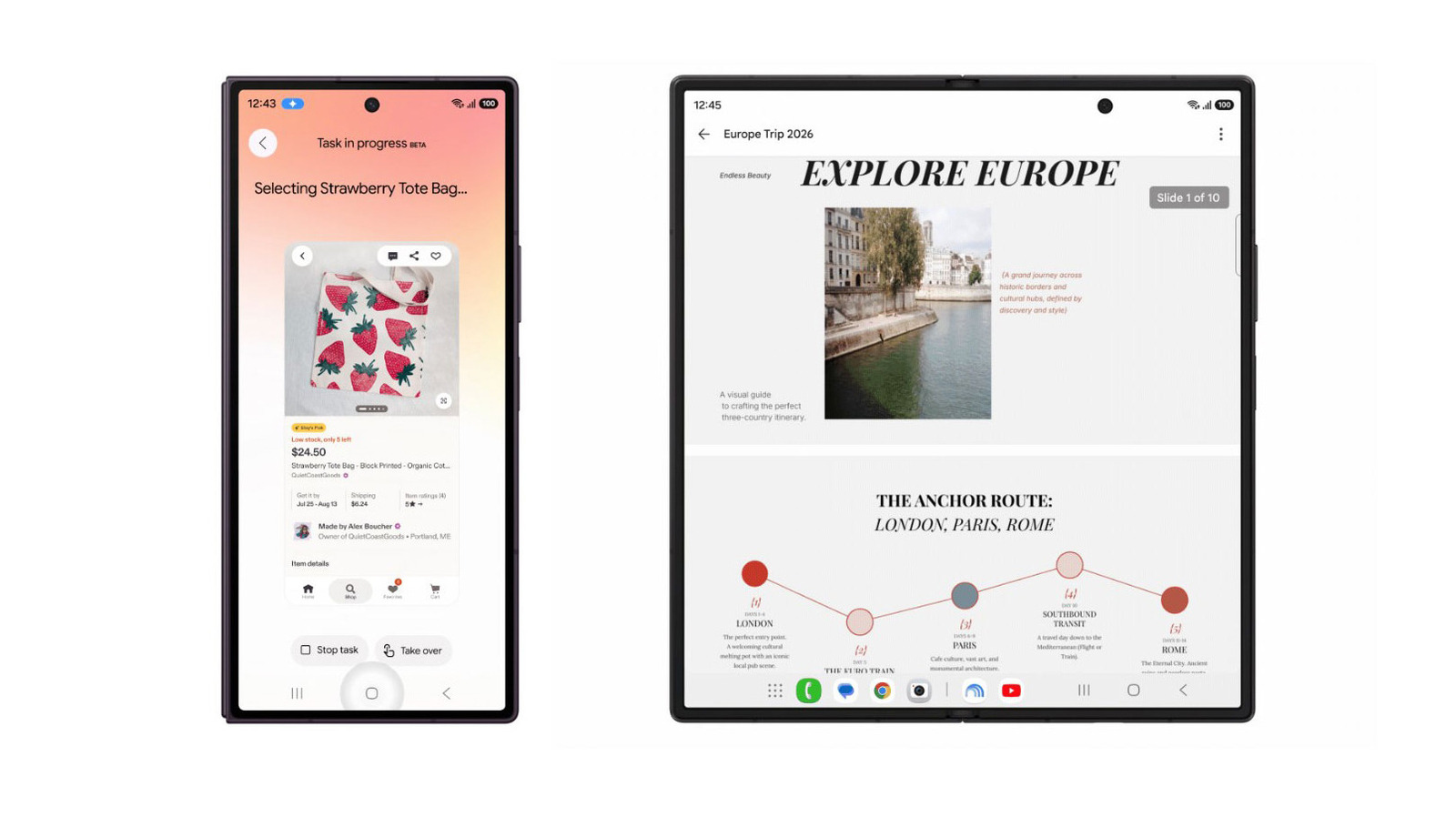
Samsung and Google used Galaxy Unpacked to detail a wave of Gemini-powered AI features arriving on Samsung's new Galaxy Z Fold 8 series and Z Flip 8 foldables. The devices will ship with Google's Gemini Notebook (formerly NotebookLM) pre-installed, alongside an expanded AI task automation feature that can now handle actions like shopping, booking travel and making dinner reservations, reflecting Google and Samsung's push to embed deeper AI assistance directly into flagship hardware.
Task automation, first launched in beta in February, is expanding from a handful of supported apps to 40, and on the Z Flip 8 it can be triggered directly from the Flex Window by long-pressing the power button. Gemini can also now interpret complex images and read on-screen content, while Gemini Notebook lets users compile web pages, videos and other sources into research packs that can generate slide decks, flash cards and podcasts. Buyers of the Fold 8 Ultra, Fold 8 and Flip 8 get a six-month Google AI Pro trial, the Galaxy Watch 9 gains wrist-raise Gemini access, two new Android XR smart glasses frames were unveiled ahead of a autumn launch, and Android 17 introduces a native iPhone-to-Android migration tool debuting on the new foldables and select Pixel phones.
In short
- Samsung's new foldables ship with Gemini Notebook and expanded AI task automation.
- Task automation now covers 40 apps, including shopping and bookings.
- New devices get free Google AI Pro trial and native iPhone data migration.
Steelman: both sides, in good faith
The strongest fair case each way — we don't pick a winner.
The case for
These AI features represent meaningful consumer innovation and accessibility improvements. Pre-installation ensures all users can immediately benefit from advanced capabilities like task automation and research compilation without installation friction, whilst the six-month trial offers risk-free evaluation of paid services. Users retain complete freedom to ignore features they don't want, so pre-installation serves genuine convenience without restricting choice or consumer autonomy.
The case against
Mandatory pre-installation of proprietary AI services that process personal data raises legitimate concerns about consumer choice and autonomy. Users uncomfortable with AI handling their information feel pressured to engage with Google's ecosystem to fully use their devices, whilst those preferring alternative services face practical obstacles to switching. This bundling approach prioritises vendor convenience over user sovereignty and erects barriers to competing solutions, potentially entrenching market dominance rather than earning adoption through merit alone.
Explained simply
Samsung makes Galaxy phones that open like small books or flip shut to become more compact. Google makes Gemini, an AI assistant built into its services and devices. The two companies have been adding Gemini features to Samsung phones, as phone makers compete to offer more help with everyday tasks.
AI assistants can respond to questions and work with information from different sources, but some features also need access to apps and on-screen content. Bringing these tools onto a phone raises practical questions about what tasks they can handle and how people use them. The changes matter to Samsung and Google as they develop their partnership and to people choosing a new phone.