Azerbaijan’s school hijab restrictions trigger protests and tensions with Turkey
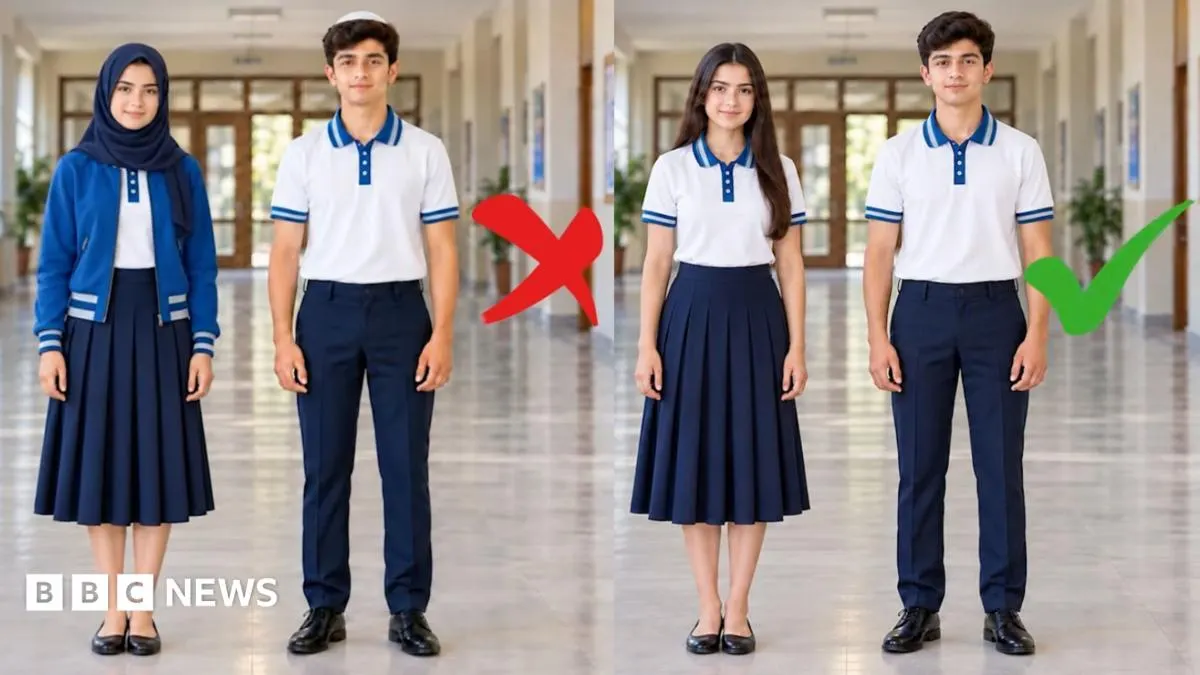
Azerbaijan’s enforcement of new school uniform rules has barred girls wearing hijabs from state schools, prompting rare protests in Baku and southern districts. The dispute has drawn attention to the country’s strict secular policies and has become a source of tension with Turkey, its closest ally.
The rules, approved on 21 September, prohibit clothing deemed contrary to secularism but do not explicitly mention the hijab; similar guidance for teachers followed on 6 October. Authorities say 37 people were detained over attempts to obstruct enforcement, while protesters and activists have faced reported detentions or loss of contact, and some users say social media access has been disrupted. The article also describes concerns over Iranian influence in areas where protests have taken place.
- Girls wearing hijabs have been turned away from state schools.
- Protests have taken place in Baku and southern districts.
- The policy has strained relations with close ally Turkey.
New here? Start with this
Azerbaijan is a mainly Muslim country where the state is formally secular, meaning religion and government are kept separate. The government sets rules on what pupils and teachers may wear in state schools; the latest uniform guidance does not name the hijab but bans clothing considered inconsistent with secularism.
Turkey is Azerbaijan’s closest ally, and the two countries have strong political and cultural ties. Iran, which borders Azerbaijan, is another influence in the region and has been a source of concern for the Azerbaijani authorities. The dispute matters because it touches on religious practice, state control of education and relations with neighbouring countries.
Both sides, in good faith
The strongest fair case each way — we don't pick a winner.
The case for
Supporters of the restrictions can argue that state schools should apply a common, secular dress code so public education remains religiously neutral and students are not subject to competing religious expectations. They may also see consistent enforcement as a way to uphold national rules and limit foreign political or religious influence, provided those rules are clear and applied fairly.
The case against
Opponents can argue that barring hijab-wearing girls from state schools makes access to education conditional on giving up a sincere religious practice, despite the rules not naming the hijab explicitly. They may see this as an infringement of personal and religious freedom, and argue that reported detentions and disruptions deepen mistrust rather than resolve the dispute.
Read the full article at the source →
Originally published by BBC World as “School headscarf ban sparks rare protests in Azerbaijan and row with Turkey”.