Seldon Biography Exposes Conservative Leadership Rifts: Sunak’s Johnson Plot and Cameron’s Private Election Doubts
Developed over time first seen 2 months ago
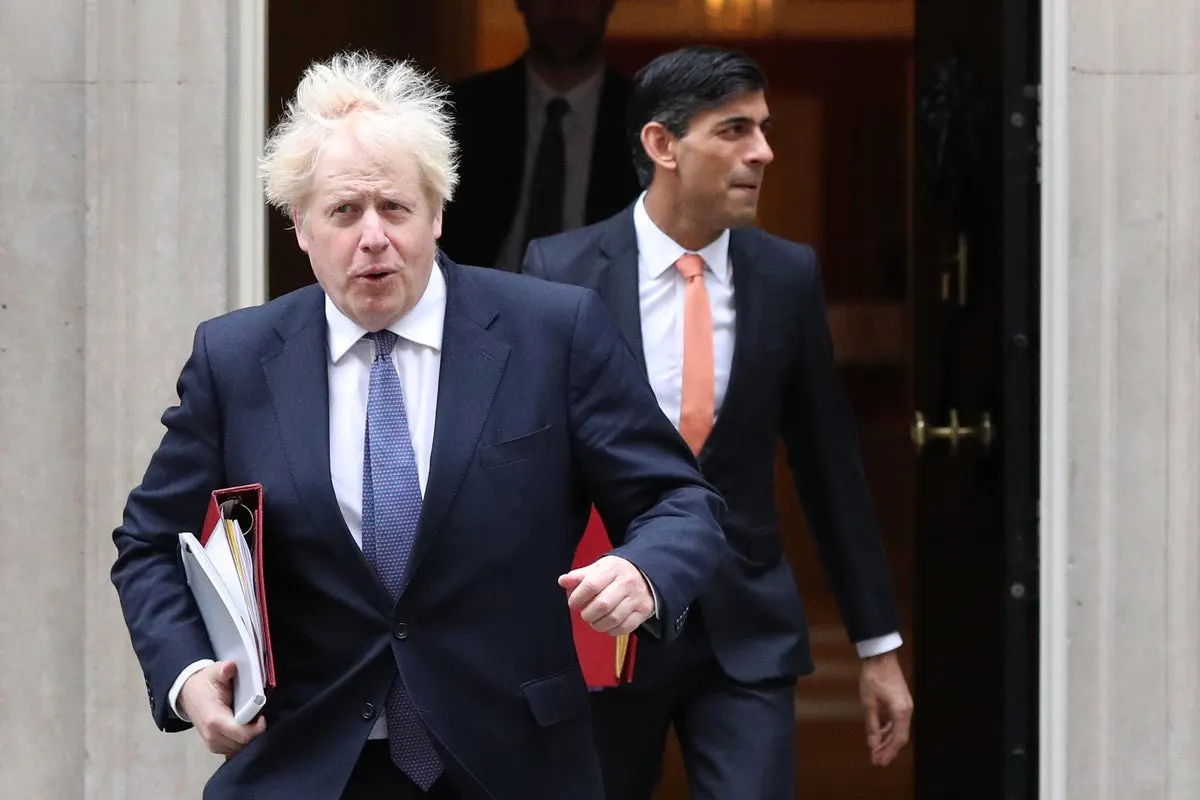
Sir Anthony Seldon's forthcoming biography contains fresh allegations about internal Conservative machinations surrounding Boris Johnson's departure from office. The book claims Rishi Sunak played a more active role in efforts to undermine Johnson than previously disclosed, with Sunak's aides working strategically to weaken Johnson's position with Sunak's knowledge and tacit approval. This account reignites long-standing controversy over whether Sunak orchestrated a political betrayal of his predecessor.
Simultaneously, Seldon's book reveals divisions within senior Conservative leadership over Sunak's May 2024 snap election decision. David Cameron privately counselled Sunak against calling the election, warning it was strategically mistaken, yet publicly endorsed the announcement the following day without disclosing his prior objections. The revelation illustrates a pattern of private reservations concealed beneath a facade of unified party leadership during a pivotal period.
- Seldon's biography alleges Sunak actively plotted Johnson's downfall with tacit approval, reviving accusations of political betrayal
- Cameron privately opposed Sunak's snap election call as strategically unwise but publicly backed it without revealing doubts
- Book exposes rifts and undisclosed private disagreements among Conservative Party leadership figures
New here? Start with this
Conservative MPs replaced Boris Johnson as prime minister in 2022 after a series of scandals, with Rishi Sunak eventually taking over. Their relationship has long been a source of tension within the party, amid claims that Sunak's resignation as chancellor helped trigger Johnson's downfall. Sir Anthony Seldon is a historian and former head teacher known for writing detailed insider accounts of recent prime ministers, drawing on interviews with those close to the events.
David Cameron was Conservative prime minister from 2010 to 2016 and later returned to government as foreign secretary under Sunak. In May 2024, Sunak surprised Westminster by calling a general election for July that year, a decision widely seen as having backfired badly, since the Conservatives went on to lose heavily to Labour.
These accounts matter because they touch on how much the public presentation of Conservative unity matched what was happening behind closed doors during two of the most consequential moments in the party's recent history: the removal of one leader and the election defeat that followed under his successor.
Both sides, in good faith
The strongest fair case each way — we don't pick a winner.
The case for
Defenders of this conduct would argue that collective responsibility and party unity necessarily involve holding private reservations while presenting a united public front, and that this is neither unusual nor dishonest but simply how functioning governments operate. Sunak's resignation from Johnson's government can be read as a principled stand on integrity grounds, with his allies' subsequent positioning a legitimate response to a leadership crisis rather than a covert plot. Similarly, Cameron's choice to raise concerns about the election timing privately, then support Sunak's decision once made, reflects the convention that internal debate should conclude once a leader has decided, with loyalty and discretion valued over public dissent that could destabilise the party further.
The case against
Critics would counter that voters are entitled to honesty from those who govern them, and that concealing serious doubts about a consequential decision, such as the timing of a general election, or working to undermine a sitting Prime Minister while maintaining a public show of support, amounts to a betrayal of that trust. If Sunak's aides acted with his knowledge to weaken Johnson's position, this suggests calculated self-interest dressed up as principle, while Cameron's private warning followed by public endorsement exemplifies a wider culture of concealment that leaves the electorate making judgements based on a false picture of unity. Such episodes, they would argue, feed public cynicism about whether politicians ever say what they truly believe.
Full account
A forthcoming biography by Sir Anthony Seldon portrays Rishi Sunak’s premiership as shaped by deep Conservative divisions, reviving the dispute over Boris Johnson’s fall from office. The book, Sunak at 10: The Last Conservative PM?, says Sunak’s advisers worked methodically to weaken Johnson in 2022 with the then chancellor’s implicit approval. Johnson’s allies had long portrayed Sunak’s resignation as a betrayal, although Seldon argues that Johnson’s own conduct and fitness for office were the central reasons for his downfall.
Sunak resigned as chancellor in July 2022 amid a series of controversies surrounding Johnson’s government. Johnson left Downing Street shortly afterwards, before Sunak lost the ensuing leadership contest to Liz Truss and later became prime minister when her administration collapsed. According to Seldon’s account, Sunak and his associates contributed to the political pressure on Johnson, but were not the decisive factor. The alleged plotting is presented as an explanation for some of the lasting animosity between the two camps.
The biography also describes a private disagreement between Sunak and David Cameron over the timing of the 2024 general election. Seldon writes that Cameron, then foreign secretary, advised Sunak against an early summer contest, arguing that the government should allow more time for its economic, diplomatic and energy-security agenda to take effect. Sunak nevertheless announced a 4 July election the following day, despite having been able to delay until January 2025.
The early-election decision ended in a heavy Conservative defeat, after a campaign marked by setbacks including criticism over Sunak’s early departure from a D-Day commemoration and controversy over bets placed on the election date. The book says Sunak sought Cameron’s support partly to contain possible cabinet resistance, but that Cameron believed the move was premature. It therefore depicts both the Johnson episode and the election decision as moments when Sunak faced distrust or opposition within his own party.
Where outlets differ
The two reports focus on separate extracts from the same Seldon biography: the first centres on the alleged role of Sunak and his aides in Johnson’s removal, while the second examines Cameron’s private objection to the 2024 election timetable.
The Johnson report gives greater weight to the hostility between the Johnson and Sunak camps and stresses Seldon’s view that Johnson’s own shortcomings were the main cause of his exit. The Cameron report instead foregrounds the tactical case for postponing the election and the subsequent campaign failures.
Both reports are framed as accounts of claims in Seldon’s book, rather than independently established findings.