Swedish voters go to polls to choose a new parliament as hard right bids for role in government
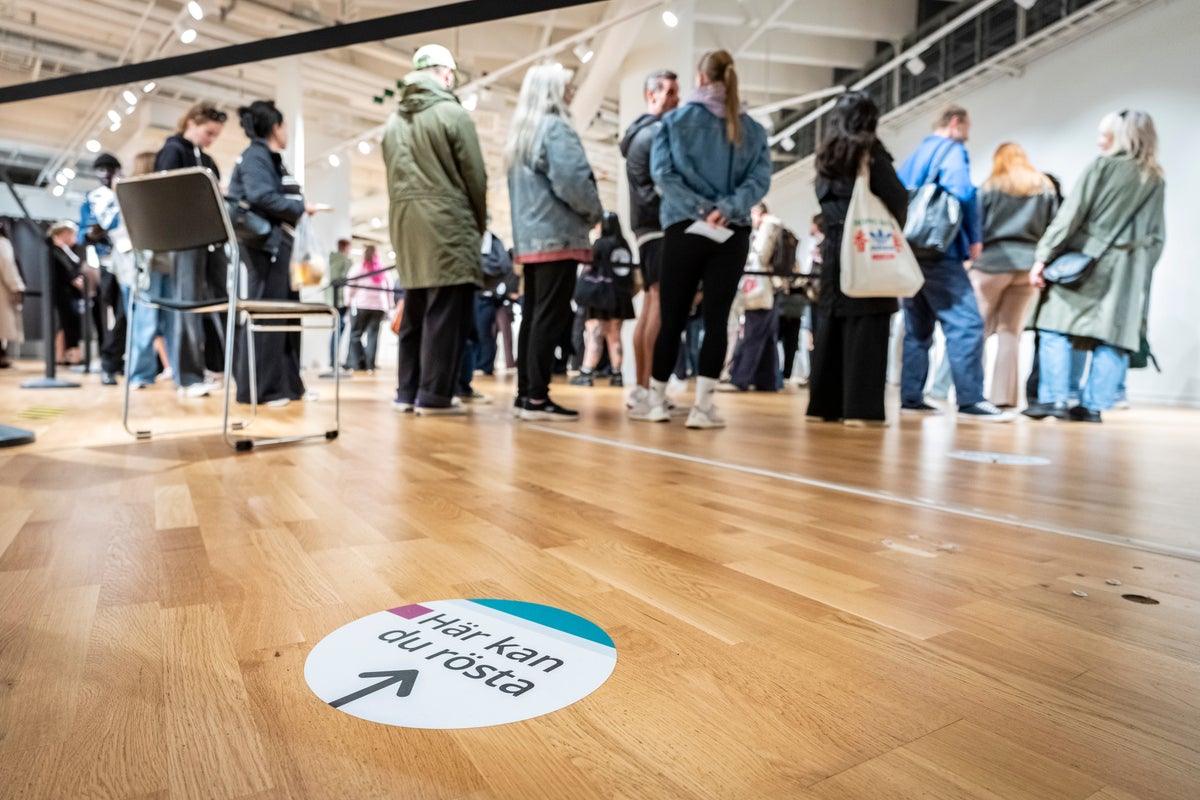
Voters in Sweden go to the polls on Sunday in an election that will decide whether centre-right Prime Minister Ulf Kristersson wins a second term, with the possibility that the hard-right Sweden Democrats gain Cabinet posts for the first time, or whether the centre-left Social Democrats return to power under former prime minister Magdalena Andersson. The vote matters beyond Sweden's borders, coming amid wider gains for the populist right across Europe, and will shape the direction of an EU member state that is also NATO's newest addition.
Kristersson has governed since 2022 with a three-party coalition propped up by outside support from the Sweden Democrats, an anti-immigration party with far-right roots that has moderated under leader Jimmie Åkesson since 2005; he has said they could enter government formally if the right retains its majority, while he would stay prime minister regardless. The Sweden Democrats took 20.5% of the vote in 2022, making them the largest party on the right, and analysts say the campaign has focused less on policy than on which of the two main blocs, four parties on the right versus four on the left, can secure a majority. More than 8 million of Sweden's roughly 10.6 million people are eligible to vote for the 349-seat Riksdag, with first preliminary results expected around 9pm local time (1900 GMT).
- Sweden votes Sunday on whether Kristersson or Andersson leads next
- Hard-right Sweden Democrats could win Cabinet seats for first time
- Result hinges on which four-party bloc secures a majority
New here? Start with this
Sweden holds a general election on Sunday to elect all 349 members of its parliament, the Riksdag, which in turn determines who governs the country. The contest is largely a choice between two blocs: a centre-right group led by current Prime Minister Ulf Kristersson, and a centre-left group led by former prime minister Magdalena Andersson of the Social Democrats.
Since 2022, Kristersson has led a minority coalition government that relies on the outside backing of the Sweden Democrats, a party with far-right origins that campaigns mainly on tighter immigration and law-and-order policies but has sought to present a more mainstream image under leader Jimmie Åkesson. Until now the Sweden Democrats have supported the government from outside without holding ministerial posts, but this election could see them formally enter cabinet for the first time if the right-leaning bloc wins.
The outcome is being watched beyond Sweden because it comes at a time when parties on the populist right are gaining ground in elections across Europe, and because Sweden is a European Union member and, since 2024, a NATO member, meaning any change in government could affect its policy direction on issues from defence to migration.
Both sides, in good faith
The strongest fair case each way — we don't pick a winner.
The case for
Supporters of the centre-right path argue that voters have already shown, in 2022 and in opinion polls since, that they want firmer control of immigration and integration, tougher policing of gang violence, and a government that reflects that mandate rather than sidelining the country's largest right-of-centre party from formal power. They contend that Jimmie Åkesson's Sweden Democrats have spent two decades moderating, distancing themselves from their fringe origins, and that continuing to treat them as untouchable while relying on their parliamentary votes is less honest and less democratic than giving them cabinet responsibility and accountability. For these voters, continuity under Ulf Kristersson also offers stability at a sensitive moment for a new NATO member navigating a difficult security environment.
The case against
Supporters of a return to Social Democrat-led government argue that Magdalena Andersson's party offers a tested, broadly trusted alternative built on Sweden's traditions of strong welfare provision, workplace rights and social cohesion, which they see as better suited to addressing inequality and public-service strain than four years of right-leaning rule. They also argue that formally admitting a party with far-right roots into cabinet, even one that has moderated its rhetoric, risks normalising more hardline positions on immigration and minorities and could shift Sweden's international image and EU alignment in ways that concern voters who value the country's consensus-driven political culture. For them, keeping such a party at arm's length, as outside support rather than in government, remains a meaningful democratic safeguard rather than an affront to voters' wishes.