More than 120,000 teenagers claim disability benefits for mental health conditions
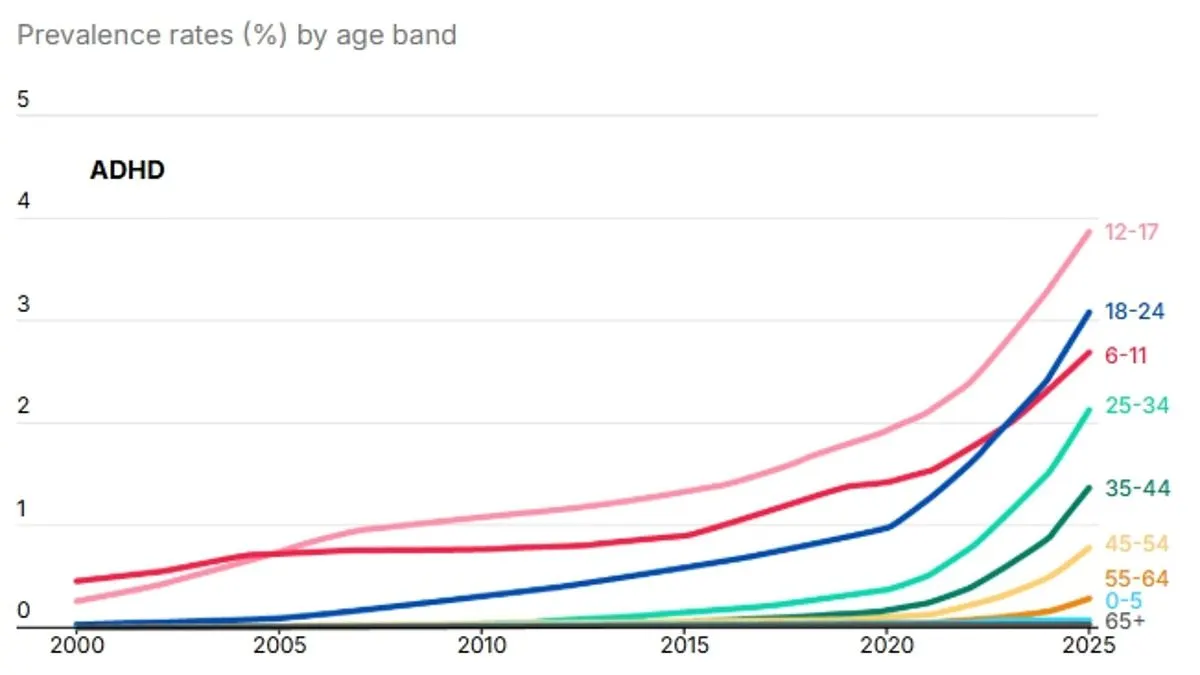
More than 120,000 teenagers aged 16-19 in England and Wales are claiming Personal Independence Payment benefits worth up to £192 weekly for mental health conditions including autism, ADHD and depression, costing taxpayers £1 billion annually. A new report has questioned whether the rising number of diagnoses reflects genuine increases in these conditions or stems from "superficial" assessments, with parents reportedly incentivised by schools and welfare systems to seek diagnostic labels for their children.
Autism diagnosis rates have increased up to 40-fold in recent years, yet a Government-commissioned review found no evidence that the actual prevalence of autism in children has increased correspondingly. Critics argue that the £1 billion welfare spend could instead fund 442,000 children with six counselling sessions each through the NHS, and a separate report reveals the UK has spent £1.1 trillion more on welfare than infrastructure over the past 20 years, suggesting that benefits are treating symptoms rather than addressing underlying economic decline.
- 120,000 teenagers receive £1bn yearly in disability benefits for mental health conditions
- Autism diagnosis rates have soared 40-fold with no evidence of actual increase in cases
- UK has spent £1.1 trillion more on welfare than infrastructure in past 20 years
New here? Start with this
Personal Independence Payment is a welfare benefit that provides regular payments to people who struggle with everyday tasks due to disabilities. More than 120,000 teenagers aged 16-19 in England and Wales receive these payments for mental health conditions including autism, ADHD and depression, with each payment worth up to £192 per week. This costs approximately £1 billion per year.
The concern centres on how many teenagers are receiving these diagnoses. Diagnoses of autism, for example, have increased dramatically in recent years—up to 40-fold in some measures—but government reviews found no matching increase in how common autism actually is in the population. This gap raises questions about whether rising numbers of diagnoses and benefit claims reflect genuine changes in prevalence, or whether the assessment process may be contributing to the growth.
The issue matters because of the scale of spending involved and what the money could be used for. The £1 billion annually spent on these benefits is a significant part of the welfare budget, and there are questions about whether it would be better spent on mental health treatment like counselling through the NHS. More broadly, it touches on how society responds to mental health challenges among young people.
Both sides, in good faith
The strongest fair case each way — we don't pick a winner.
The case for
Mental health conditions in young people have genuinely increased, driven by social media, economic uncertainty, pandemic effects, and improved awareness. Young people experiencing autism, ADHD, and depression face real functional impairment that prevents education and employment, and disability benefits provide essential financial support whilst they access treatment. Better diagnostic practice and reduced stigma have rightly identified conditions previously missed, and these young people deserve proper recognition and resources to manage serious conditions affecting their wellbeing.
The case against
The evidence suggests diagnosis rates have increased far beyond what actual prevalence data supports, indicating potential over-diagnosis driven by system incentives rather than genuine condition increases. Many assessments appear superficial rather than rigorous, and the £1 billion annual spend perpetuates welfare dependency rather than addressing root causes. Resources would be better redirected towards preventative NHS counselling and treatment that might equip young people with sustainable strategies, rather than funding long-term benefit claims for conditions that may not warrant such intensive welfare support.
Read the full article at the source →
Originally published by Daily Mail as “Taxpayers footing £1bn a year cost of 120,000 teenagers getting benefits for autism, ADHD and depression”.