Tesla renames its supervised driving feature for European customers
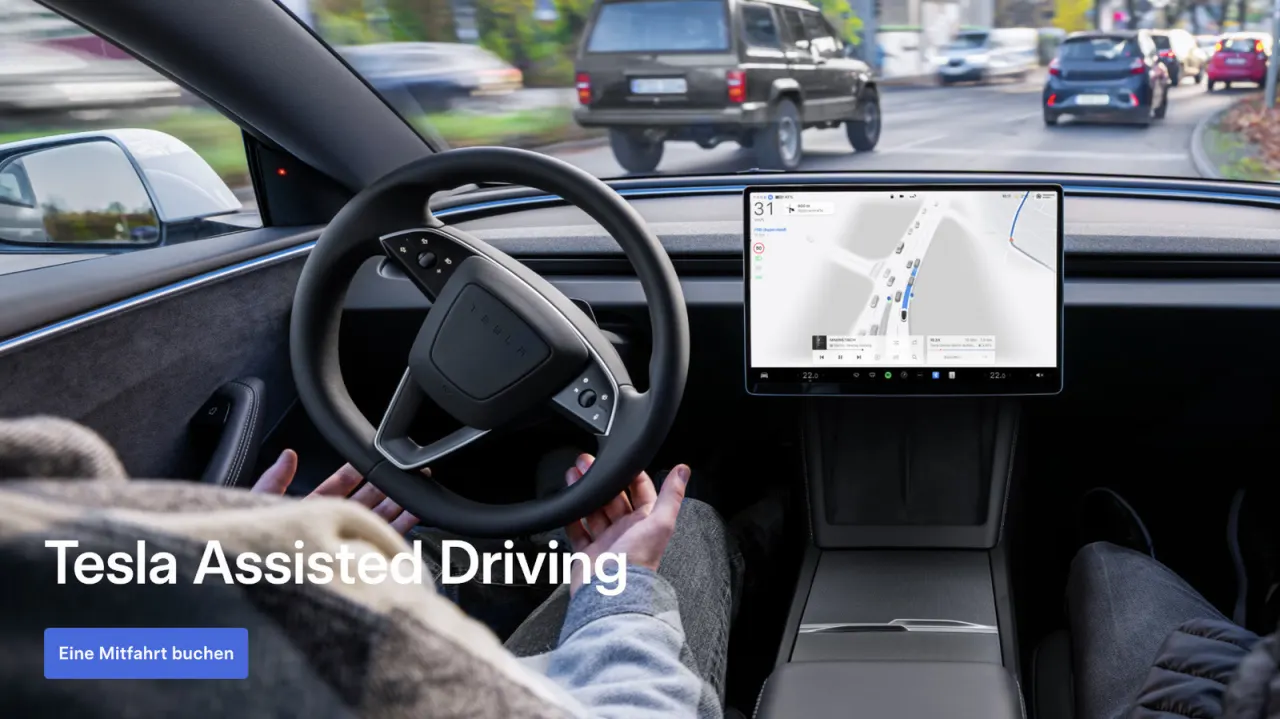
Tesla has rebranded its Full Self-Driving feature to "Assisted Driving" on European websites, including Germany, Spain and France, following regulatory concerns that the original name was misleading. Authorities worried that consumers might believe the system offered fully autonomous capabilities, when it actually requires constant driver supervision and only assists with specific tasks such as acceleration and braking.
Germany's Transport Minister Steffen Bilger discussed the matter with Tesla in September, and the automaker agreed to the rebranding. The feature is already operational in several European countries—the Netherlands, Denmark, Belgium, Slovenia, the Czech Republic and Croatia—whilst Swedish and Italian authorities are still reviewing whether the original name could confuse consumers. The rebranding is expected to smooth Tesla's path towards gaining regulatory approval across the remaining European nations.
- Tesla rebrands Full Self-Driving to Assisted Driving in Europe over misleading name concerns
- The system requires driver supervision and only assists with specific tasks
- The change should help Tesla gain regulatory approval across more European countries
New here? Start with this
Tesla offers an advanced driving assistance system that can perform certain driving tasks automatically, such as accelerating and braking, whilst requiring drivers to remain fully attentive and ready to take control at any moment. The system's original name, "Full Self-Driving," concerned regulators across Europe who worried that consumers might misunderstand it as offering fully autonomous capabilities, potentially creating safety risks.
European authorities, particularly in Germany, began scrutinising whether the name was misleading under consumer protection standards. The feature already operates in several European countries including the Netherlands, Denmark and Belgium, but regulators in other nations such as Sweden and Italy are still evaluating whether the terminology could confuse consumers.
How companies label advanced driving features is increasingly important as the technology spreads, because names must accurately convey what a system can and cannot do. Tesla's approach to addressing regulatory concerns could influence how other automakers market similar features across the continent.
Both sides, in good faith
The strongest fair case each way — we don't pick a winner.
The case for
The rebranding protects consumers from genuine confusion, as 'Full Self-Driving' could mislead buyers into believing the system offers true autonomy when it actually requires constant supervision and only assists with specific tasks. Regulators rightly prioritise accuracy in marketing language for safety-critical systems, ensuring consumers can make informed decisions. Clearer terminology reduces the risk of dangerous misuse whilst strengthening regulatory credibility.
The case against
This reflects regulatory overreach based on speculative consumer confusion rather than demonstrated harm or actual safety failures. Similar automotive features like Autopilot and Pilot Assist use evocative marketing language without triggering such intervention, and the system operates safely under its current name in other markets. Regulators should focus on substantive safety standards rather than policing corporate naming decisions, which risks establishing precedents for excessive government control over commercial speech.
Read the full article at the source →
Originally published by Engadget as “Tesla’s Full Self-Driving is now called Assisted Driving in Europe”.