Thanks to South Park, Trump Finally Got His Emmy
Developed over time first seen 2 months ago
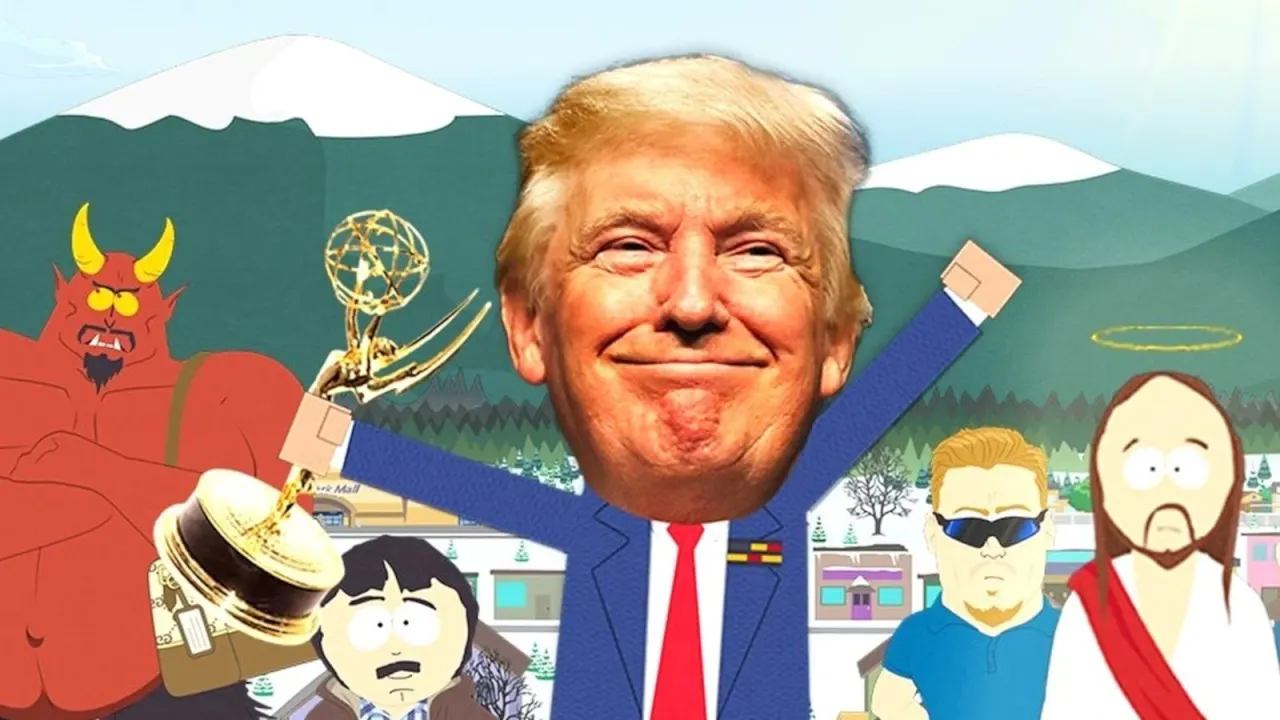
South Park has secured Donald Trump the Emmy Award he had long complained about missing out on. Creators Trey Parker and Matt Stone won Outstanding Animated Program at Sunday night's Creative Arts Emmys for the show's 28th season, which depicted a president with a tiny penis who impregnates Satan, adding an extra layer of mockery given Trump's years of grievances over The Apprentice being repeatedly snubbed by the Emmys.
To mark the win, Parker and Stone released poster artwork of Trump holding the trophy, captioned "You finally got your Emmy!" South Park's official account also posted a congratulatory message to Parker, Stone and the production team, with the show's 29th season due to premiere on 16th September.
- Sources
- 3
- Outlets
- 3
- Left · Centre · Right
- 0 · 0 · 0
In short
- South Park wins Outstanding Animated Program Emmy for its Trump satire
- Creators mock Trump with "You finally got your Emmy!" poster
- Season 29 of South Park premieres 16th September
How this story developed
- 2 months ago South Park has finally landed Donald Trump the Emmy Award he had long complained about missing out on.
- 2 months ago Donald Trump has finally secured a long-coveted Emmy Award, courtesy of South Park's satirical portrayal of him.
- 2 months ago South Park has secured Donald Trump the Emmy Award he had long complained about missing out on.
- 2 months ago South Park creators Trey Parker and Matt Stone have won an Emmy for a season that mocked Donald Trump, delivering him the award he had long complained was unfairly withheld from him.
Full account
Donald Trump has finally secured an Emmy Award, albeit not in the way he might have hoped: the accolade arrived courtesy of South Park, the animated satire that has spent much of the past year mocking him. At Sunday night's Creative Arts Emmys, creators Trey Parker and Matt Stone picked up the award for Outstanding Animated Program, with the winning run of episodes featuring an unflattering depiction of the president, including a storyline in which he is shown fathering a child with Satan.
The result marked a notable return to form for the long-running Comedy Central series, which had gone five years without a nomination in the category before this year's success, and thirteen years since its last win in it. It was the show's sixth victory from nineteen nominations overall in the Outstanding Animated Program field, and came in a year in which South Park also picked up a record three Emmy nominations in total, alongside a separate Television Academy Honour. Accepting the award on stage, Parker thanked the show's audience, crediting them with keeping the series on air for three decades.
South Park's official account marked the win on social media with a pointed dig at its favourite target, posting artwork of an animated Trump triumphantly holding an Emmy statuette, captioned "You finally got your Emmy!" — a reference to the president's history of Emmy disappointment. As an executive producer on NBC's The Apprentice, Trump had been nominated twice for Outstanding Reality-Competition Program, in 2004 and 2005, losing on both occasions to The Amazing Race. Accounts differ slightly on the detail of the image: some describe Trump depicted with his trousers and underwear pulled down, evoking the show's recurring mockery of him. The White House has previously dismissed the show's satire, with a spokesperson describing it as relying on "uninspired ideas for attention" after two decades on air.
The episodes that secured the win were broadcast across South Park's 27th and 28th seasons, ten instalments in all that fell within the Emmys' eligibility window, during which Trump — rendered using real photographs superimposed on animated bodies — was a recurring and heavily lampooned presence, including a widely discussed sequence involving a deep-faked depiction of him. Speaking to the New York Times about the decision to make Trump such a central figure, Parker said the choice reflected how thoroughly politics had bled into everyday culture rather than any deliberate political agenda on the show's part, arguing that with government and politics now inescapable across podcasts and social media, the two had effectively become inseparable from pop culture itself. South Park's new season is due to begin on 16 September.
Where outlets differ
From the full account, which is AI-written from the sources:
Source 1 (Rolling Stone) keeps the focus tight on the Emmy-snub irony and the celebratory poster, with little detail on the ceremony or Trump's on-screen depiction beyond the caption.
Source 2 (Deadline) gives the fullest statistical and contextual picture — the show's nomination/win history in the category, the White House's dismissive statement, and reader comments questioning whether the satire still lands, alongside Parker's on-stage thank-you to fans.
Source 3 (unspecified, citing a New York Times interview) provides the most detail on the content of Season 27's premiere (the Trump/Satan storyline, the deep-faked desert PSA and its slogan) and includes Parker's explanation of why the show fixated on Trump, framing it as politics becoming pop culture rather than a political statement.
Descriptions of the celebratory image vary in specificity: Source 1 mentions only Trump holding the trophy, while Sources 2 and 3 add the detail of his trousers and underwear being pulled down.
Steelman: both sides, in good faith
The strongest fair case each way — we don't pick a winner.
The case for
Supporters see this as satire doing exactly what satire is meant to do: puncturing the vanity of a uniquely image-conscious public figure who has spent years publicly fixating on award recognition. They argue that mocking a sitting or former president's ego, however crude the imagery, sits squarely within a long tradition of political cartooning and comedy holding power up to ridicule, and that South Park has always applied its exaggerated, equal-opportunity crudeness to politicians of every stripe. For them, the Emmy win itself is simply an industry rewarding sharp, enduring comedic craft, and Parker and Stone's cheeky poster is a knowing, harmless bit of trolling rather than a serious political statement.
The case against
Critics who might otherwise defend robust political satire can still reasonably object that this particular joke trades wit for crude sexual degradation, arguing that mocking a leader's anatomy and inventing a grotesque sexual storyline adds little insight and instead signals contempt dressed up as commentary. They may also point out that an awards body honouring content built around such imagery of a named, real political figure blurs the line between artistic recognition and partisan point-scoring, especially given Hollywood's perceived lean against Trump, which risks reinforcing the view that entertainment institutions treat conservative figures as fair game for humiliation in ways they would not accept if the target were on the other side of the aisle.
Explained simply
South Park has been running for nearly three decades, with creators Trey Parker and Matt Stone regularly using the animated show to satirise politicians and public figures. Donald Trump has been a recurring target, and the programme has drawn attention this year for episodes mocking his time in office. The Emmy Awards are television's top industry honours, split into a primetime ceremony and the separate Creative Arts Emmys, which cover categories such as animation.
Trump has a long history of publicly complaining that his previous reality series, The Apprentice, was repeatedly overlooked by the Emmys despite its popularity, something he has referenced many times over the years. This context matters because South Park's latest award effectively hands Trump an Emmy connection after all, but by way of a show that has portrayed him in a mocking and unflattering light, rather than any project of his own.
The story sits at the intersection of entertainment industry recognition and long-running celebrity rivalry, with South Park's creators using the win as an opportunity for further satire rather than a straightforward tribute.
Coverage · 3 sources
Art Business Culture Government Markets Politics