Culture news and discussion on TalkFuse.
The town that took on travellers and won: How, in the face of goading, security fences and intimidation, the defiant town of Sawbridgeworth spent 72 nerve-wracking hours fighting to stop diggers paving over their wildlife sanctuary
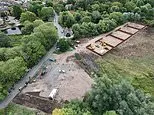
Residents of Sawbridgeworth, Hertfordshire, mobilised in their hundreds over the August bank holiday weekend to stop a group of travellers from occupying and developing a stretch of protected greenland used as a wildlife habitat and floodplain. The land grab, which began with diggers arriving on Friday evening and around 50 workmen flattening the site by Saturday morning, was halted within 48 hours after the local council secured a High Court injunction, marking a rare and swift victory for a community against this kind of illegal occupation.
The incident followed a pattern seen elsewhere, with groups exploiting bank holidays when council enforcement teams are typically unavailable, often intending to apply for retrospective planning permission once works are already underway. Workers used heavy machinery to clear grass, fell trees, erect fencing and lay drainage pipes on the site off Sheering Mill Lane, home to muntjac deer, prompting fears among locals about future flood risk. Residents were alerted via WhatsApp and Facebook, and the council issued a Temporary Stop Notice by 10.45am on Saturday before obtaining an out-of-hours judge to grant the injunction. A similar unauthorised occupation also took place on privately owned land near Rochford, Essex, over the same weekend.
In short
- Sawbridgeworth residents blocked a traveller land grab on protected greenland
- Council won a High Court injunction within 48 hours to evict occupiers
- Similar unauthorised land occupation occurred in Rochford, Essex, that weekend
Steelman: both sides, in good faith
The strongest fair case each way — we don't pick a winner.
The case for
Residents and the council can argue that swift action was needed to protect a designated wildlife habitat and floodplain from potentially lasting damage. Requiring work to stop while planning and land-use questions are properly examined also upholds the rule that development should follow an authorised process, rather than gain an advantage by proceeding first.
The case against
Those carrying out the works could argue that land-use and planning claims should be assessed through fair legal procedures, with a chance to establish ownership, seek permission or challenge restrictions. A forceful, rapid response can raise concerns about due process and equal treatment if enforcement is inconsistent, though those concerns do not by themselves justify damaging protected land or proceeding without permission.
Explained simply
The site off Sheering Mill Lane is protected green land in Sawbridgeworth, Hertfordshire, used by wildlife and as a floodplain. A floodplain is land that can hold excess water when rivers or streams rise, so changes to it can affect nearby flood risk.
The dispute involved local residents, Hertfordshire council and a group of travellers, whose workers brought machinery onto the land and began clearing it. Planning rules govern what can be built or changed on land; work without permission may lead to council enforcement or court action.
The case matters because it raises questions about how quickly councils can respond when land is occupied and altered without permission, especially over a bank holiday. It also brings together concerns about protecting habitats, managing flood risk and enforcing planning rules.
Art Culture Environment Science Travel World