The ultimate eclipse chase: A Concorde raced against the Moon’s shadow
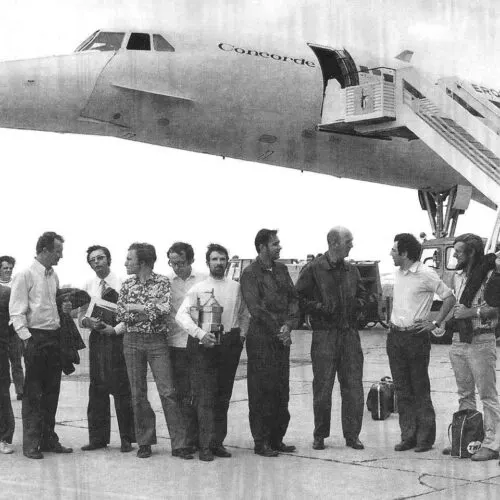
In June 1973, eight scientists used the Concorde 001 prototype to follow a total solar eclipse across Africa, extending their observation of totality to a record 74 minutes. The flight demonstrated how a supersonic aircraft could effectively chase the Moon’s shadow, providing far longer conditions for scientific study than were possible from the ground.
The idea came from astronomer Pierre Léna, who approached Concorde test-flight chief André Turcat after the prototype first flew supersonically in 1970. Flying at nearly 17 km altitude and more than twice the speed of sound reduced atmospheric humidity and improved infrared observations; by comparison, totality on the ground can last about 7.5 minutes at most, while the 12 August eclipse in Europe will offer just over two minutes.
- Concorde 001 chased a 1973 eclipse for a record 74 minutes.
- Scientists gained far longer observing time than ground-based teams.
- High-altitude supersonic flight improved infrared viewing conditions.